• The move to the new server is done. There are some software and database maintenance updates in process. This has us passing the hat around to help out. We appreciate any donations. Seriously, even a dollar helps. The payment page may be found here - https://www.audiokarma.org/support.html

Resurrect a 2330

Fellas
It been a while since I have been on here but I am still in the hobby I have a 2330 that I bought a few years back if I remember correctly it’s has and unstable power supply and one Channel worked and the other one was cooked so I replaced the bad amp and it worked but The Idling current was unstable then it ran away from me and cooked the amp so Then I put it away . So my plan is to start from scratch with the power supply and replace all the Components . I am looking for a complete part list with the substitutes and l will get my head in the game and start a Thread on my adventure right now I am rebuilding the iconic sx1010 which I should be done around first of the year I could use the help
Thanks
Marc
 
Register to hide this ad
That sounds like terrible troubleshooting and a terrible course of action, especially since the 2330 is easy to work on. Get it to a real tech before you do more damage.
 
That sounds like terrible troubleshooting and a terrible course of action, especially since the 2330 is easy to work on. Get it to a real tech before you do more damage.
I never said I was a tech but I know enough to dangerous and I know my limitations I am a construction superintendent I build casinos hospitals buildings like that . What I am is short on resources am looking for a part list and maybe a thread on someone who rebuilt one before. I have been fixing these for fun for quite a few years. I am just looking for a little help .
Thanks
 
IMHO I think it is generally better to troubleshoot a device, and locate the defective components, rather than "replacing all the components". There is WAY too much chance of introducing additional defects, when "replacing all the components". The likelihood is that 98+ % of the components you would replace are perfectly functional, so you are needlessly adding to the cost, and likely the time needed to repair your receiver.
 
IMHO I think it is generally better to troubleshoot a device, and locate the defective components, rather than "replacing all the components". There is WAY too much chance of introducing additional defects, when "replacing all the components". The likelihood is that 98+ % of the components you would replace are perfectly functional, so you are needlessly adding to the cost, and likely the time needed to repair your receiver.
I agree 150% I my have come of half cocked , I am working on right it’s a pioneer sx1010 it had a crispy power supply I am half way done with it and it’s still alive I following a thread from a fellow by the name of Super Noob it’s dated march 2 2020 he dug into his piece way more then I would to dare to I fix power supply made it so it’s functional it has some leaky and some caps that wouldn’t charge up then I elected to change the rest of the caps and the transistors on that board and move onto the protection board and then so on and so forth I bought a couple of pieces that were a failed attempts and boy they were some good puzzles
 
I agree 150% I my have come of half cocked , I am working on right it’s a pioneer sx1010 it had a crispy power supply I am half way done with it and it’s still alive I following a thread from a fellow by the name of Super Noob it’s dated march 2 2020 he dug into his piece way more then I would to dare to I fix power supply made it so it’s functional it has some leaky and some caps that wouldn’t charge up then I elected to change the rest of the caps and the transistors on that board and move onto the protection board and then so on and so forth I bought a couple of pieces that were a failed attempts and boy they were some good puzzles

The best course of action is to fix what's wrong first, then go and rebuild it if you want to. Doing it the other way around will just add potential issues and mass confusion to the equation
 
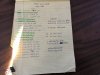
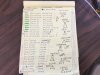
image.jpg image.jpg image.jpg image.jpg image.jpg image.jpg image.jpg I have made some progress on this project as it’s stands now I went threw the power supply which I found a couple of bad components the majority of the capacitors I checked charged but charged slowly I am assuming it’s because this thing has been sitting around for a Decade I will post my notes since a picture is Worth 1000 words.but going over my notes I think that power supply board may still have some issues.I will go back and do more accurate testing. Moving forward I powered it up ran it as a preamp and it functions fine I installed the the good amp and The Idling current and DC offset is stable now the voltage is a little low but the signal is good and clear but it’s running on a dim bulb tester . As far as the amp thats shorted out there was a lot of faulty parts on it I changed them all out plus some more . I am going over my work right because that’s a lot of parts I changed am not too Comfortable about it I will post my notes as well I do have a couple of questions about some components and how they function in a circuit I am still trying to wrap my head around circuit analysis but it will come image.jpgimage.jpgimage.jpgimage.jpgimage.jpgimage.jpgimage.jpgimage.jpgimage.jpgimage.jpgimage.jpgimage.jpgimage.jpgimage.jpg
Q711 Stv3hy I tested in Circuit and I get a voltage drop both ways I have seen threads on this component I don’t under stand how it works
C711 1uf -50v It’s a electrolytic capacitor there is no polarity markings on the cap board or schematic what’s its purpose ? It tested fine out of Circuit but it’s placement On the board is right at ground zero I’d like to change it
 
The stv3 is a triple diode and needs to be pulled out of circuit to be tested properly, you should get 1.4v in one direction on a diode test with a good meter and OL in the other. Be careful handling this component as th leads can break off the casing very easily.
 
Back
Top Bottom