• The move to the new server is done. There are some software and database maintenance updates in process. This has us passing the hat around to help out. We appreciate any donations. Seriously, even a dollar helps. The payment page may be found here - https://www.audiokarma.org/support.html

Revox A77 MK1 - How To Thread

Vasil Penev

New Member
Hey guys, I just got my Revox after repairs (after playing with it for hours non stop it smoked on me, luckily it was the power block, and not a motor)

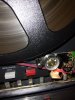
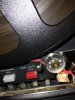
Anyways, eversince I got it I can't quite figure the correct way to thread the tape - above or beneath the stationary guide at the beginning.

If I thread it below it, its as if it the motors go "too fast", and the tape spools... well not bad but abit irregular, on rewind. Kinda flops around. My best guess is this setup is for 7" reels.

Threading above it slows down the motors abit when rewinding and spools it nicely, but Im afraid it can damage them or the tape if its not right to do so.

So which way is the correct one in your opinion? Thanks!
 

Attachments

  • 1.jpg
    1.jpg
    162.6 KB · Views: 76
  • 20210427_131210.jpg
    20210427_131210.jpg
    139.8 KB · Views: 72
Register to hide this ad
Hi! The correct way (not in my opinion, but in the user manual ;) ) is above the guide as in 1.jpg. Incidentally, that guide is not exactly stationary, it is spring-loaded and can move up and down to avoid tape slack, especially during starts/stops. If it does not move, then this is a problem and it needs fixing. The same goes for the PR99 and B77 as well.
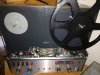
 
Well, I have just checked the A77 service manual and it shows two alternative drawings for this part. One (drawing E) has a fixed post, while the other (drawing E1) has a spring-loaded post. A hint of what version you have is the tape guide cups: they are flat on version E1, and on version E they have embosses like those on your video. It looks like you have an early version of the A77, I had forgotten that they had this difference.
 
Alrighty then, thanks for the help! The first technician that touched it and replaced a transistor also said there are some differences compared to the manual he had. Seems like these machines had many little mods along the way.
 
There's 4 different versions of this machine, built from 1968-1977. There's original, Mk II, Mk III, and Mk IV. The last version has recognizable styling differences. You may have a Mk II or even a Mk III.
 
That is right, the A77 evolved quite a bit during its production, and the modifications are actually more than the styling: they changed the left guide pin as we've seen, but there are also two successive versions of the reel and capstan motors, at least two versions of the capstan control board, plus electromagnet plunger mods, brake drum mods, etc.). Unfortunately those design changes did not always happen at the same time as the switch from a Mk version to the next, so one one cannot really judge by the look of the machine, you need to check the serial number, or just see the part that you need to work on. The service manual lists currently available shows the different versions, along with the serial number at which changes occured in many cases. so you are not exactly abandoned to your fate.

Here is a partial overview of the evolution - originally in German, so I give you the Google Translate link - : https://translate.google.com/transl...://www.theimann.com/Analog/A77/Versionen.html
 
Last edited:
20210429_160759.jpg sn.jpg


Thanks for the replys. G004597 maybe its an early MK 1 german machine, because the ones in the site start with G100, the tech said it has very good capstan control with somekinda system where a wheel spins and part of it is magnetised to control RPM after transistor

Also, looking at this wheel in the compartment, is this voltage? Because Im in Europe voltage is 220 volts?
 
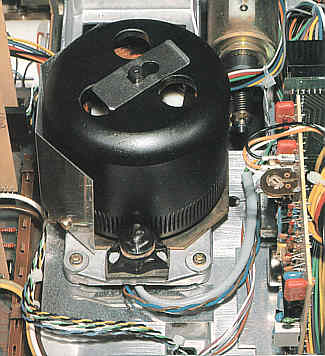
That's right, you are the owner of a Mk I. It looks the same as the Mk II except for the fixed guide post. Your tech is correct, the A77 capstan control uses a phase-locked loop which is very sophisticated for its time: the Nagra III and its successors (as well as Suder recorders) used the same system as soon as 1958, but these were professional machines. There is a magnetic head (similar to a tape playback head) that measures the rotation speed of the capstan via a set of slots engraved on the side of the outer rotor of the motor, which you can see on this photo from the reeltoreel.de website:

B77-003.jpg


The low speed (9,5 cm/s) yields a frequency of 800 Hz, the high speed (19 cm/s) yields a frequency of 1600 Hz, and this is what the circuit regulates. This makes the speed completely independent from the mains frequency and voltage.

As for the 240V marking on your photo, this is the correct mains voltage settings. It used to be 220V in Europe, but now all the countries have increased it to 240V. Note that it does not change the tape speed, which is regulated by the servo circuit, but it does change a little the tape tension, so since your tech chose the voltage setting that gave the correct tape tension, I would not change it.
 
Last edited:
Nice, thanks for the info! Clever way to make the capstan independent from mains parameters, couse that would be a problem for AC motors.

Now I just have to find a tech to fix a little problem with recording\playback, despite all the cleaning Ive done, sometimes one of the two channels drops off then comes back or sound just gets muffled. I tried cleaning as best as I can + it doesnt happen to just one channel it seems soo random.

Ill get a new roll of LPR 35 just to test again, but I have a suspicion this problem is electrical because it is too random. Doesnt show on the meters when you record. I hope it wont need a full recap, couse finding a good tech with a scope and test tapes in our country is so hard. Id rather not touch the trimmers and change electronics on the sound boards.

When it does play properly, it sounds sweet. Maybe its particles stuck to the tape when I played it before cleaning, otherwise my friend who gave it to me claims the tape I have is new LPR35. He claims Im crazy actually but his speakers are very far apart he might have not noticed. Maybe he gave me old tapes but I dont belive he would lie about it.

I believe the problem happens less ofter or dissapears when the machine works for longer time. At least part of the problems is IN the recording (happens at the same spots) but its not like an old tape that has a minor dropout I know how that sounds. Sometimes happens at random places.

The problem is apparent through headphones plugged directly in the machine. Btw I tried plugging my guitar directly into the mic input, it records nice, should be great for a little 2-mic live recording (it records 1 mic to 1 channel). I also didnt noticed any dropours with that recording.
 
Last edited:
There are sereval things that may explay what you are experiencing, mostly faulty contacts. You may try to actuate the knobs and see if the problems go away, often it's just dirty switch or pot contacts and all you have to do is a good cleaning (not so easy, as you need to dismantle the deck to gain access to those switches and pots).

On a Revox of this age I would suspect the trimmers too, if it has been adjusted without replacing the trimmers first. Those Ruwido trimmers were fine when new, but with time they almost developed the same disease: the wiper becomes brittle and breaks like glass by just looking at it - and even before that they develop an intermittent-partial contact that may account for what you describe. Replacing all the original trimmers is my first step when I have to adjust a Revox, this is actually more important than the much-touted recapping. But of course there are several possible causes, and since your A77 has been serviced by a tech I would talk to him first, it may well be part of the guarantee.
 
I replaced the fixed spacer on the right hand side of all 4 of my A and B77 Revoxs over the years with a bearing just like on the feed side. I also used higher class bearings changing from class 3 to class 5. It reduces wow and flutter and if you are using older tapes it prevents the right hand guide from clogging up causing scrape flutter and squeaking as the tape passes thru the guide. Also reduces the chances of stretching the tape in FF or RW modes.

At the recommendation of the Revox distributor we used to use STP to lube the front bushing of the capstan. Then we would soak the rear bearing in heated STP to get it to flow into the bearing races. I did that to my machines near my birthday every year. I also replaced the control relays with Potter and Blumfeld hermetically sealed relays first thing. Then I never had issues with tape modes like other owners who were stuck with the cheap relays Revox used. I guess my last B-77HS 2/4 was 45 Years when I sold it. I installed a 1/4 trk stereo head in the head stack 4 th position with a micro switch to select the different heads. It also had the Vaiable speed remote control box. It was a great machine.

But like I said it just couldn't handle play back of tapes I had recorded live with Ampex 300-2 and AG 440 C-2 as the Revox electronics would go into distortion on loud passages and with loud peaks. Even when I was using DBX noise reduction at reduced levels the Revox just never sounded as good. I finally dubbed all my tapes to CD about 10 years ago. , But I had to use my AG 500-2/4 to do so. Cutting the 10 1/2 inch reels down to two 7 inch reels on the B-77. Oh I also installed a metal tape splicing block on the head covers, it made the process much faster and the plastic splicer Revox didn't hold up well.
 
Back
Top Bottom