Fleime
New Member
Hello,
First off, I am a electrical novice. I guess I know the basic stuff an average person does. I have actually learned most here on AK, but forgive me if I'm not using the correct terminology as of yet. I have a multi-meter.
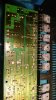
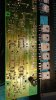
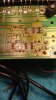
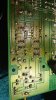
After acquiring some Infinity Kappa 8.1, I was advised on the Infinity forum to get a decent amplifier. So I bought a second hand Rotel RB-990BX. The amplifier had been (somewhat) serviced by the seller (private audio repair man), after which he stated the amplifier was in top condition.
The amplifier has not been auditioned due to distance, and has been sent to me. After arrival I shortly hooked it up to check if it was working, which it did, however I did not test or audition them extensively (yet).
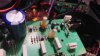
I let it run idle, no loads, to check the bias. I have adjusted the both channels to 7 mV (according to manual) using the bias trim pots (I think the're called). The pot on the left channel is much more sensitive than the right channel. However, the bias on both channels fluctuates up and down, with a total range of around 0.4 mV difference between min and max readings.
So, is the bias supposed to fluctuate? And if so, is the range acceptable?
If not, what could be the cause of the fluctuation? The trim pots?
Is there something else I can do to determine the cause?
Additional information, if relevant:
- the DC offset at the speaker terminals is 25 mV for the left channel, and -25 mV for the right channel. I have come to understand the polarity is not an issue;
- temperature at idle is 95 ℉ for the left channel, and 100 ℉ for the right channel. When in use the temperature gets to about 105 ℉ for the right channel.
Thanks in advance.
First off, I am a electrical novice. I guess I know the basic stuff an average person does. I have actually learned most here on AK, but forgive me if I'm not using the correct terminology as of yet. I have a multi-meter.
After acquiring some Infinity Kappa 8.1, I was advised on the Infinity forum to get a decent amplifier. So I bought a second hand Rotel RB-990BX. The amplifier had been (somewhat) serviced by the seller (private audio repair man), after which he stated the amplifier was in top condition.
The amplifier has not been auditioned due to distance, and has been sent to me. After arrival I shortly hooked it up to check if it was working, which it did, however I did not test or audition them extensively (yet).
I let it run idle, no loads, to check the bias. I have adjusted the both channels to 7 mV (according to manual) using the bias trim pots (I think the're called). The pot on the left channel is much more sensitive than the right channel. However, the bias on both channels fluctuates up and down, with a total range of around 0.4 mV difference between min and max readings.
So, is the bias supposed to fluctuate? And if so, is the range acceptable?
If not, what could be the cause of the fluctuation? The trim pots?
Is there something else I can do to determine the cause?
Additional information, if relevant:
- the DC offset at the speaker terminals is 25 mV for the left channel, and -25 mV for the right channel. I have come to understand the polarity is not an issue;
- temperature at idle is 95 ℉ for the left channel, and 100 ℉ for the right channel. When in use the temperature gets to about 105 ℉ for the right channel.
Thanks in advance.