• The move to the new server is done. There are some software and database maintenance updates in process. This has us passing the hat around to help out. We appreciate any donations. Seriously, even a dollar helps. The payment page may be found here - https://www.audiokarma.org/support.html

RSL Elan or Wharfedale sp87?

Jhnny1218

New Member
Hello everyone, I have a pair of RSL Elan that I've had for a little while and I'm starting to notice a little bit of crackling from one of the speakers. I found a pair of Wharfedale Sp87s at the pawn shop for 105 and was wondering if these would be a good replacement. I'm not very savvy on speakers. Id be running them with a marantz 2240.
 
Register to hide this ad
Isn't that what I said,Dave:)

Haha, posted before I could.

The RSL looks to be of an interesting design over the Wharfedale, which looks to be the stereotypical 2.5way. Should be okay but, my interest would be toward the RSL.
 
The Elans were one of the best sounding RSL models offered and are highly regarded by the people here at AK that own a fully functional pair. It's well worth it to take the time to diagnose the source of the problem and repair it. Also the "crackling" could possibly be from the receiver/pre-amp/amp being used to drive them, or a bad or loose wiring connection, so all possible sources need to be investigated.

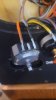
One the back of the cabinet near the top is a 12" passive radiator flat cone with a foam surround that will deteriorate over time that will need replacement and when the surround fails it can make strange noises as the flat cone moves around. Also, the midrange and tweeter level control potentiometers will always corrode over time and cause crackling noises and volume drops (or cut-outs) and are your most likely culprits. They would need to be loosened so you could access them behind the front baffle board in order to spray De-Oxit into all of the openings in the potentiometer metal casing and then you would turn them back and forth many times to make sure the De-Oxit gets spread around inside to dissolve the corrosion. Once you pull the knobs off in a straight out direction there is a thin nut on the central shaft which holds them in position to the cabinet. With the woofer removed you can then access the potentiometers for "treatment".

Even if you decide to go with thinner speakers by repairing the Elans to fully functional condition you would then be able to sell the pair for a much higher price which usually runs at least $ 400 a pair these days and usually higher (typically in the $ 500 to $ 700 range here in LA.).

 
Thats a lot of really useful information, thank you. After reading your post, I messed around with the tweeter level and noticed some distortion so it looks like it could use some deoxit. How exactly do I acess the potentiometers? I pull out the knobs straight off and also remove the woofer? I've never worked on a speaker before, usually just minor things on my receivers.


The Elans were one of the best sounding RSL models offered and are highly regarded by the people here at AK that own a fully functional pair. It's well worth it to take the time to diagnose the source of the problem and repair it. Also the "crackling" could possibly be from the receiver/pre-amp/amp being used to drive them, or a bad or loose wiring connection, so all possible sources need to be investigated.

One the back of the cabinet near the top is a 12" passive radiator flat cone with a foam surround that will deteriorate over time that will need replacement and when the surround fails it can make strange noises as the flat cone moves around. Also, the midrange and tweeter level control potentiometers will always corrode over time and cause crackling noises and volume drops (or cut-outs) and are your most likely culprits. They would need to be loosened so you could access them behind the front baffle board in order to spray De-Oxit into all of the openings in the potentiometer metal casing and then you would turn them back and forth many times to make sure the De-Oxit gets spread around inside to dissolve the corrosion. Once you pull the knobs off in a straight out direction there is a thin nut on the central shaft which holds them in position to the cabinet. With the woofer removed you can then access the potentiometers for "treatment".

Even if you decide to go with thinner speakers by repairing the Elans to fully functional condition you would then be able to sell the pair for a much higher price which usually runs at least $ 400 a pair these days and usually higher (typically in the $ 500 to $ 700 range here in LA.).
 
The goal is to get the potentiometers loose and free from the baffle board so you can hold them in your hand to administer the sprays of De-Oxit from a pressurized cannister version of that product (I use the 100% strength version of De-Oxit). By removing the woofer that gives you access to the rear body of the potentiometer, so when you unscrew the thin nuts on the threaded shaft sticking out the front you can pull them out the back. A few applications of De-Oxit spray to any openings in the potentiometer metal housing and a lot of turning the shaft back and forth (with the knob temporarily back on) after each treatment will revive the potentiometers as much as can be done.

While you have the woofers out of the cabinet be sure to look at the cross-over network components mounted by the connection plate to make sure nothing looks burned or damaged.
 
I dont mind trying to fix it myself. Sounds relatively easy, I'm not sure what a baffle board is though. I was going to order some Deoxit. Is it the D5 stuff? Or are there some other alternatives?


The goal is to get the potentiometers loose and free from the baffle board so you can hold them in your hand to administer the sprays of De-Oxit from a pressurized cannister version of that product (I use the 100% strength version of De-Oxit). By removing the woofer that gives you access to the rear body of the potentiometer, so when you unscrew the thin nuts on the threaded shaft sticking out the front you can pull them out the back. A few applications of De-Oxit spray to any openings in the potentiometer metal housing and a lot of turning the shaft back and forth (with the knob temporarily back on) after each treatment will revive the potentiometers as much as can be done.

While you have the woofers out of the cabinet be sure to look at the cross-over network components mounted by the connection plate to make sure nothing looks burned or damaged.
 
I use the De-Oxit D100S formula. Here is a link to an interesting take on De-oxit from a military guy:
Link: https://www.hagensieker.com/wordpress/2018/06/18/deoxit-what-is-it-what-isnt-it/
If it is just lighter fluid in a fancy can, they are indeed making quite a profit!

The "baffle board" is just the proper name of the front wood panel on the cabinet where the speaker drivers and potentiometers are mounted. Once you've carefully removed the woofer, level control knobs, and thin nut on the front on the potentiometer shaft, just pull the potentiometers out the back of the baffle board and the attached wires should give you enough reach to where you can easily spray the De-oxit into the cannister openings (while holding a paper towel behind it to prevent drips and over-spray). Work the knob back and forth and spray some more De-oxit and just repeat this process a couple of times before you re-mount them. Good luck
 
Okay, its all makes sense now. I'll remove the 8 screws around woofer and carefully remove the woofer to gain better access. Do you have any tips on how to remove level control knobs? There isnt much grip to pull it straight off. I tried using some needle nose pliers with some cloth around them but I'm scared of pulling any harder and scratching them or breaking the knob.
 
Also, interesting take on De-oxit. If I were to get some, I'd have to order some online, since there isnt a way to get some in town. Think some WD-40 Specialist Contact Cleaner from Home Depot will do the trick?
 
I would not use a WD-40 named product. I used to buy the De-oxit from the Fry's Electronics chain when they were still in business, but any online source will do. For removing the knobs with minimal chance of damage, I'd say put some good masking tape on them and then put a thin piece of cotton cloth over them to protect them from the plier grooves and use regular pliers (not needle nose) to apply just enough pressure to be able to pull them straight out as they are just a friction fit on the potentiometer shaft. As long as you don't over do it the knobs should survive as they are made of a sturdy plastic.
 
The Deoxit D5 can be ordered from Guitar Center to pick up a a local store, saving shipping charges if there are any in your area; though not the 100S formula.
The "magic" ingredient, i.e. trade secret, is indeed an acid. The actual acid used can be found on the web though I do not recall where I found that information. For the record: if all acids were hazardous vinegar would require a warning label.
 
Yes, or better yet you can remove the stuck connector on the pin with needle nose pliers and get a replacement female connector you could crimp or solder the wire to. This is the proper way to proceed.

If you do decide to solder the wire to the input lead, then put an alligator clamp on the potentiometer lead close to where it goes into the body to minimize the heat transferred inside. No need to melt things inside the potentiometer you can't get to if you don't need to.
 
Back
Top Bottom