• The move to the new server is done. There are some software and database maintenance updates in process. This has us passing the hat around to help out. We appreciate any donations. Seriously, even a dollar helps. The payment page may be found here - https://www.audiokarma.org/support.html

Running a 4 ohm amp at 3 ohms causing damage?

Resistance to DC is the resistance of a given length of wire of certain gauge (how much wire is wrapped around the voice coil) plus the resistance of other junk in the crossover. It is measured with DC current.

Impedance (to an alternating electrical signal) includes reactions of the magnetic fields of the voice coil inside fixed magnet(s) at a given frequency.

Amp impedance denotes how little resistance/impedance the amp can tolerate before it is close to being a short circuit whereas speaker impedance describes the lowest point at a given frequency before the current can do damage.
 
Okay, I thought hooking up a dvm to a speaker discovers it's impedance. I know it fluctuates with frequency but I thought you could arrive at a baseline that way. The reason I thought it was a static measurement is because other components also have impedance ratings. Which I also know nothing about how they are arrived at.
 
Not diminishing previous posts, but it would be a good idea for anyone needing to understand resistive 'impedance', reactive impedance, capacitive impedance and inductive impedance (even negative impedance!), to first use the convenience of the internet and look up one of many excellent explanations, with diagrams to show how matters fit together. It can be a quagmire until everything falls into place.

An amplifier does not actually have an 'output impedance'* per se. It can list an impedance into which the amp will perform at its best or most efficient as its load.
____________________________________________________________________________
*Not to be confused with the internal impedance, mostly governed by the NFB.
 
I have a Crown XLi 800 amp, my 8 ohm speakers 2 speakers on each channel they are not big speakers but ok size and they read 6.5 ohms each and when connected together the 2 speakers connected is 3.5 ohms and my amp is rated to go down to 4 ohms is this causing any damage? Sometimes I like to play loud in my house I bought the amp new in july 2016 and wanted to know does this cause any damage to my amp?
May overheat at high volume, you can run them in series and get 10 or 12 ohms which is easier on the amp but you might have to turn the volume up higher. If you have power meters it is deceptive as they read out power according to the amps rating. ex: rated 8 ohms using 4 ohm sp. the 50 watt level is now 100 watts approximately
 
Not diminishing previous posts, but it would be a good idea for anyone needing to understand resistive 'impedance', reactive impedance, capacitive impedance and inductive impedance (even negative impedance!), to first use the convenience of the internet and look up one of many excellent explanations, with diagrams to show how matters fit together. It can be a quagmire until everything falls into place.

An amplifier does not actually have an 'output impedance'* per se. It can list an impedance into which the amp will perform at its best or most efficient as its load.
____________________________________________________________________________
*Not to be confused with the internal impedance, mostly governed by the NFB.
Yep, and although the amp is suppose to talk to the speaker not the other way around its still does. Under powering a large speaker can cause the amp to loose control. Don't want your speakers to talk back to the amp load impedance. woofers will sometimes flutter without making a sound.
 
The internal impedance of an amplifier is the impedance of the circuit that drives the speakers. It is one of the numbers that is used to calculate damping factor.

In would be more accurate to call it the output source impedance. This is the way things RF are specified. This is audio and we are not talking about transmission lines and matched impedance in terms of maxim power transfer.

We know that maximum power transfer occurs when the source and load impedances are equal. In general matched load and source impedances are not used in terms of audio amplifiers and our hobby (there are exceptions).

The output impedance of an amplifier is what the speaker sees looking back at the amplifier (not to discount speaker wire and connections). .

In terms of our hobby and those trying to understand this, the output impedance of a power amplifier can be viewed as the same type of thing as the output impedance of a phono cartridge or and audio preamp, all though the actual numerical value is different.

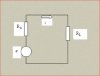
Below is a simple diagram the give an indication of the output impedance of an amplifier.

Capture19.JPG

E is the voltage source (power supply of the amplifier and we are considering to be a perfect voltage source which in the real world it is not). Ro is the amplifier output impedance. RL is the speaker. i is the current flowing to and through the speaker. Ro will in general be a fraction of an Ohm for a solid state amplifier (there are exceptions).

Ro is in series with the voltage source and the speaker.

So in a real sense, in terms of our hobby an amplifier does have an output impedance.

In the normal real world all sources of current (caused to flow by difference in electrical potential or voltage) have a DC resistance or and AC impedance.
 
The internal impedance of an amplifier is the impedance of the circuit that drives the speakers. It is one of the numbers that is used to calculate damping factor.

In would be more accurate to call it the output source impedance. This is the way things RF are specified. This is audio and we are not talking about transmission lines and matched impedance in terms of maxim power transfer.

We know that maximum power transfer occurs when the source and load impedances are equal. In general matched load and source impedances are not used in terms of audio amplifiers (there are exceptions).

The output impedance of an amplifier is what the speaker sees looking back at the amplifier (not to discount speaker wire and connections). .

In terms of our hobby and those trying to understand this, the output impedance of a power amplifier can be viewed as the same type of thing as the output impedance of a phono cartridge or and audio preamp, all though the actual numerical value is different.

Below is a simple diagram the give an indication of the output impedance of an amplifier.

View attachment 821887

E is the voltage source (power supply of the amplifier and we are considering to be a perfect voltage source which in the real world it is not). Ro is the amplifier output impedance. RL is the speaker. i is the current flowing to and through the speaker. Ro will in general be a fraction of an Ohm for a solid state amplifier (there are exceptions).

Ro is in series with the voltage source and the speaker.

So in a real sense, in terms of our hobby an amplifier does have an output impedance.

In the normal real world all sources of current (caused to flow by voltage) have a DC resistance or and AC impedance.
 
Yep, and although the amp is suppose to talk to the speaker not the other way around its still does. Under powering a large speaker can cause the amp to loose control. Don't want your speakers to talk back to the amp load impedance. woofers will sometimes flutter without making a sound.
The internal impedance of an amplifier is the impedance of the circuit that drives the speakers. It is one of the numbers that is used to calculate damping factor.

In would be more accurate to call it the output source impedance. This is the way things RF are specified. This is audio and we are not talking about transmission lines and matched impedance in terms of maxim power transfer.

We know that maximum power transfer occurs when the source and load impedances are equal. In general matched load and source impedances are not used in terms of audio amplifiers (there are exceptions).

The output impedance of an amplifier is what the speaker sees looking back at the amplifier (not to discount speaker wire and connections). .

In terms of our hobby and those trying to understand this, the output impedance of a power amplifier can be viewed as the same type of thing as the output impedance of a phono cartridge or and audio preamp, all though the actual numerical value is different.

Below is a simple diagram the give an indication of the output impedance of an amplifier.

View attachment 821887

E is the voltage source (power supply of the amplifier and we are considering to be a perfect voltage source which in the real world it is not). Ro is the amplifier output impedance. RL is the speaker. i is the current flowing to and through the speaker. Ro will in general be a fraction of an Ohm for a solid state amplifier (there are exceptions).

Ro is in series with the voltage source and the speaker.

So in a real sense, in terms of our hobby an amplifier does have an output impedance.

In the normal real world all sources of current (caused to flow by voltage) have a DC resistance or and AC impedance.
its all ac current if you have dc to your speakers I hope they are fuse properly. any dc will offset the cone from true center at rest and dc can blow a speaker and never make a sound. put a 9vdc battery to a woofer and it will push or pull no sound. also you cant move a voice coil pass a magnet with generating current which is seen by the amp. all the research you talk about in my hobbie would hinder the time needed to get the hifi sound that's my hobby. rf is also just sound beyond our hearing range and swr's exist at all frequencies. aluminum wire resists dc but not ac and is more conductive that gold or copper

.
 
The internal impedance of an amplifier is the impedance of the circuit that drives the speakers. It is one of the numbers that is used to calculate damping factor.

In would be more accurate to call it the output source impedance. This is the way things RF are specified. This is audio and we are not talking about transmission lines and matched impedance in terms of maxim power transfer.

We know that maximum power transfer occurs when the source and load impedances are equal. In general matched load and source impedances are not used in terms of audio amplifiers and our hobby (there are exceptions).

The output impedance of an amplifier is what the speaker sees looking back at the amplifier (not to discount speaker wire and connections). .

In terms of our hobby and those trying to understand this, the output impedance of a power amplifier can be viewed as the same type of thing as the output impedance of a phono cartridge or and audio preamp, all though the actual numerical value is different.

Below is a simple diagram the give an indication of the output impedance of an amplifier.

View attachment 821887

E is the voltage source (power supply of the amplifier and we are considering to be a perfect voltage source which in the real world it is not). Ro is the amplifier output impedance. RL is the speaker. i is the current flowing to and through the speaker. Ro will in general be a fraction of an Ohm for a solid state amplifier (there are exceptions).

Ro is in series with the voltage source and the speaker.

So in a real sense, in terms of our hobby an amplifier does have an output impedance.

In the normal real world all sources of current (caused to flow by difference in electrical potential or voltage) have a DC resistance or and AC impedance.
max power is when the output no longer matches the input called clipping or distortion. as a hobby that's plenty technical not hear to measure brain pans just think if someone can afford it throw the crossovers to the curb and bi-amp or send the freq's to the transducer its meant for and over lap them to what sounds best according to the listener (let the reader use discernment)
 
"max power is when the output no longer matches the input called clipping or distortion"

You are talking about something different.


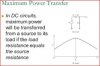
This is what I am talking about. This is basic power transfer theory.

Capture50.JPG


And it is the same in a DC circuit with only resistance.

Capture35.JPG

Of course when an amplifier is driven to clipping, distortion will increase. But the above is something different.
 
I have a Crown XLi 800 amp, my 8 ohm speakers 2 speakers on each channel they are not big speakers but ok size and they read 6.5 ohms each and when connected together the 2 speakers connected is 3.5 ohms and my amp is rated to go down to 4 ohms is this causing any damage? Sometimes I like to play loud in my house I bought the amp new in july 2016 and wanted to know does this cause any damage to my amp?
Sand amps aka transistor amps might be damaged by driving too low impedance. You should
connect your speakers in series instead!
 
"max power is when the output no longer matches the input called clipping or distortion"

You are talking about something different.


This is what I am talking about. This is basic power transfer theory.

View attachment 821929


And it is the same in a DC circuit with only resistance.

View attachment 821930

Of course when an amplifier is driven to clipping, distortion will increase. But the above is something different.
You can distort an amp all you want but I won't not beyond .005% and s/n 110 to 120 db . And amp put out a/c current which is the same as alternating dc just at different freq no getting around that. I am not limited to what your talking about, but an amp that is stable at 4 ohms shouldn't have trouble with 3 just don't overheat it. Most high end amp will simply shut down when over heated. not sure what you're trying to do. There isn't supposed to be any d/c current reaching the speaker in sound. Theory is just that I have 40 yrs of reproducing music, had an amp that had 20,000 dampening factor and JBL 4435 uses aluminum wire in the crossover to speakers because they resist dc current and can handle 2k/per channel at 8 ohms, is also a very efficient unit . The red and black terminals are for polarity only.
 
Resistance to DC is the resistance of a given length of wire of certain gauge (how much wire is wrapped around the voice coil) plus the resistance of other junk in the crossover. It is measured with DC current.

Impedance (to an alternating electrical signal) includes reactions of the magnetic fields of the voice coil inside fixed magnet(s) at a given frequency.

Amp impedance denotes how little resistance/impedance the amp can tolerate before it is close to being a short circuit whereas speaker impedance describes the lowest point at a given frequency before the current can do damage.
You'll be ok unless your using a light inexpensive amp. What is it? Most hi end stuff like Crown are 1 ohm stable.
 
You can distort an amp all you want but I won't not beyond .005% and s/n 110 to 120 db

I am not sure what this has to do with my post. How is related to the maximum power transfer theorem?

And why would you want to limit the signal to noise ratio?

There isn't supposed to be any d/c current reaching the speaker in sound.

If you read my post you will see that is not what I said. I was and am talking about the theorem of matched impedance/resistance for maximum power transfer from the source to the load. This is basic theory.

its all ac current if you have dc to your speakers I hope they are fuse properly

Read my posts 27 and 31 to see what I am talking about. It is basic theory.


Again, I did not, as you indicate, say anything about DC going to a speaker.

You seem have missed that I was talking about the theorem of maximum power transfer and put my comments into a different context.
 
only a problem if you get stupid with the volume, lower ohms = more current flow which = the more heat Most amplifiers have some error room
 
The Crown amp will handle nearly anything you can throw at it! You can easily monitor how hard the amp is working by touching it to see if its getting hot. If it stays warm only then you are fine.
 
Back
Top Bottom