• The move to the new server is done. There are some software and database maintenance updates in process. This has us passing the hat around to help out. We appreciate any donations. Seriously, even a dollar helps. The payment page may be found here - https://www.audiokarma.org/support.html

Running Infinity RS 6b speakers on an 8 ohm receiver/amplifier

wolfiesblues

New Member
I recently bought a pair of Infinity RS 6b speakers rated 4-to-8 ohm (up to 100 W) for $15 at a thrift store. After I refoam the woofer on one of them, I should be good to go. However, I'm in doubt because I wouldn't normally connect an 4 ohm speaker to an 8 ohm amplifier or receiver. Any advice is appreciated. Thanks.
 
Register to hide this ad
From what I read you should not have an issue with either amp. Great score! Let us know how they sound. Post pics.
 
Some info I found

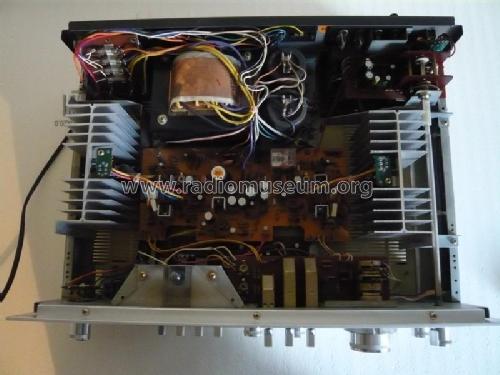
Akai 2600

Power (RMS) 2 X 60w/8 ohms
Power Band: 20Hz to 20Khz
Frequency response: 7Hz/40kHz
Harmonic at rated output: 0,1%
Intermodulation Distortion: 0,1%
Damping Factor: 60 - 8 ohms
Input Sensitivity Phono 1: 3 mV
Input Sensitivity Phono 2: 3 mV
Input Sensitivity Tuner: 150 mV
Input Sensitivity Aux: 150 mV
Input Sensitivity Tape In: 150 mV
Signal/Noise Ratio Phono: 75 dB
Signal/Noise Ratio Tuner: 95 dB
Signal/Noise Ratio Tape In: 95 dB
Signal/Noise Ratio Aux: 95 dB
Output Impedance: 4 to 16 ohms
Dimensions: 440 x 331 x 141 mm
Weight: 10 Kg


stereo_amplifier_am_2600_1810192.jpg
 
Last edited:
Look on the speaker outputs on the amps. They will state the ohms range.
 
Last edited:
Kenwood goes down to 4 ohms .

Specifications
Tuning range: FM, MW

Power output: 40 watts per channel into 8Ω (stereo)

Frequency response: 20Hz to 50kHz

Total harmonic distortion: 0.5%

Damping factor: 40

Input sensitivity: 2.5mV (MM), 150mV (line)

Signal to noise ratio: 70dB (MM), 90dB (line)

Speaker load impedance: 4Ω to 16Ω

Dimensions: 500 x 140 x 334mm

Weight: 11.2kg

Year: 1977
 
Some info I found

Power (RMS) 2 X 60w/8 ohms
Power Band: 20Hz to 20Khz
Frequency response: 7Hz/40kHz
Harmonic at rated output: 0,1%
Intermodulation Distortion: 0,1%
Damping Factor: 60 - 8 ohms
Input Sensitivity Phono 1: 3 mV
Input Sensitivity Phono 2: 3 mV
Input Sensitivity Tuner: 150 mV
Input Sensitivity Aux: 150 mV
Input Sensitivity Tape In: 150 mV
Signal/Noise Ratio Phono: 75 dB
Signal/Noise Ratio Tuner: 95 dB
Signal/Noise Ratio Tape In: 95 dB
Signal/Noise Ratio Aux: 95 dB
Output Impedance: 4 to 16 ohms
Dimensions: 440 x 331 x 141 mm
Weight: 10 Kg


stereo_amplifier_am_2600_1810192.jpg
That's the Akai 2600 amplifier, right? It's a nice powerful amp.
 
Look on the speaker outputs on the amps. They will state the ohms range.
I have. My concern is whether I would damage the speakers (or the amplifier) since the amp's minimal rated impedance is 8 ohms but the Infinity RS 6b speakers say 4 to 8 ohms. I suppose the speakers will adjust to what the amp is driving, correct?
 
I have. My concern is whether I would damage the speakers (or the amplifier) since the amp's minimal rated impedance is 8 ohms but the Infinity RS 6b speakers say 4 to 8 ohms. I suppose the speakers will adjust to what the amp is driving, correct?
From specs posted by @NH-MAN and @DavidZak, looks like both amps are rated for nominal 4 ohm speakers, so you should be okay with either one. Try them both and see which one sounds better to you.
 
I have. My concern is whether I would damage the speakers (or the amplifier) since the amp's minimal rated impedance is 8 ohms


No, I am pretty sure that the Akai AM-2600 and the Kenwood KR-5600 are rated for use with speakers from 4 to 16 ohms when using one pair of speakers at a time (if using 2 pairs at a time, the minimum may be 8 ohms, but that does not matter if you are using only one pair). Look on the back of each unit near where the speaker wires connect, and see what it says the minimum impedance should be for using one pair of speakers and for using two pairs of speakers. You could also search for owner's manuals, which may also have this information.

Akai AM-2600:

https://www.hifiengine.com/manual_library/akai/am-2600.shtml

Here on page 5 we see that the Akai AM-2600 is rated for 4 ohm speakers when using one pair, and 8 ohms when using two pairs of speakers:

https://www.nodevice.com/user-manuals/amplifiers/akai/am-2600/1417318?page=5#manual-viewer


Kenwood KR-5600:

https://www.hifiengine.com/manual_library/kenwood/kr-5600.shtml

http://akdatabase.org/AKview/albums/userpics/10007/Kenwood KR-4600-5600 Service Manual.pdf

Looking at the second manual, I see that the KR-5600 is rated for 4 ohm speakers also.

So, they are both rated for use with 4 ohm speakers.


but the Infinity RS 6b speakers say 4 to 8 ohms. I suppose the speakers will adjust to what the amp is driving, correct?


No, the speaker will not adjust its impedance. Its impedance is whatever it is. Infinity has not been good about rating their speakers, and I would recommend treating them as 4 ohms and ignore the "4 to 8 ohms nominal" nonsense. They might even be more properly rated as something lower (as Infinity basically lied about this with some of their speakers), but you will probably be okay regarding them as 4 ohm speakers.

If you want a longer discussion of impedance, the impedance of a speaker varies with frequency, and the "nominal" impedance is supposed to be what you can pretend the speaker is for matching with an amplifier. Evidently, it has no legal meaning, given how some manufacturers put numbers on their speakers that do not fit reality, but engineers mean by nominal impedance:

A speaker's nominal impedance is defined as:

6b6eca5050c893680ad56b17cf8b2cc9837ae440

https://en.wikipedia.org/wiki/Electrical_characteristics_of_dynamic_loudspeakers#Nominal_impedance

That formula means that the nominal impedance of a speaker is equal to 1.15 times the minimum impedance. However, many manufacturers do not follow reality and just put a number on the back of the speaker for marketing purposes. Obviously, following that formula, one will never end up with "4 to 8 ohms nominally", as the nominal impedance will be a specific number.
 
Those speakers might be one of the easiest to run Infinitys ever made
I understand the OP's concern but it is misplaced because of all the BS hype surrounding Infinity speakers and amplification.
Good grief:)
 
Those speakers might be one of the easiest to run Infinitys ever made
I understand the OP's concern but it is misplaced because of all the BS hype surrounding Infinity speakers and amplification.
Good grief:)
That and people think ratings are absolutes.
Like "can I use a 100 watt receiver with my 50 watt speakers".
Most numbers of that type are suggestions rather than absolutes which must be obeyed.
 
I have. My concern is whether I would damage the speakers (or the amplifier) since the amp's minimal rated impedance is 8 ohms but the Infinity RS 6b speakers say 4 to 8 ohms. I suppose the speakers will adjust to what the amp is driving, correct?

To be clear, there is no "adjustment" on the part of the speakers. Amplifiers deliver varying amounts of current, depending upon the load (the impedance of the speakers) with which they are being presented at any point in time. Speaker impedance varies constantly, because impedance is variable with frequency of the signal..and of course, a music signal is highly variable.

Speaker impedance ratings are "nominal"; that is, based on some sort of average. Standards for such ratings have varied over the years, and many speaker manufacturers did not (do not) adhere to them. The current IEC standard says that a speaker's impedance rating should be such that it does not drop below 80% of said rating at any point on its impedance curve. In other words, an 8 ohm speaker should never drop lower than 6.4 ohms, a 6 ohm speaker should not drop below 4.8 ohms, etc.

An amplifier's ability to deliver current depends upon its power supply, output transistors (rating and quantity) and corresponding heat sinking. Amplifiers are rated to be able to handle various loads (most commonly, 8 and 4 ohms). Presenting a load beyond the amplifier's capabilities will cause excessive heating of the output transistors and stress on the power supply, as well as reduced linearity in output (with a corresponding reduction in sound quality). If demand exceeds capability for an extended period, damage can/will ensue.

Simply put, the amp will deliver the required current, or die trying. Ideally, it will do so with minimal voltage sag. The greater the sag, the more distorted the signal. In the real world, it is difficult (expensive) to build the kind of power supply that can maintain voltage into low impedances.

As was stated above, both amps appear to be rated to handle/withstand a 4 ohm load (or stated another way, both amps can deliver the current demanded by a 4 ohm load without damage).
 
Last edited:
To be clear, there is no "adjustment" on the part of the speakers. Amplifiers deliver varying amounts of current, depending upon the load (the impedance of the speakers) with which they are being presented at any point in time. Speaker impedance varies constantly, because impedance is variable with frequency of the signal..and of course, a music signal is highly variable.

Speaker impedance ratings are "nominal"; that is, based on some sort of average. Standards for such ratings have varied over the years, and many speaker manufacturers did not (do not) adhere to them. The current IEC standard says that a speaker's impedance rating should be such that it does not drop below 80% of said rating at any point on its impedance curve. In other words, an 8 ohm speaker should never drop lower than 6.4 ohms, a 6 ohm speaker should not drop below 4.8 ohms, etc.

An amplifier's ability to deliver current depends upon its power supply, output transistors (rating and quantity) and corresponding heat sinking. Amplifiers are rated to be able to handle various loads (most commonly, 8 and 4 ohms). Presenting a load beyond the amplifier's capabilities will cause excessive heating of the output transistors and stress on the power supply, as well as reduced linearity in output (with a corresponding reduction in sound quality). If demand exceeds capability for an extended period, damage can/will ensue.

As was stated above, both amps appear to be rated to handle/withstand a 4 ohm load (or stated another way, both amps can deliver the current demanded by a 4 ohm load without damage).

Thank you, that's a comprehensive explanation for a nontech audiophile like myself.
 
Back
Top Bottom