
• The move to the new server is done. There are some software and database maintenance updates in process. This has us passing the hat around to help out. We appreciate any donations. Seriously, even a dollar helps. The payment page may be found here - https://www.audiokarma.org/support.html

Running too hot for an EL34?

StepheK

AK Subscriber
Subscriber
I wanted to try some EL34 output tubes in my KT88 amp (running as UL/OT screen tap) but I think they are running too hot checking the voltages. The EL34 tubes caused the B+ to go up a bit, and while I don't see any red plate after playing for about an hour, not sure they will last long running this hard.

They really sound great though lol. The EL34 toned down the highs that are a touch too bright with the KT88, but I think the total plate dissipation at these voltages might be past what an EL34 can live at, even though the ma spec seems OK. Do you think an EL34 can live here? If it matters, these are JJ tubes.

EL34
Plate voltage 465v
Plate to Cathode voltage 430v
35V across a 500ohm cathode resistor = 70ma

KT88
Plate voltage 452
Plate to Cathode voltage 411
41V across a 500ohm cathode resistor = 82ma
 
Register to hide this ad
Those numbers all look good to me.
A tube with less power dissipation will pull less current, which will cause an unregulated supplys rail voltage to climb.
It found a new "stasis" at the 70 miliamp point, and the rail voltage went up a corresponding ammount.
As is to be expected.
Subtract out your 35 volts of cathode bias and you actually have 430 on the plate, which is right in the sweet zone for that particular tube.

My mentor describes class A tube power amps, in automotive terms: it's like jamming a screwdriver in your carburetor to hold it wide open, and driving with your brakes.

Its absolutely the hardest mode you can subject a power valve to, so it's sort of incompatible with getting long life from a tube. Wide open throttle all the time.
Thankfully we dont have to pour gasoline in our tube amps, nor register, smog, or insure them.
Rock it.
 
Last edited:
Comes out to 30.5w plate+screen dissipation which is within limits but just. Datasheet allows 25 on the plate and 8 on the screen, so 33w total. At least thats per the Phillips datasheet. Most of the other sheets just clone those numbers, but how well the sheets reflect reality I do not know.
 
I'm not sure I would run JJ EL34's like that. I lost a JJ KT-77 in an amplifier designed to run them and never push that amplifier very hard. Maybe try 6550's instead of the KT-88's?
 
Last edited:
I'm not sure I would run JJ KT-77's like that. I lost one in an amplifier designed to run them and never push that amplifier very hard. Maybe try 6550's instead of the KT-88's?

Do 6550 tubes sound different than KT88s?

These JJ EL34's have a richness that I'm not hearing with the KT88's in this amp. What I feel like I'm running into rolling driver tubes in this amp with the 6EJ7/KT88 is: driver tubes that have a lot of bass/mid but weak highs and lack detail sound OK, but when I finally found a driver tube with nice detail (an old soviet ear military tube), these "high mids" overpower the EQ and it sounds harsh to my ears. With these EL34s it has the detail using these driver tubes (the aprox 6k+ range of tones) without being harsh, and really pushes the mid and low end well.

My ears aren't great, at 60 years old, years of loud clubs and time spent car racing in my youth have taken their toll :) My ears are totally dead to anything over 10K and start to get weak over 5K, so I know some of this is tailoring a sound to my bad hearing.
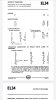
I did try using a 12V bucking transformer this morning (from 122v line down to 110v), that brought the voltages down and the amp still sounds really good. I feel like at these voltages I'm not on the ragged edge of melting these power tubes, and probably a 6V buck would bring the voltages out of the ragged edge zone.

I still have a few more driver tubes to try and am thinking maybe these 6EJ7 type drivers just aren't the sound I am looking for, and might rewire the amp to try a cascoded 6CG7/6SN7 frontend to see how that sounds with the KT88's. Or maybe just wire up a 6V buck and enjoy what I have stumbled across :)
 
I have tried EH 6550 and EH KT88 in the same amp, haven't really noticed a lot of sound difference between them. I don't know if that holds true for other brands though.

Both of those are a beam tetrode where the EL34 is a real pentode. That might be the sonic difference. Similar to the difference between a 6CA7 and an EL34. Spec-wise they interchange but the construction is completely different, and IME they don't sound the same either.
 
I have tried EH 6550 and EH KT88 in the same amp, haven't really noticed a lot of sound difference between them. I don't know if that holds true for other brands though.

Both of those are a beam tetrode where the EL34 is a real pentode. That might be the sonic difference. Similar to the difference between a 6CA7 and an EL34. Spec-wise they interchange but the construction is completely different, and IME they don't sound the same either.
I almost tried some 6550's instead of KT-88's.
I have read a few posts where some people thought the 6550 has a warmer tone. Some seem to think the EH-6CA7's sound a bit like the 6550's. But that all probably depends on the Amp design itself. I definitely prefer the 6CA7's or the EL34's tbough.
 
I definitely prefer the 6CA7's or the EL34's tbough.

One of my amps prefers the EL34, another prefers the 6CA7. They're completely different in almost every way so its not a big surprise to me that they like different tubes.
 
Screenshot_20210205-133459_Drive.jpg

I've got no personal experience running a EL34 single ended. Given the percentage distortion quoted for that mode of operation, I guarantee that tubes of different construction will sound discernibly different in that atmosphere. Occasionally you'll find data sheets with missing, omitted or erroneous information. This is not a case of a missing decimal point. Further on in the document there are conditions listed whereby a person could get that figure down under 1%. Under 1% distortion at rated power is what I tend to shoot for and my ears have always agreed.
Granted there are a variety if factors at play here. But at full tilt you get to hear 10% "personality" as in life you'll find personalities you enjoy, and others who are abrasive.

Hopefully I dont fall into the latter category.
 
Its safe to run in that mode and if you enjoy it, you're doing it right!

On the topic of single ended amplifiers, I heard a single ended triode amplifier which I actually loved at the last Burning Amp festival. It made something like 15 or 20 watts with transmitting triodes and had heaps of feedback, both positive(local) and negative (global) with the ability to tweak them and get a negative output impedance. The designer described it as "servo control"
of the low frequency reproducer.
It sounded every bit as good as an equally powerful push pull topology.
I dont have anything against the idea, per say.
It's implementation as a high power, low distortion amplifier just requires more work, and more (expensive, non-scroungeable) parts.
They can sound really really good, make good specs, and maintain control of low low bass.
Someday, once my design skills (not to mention my checking account balance) are to the level where I can build one properly, I'll probably build myself a pair of SET monoblocks.
 
It's implementation as a high power, low distortion amplifier just requires more work...

I guess that's why I don't mind, I need very little power to satisfy me. I'm not even using 1/2 of the watts one of the single digit amps produce.
 
Back
Top Bottom