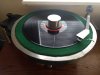
Hi all, am finally getting to this project, a very cool Russco Pro Studio-B table with a Micro-Trak 303 tonearm which I am also looking to use. The Russco has a Bodine NYC-12A motor, is there available instructions to restore or clean one of these? Is there any guidelines for restoring the Micro-Trak, this one is pretty dirty and seems to have some nicotine staining and such. Thanks!

You are using an out of date browser. It may not display this or other websites correctly.
You should upgrade or use an alternative browser.
You should upgrade or use an alternative browser.
Russco Pro Studio-B rebuild starting up with questions...
- Thread starter gkargreen
- Start date
Register to hide this ad

BillWojo
Addicted Member
https://audiokarma.org/forums/index.php?threads/russco-studio-pro-plinth-build.966246/
Lots of useful information in this plinth build thread as Andy, @adnick, and I rebuild our turntables and he does his incredible woodworking magic.
In the end I used a Syntec S-220 tonearm with a Denon DL-103 cartridge. Period correct and sounds awesome.
BillWojo
Lots of useful information in this plinth build thread as Andy, @adnick, and I rebuild our turntables and he does his incredible woodworking magic.
In the end I used a Syntec S-220 tonearm with a Denon DL-103 cartridge. Period correct and sounds awesome.
BillWojo
T
Toczo, did you do any rebuilding of the arm, like take it apart and clean it? Mine is pretty dirty and so far, I have one of the bearing caps on one side off so I can clean the entire wooden arm. Looks clean in the bearing cavity, which looks to be a jeweled needle bearing, does it require any lubricant? Thanks!
What I can say is that the MicroTrak will work well if you put a heavy damping fluid in the spindle cavity. I used 500,000 and it really improved the sound on my 16" Rek-O-Kut. It will track a medium compliance cartridge at 2-2.5 grams really well.
Toczo, did you do any rebuilding of the arm, like take it apart and clean it? Mine is pretty dirty and so far, I have one of the bearing caps on one side off so I can clean the entire wooden arm. Looks clean in the bearing cavity, which looks to be a jeweled needle bearing, does it require any lubricant? Thanks!
Toczo, forgot to ask, did you open/take apart the spindle cavity and clean it before adding new damping fluid? Was that achieved by removing the c-clip and pulling the interior piston out? And finally, how (I assume the hole on the side) and how much damping fluid did you add? Thanks!

adnick
Addicted Member
https://audiokarma.org/forums/index.php?threads/russco-studio-pro-plinth-build.966246/
Lots of useful information in this plinth build thread as Andy, @adnick, and I rebuild our turntables and he does his incredible woodworking magic.
In the end I used a Syntec S-220 tonearm with a Denon DL-103 cartridge. Period correct and sounds awesome.
BillWojo
Unfortunately that thread was supposed to be just a plinth build for the Russco Studio Pro, but Bill sent me a working model to use for fitting the new plinth. Then, somehow it turned into my own build&refurbishing thread

Anyway the end result(s) was a lot of information regarding testing and parts replacement buried throughout the pages, so one has to read the whole thing to find a few good points

As I’ve stated before, now the Studio Pro is one of my favorite tables, so all I can say is , thanks Bill

VR
Andy
It has been a couple of years since I've messed with the big micro-trak. Believe it or not I've had it since 1978 or something. My buddy gave it to me. He had epoxied the head shell on since it got loose on him. I never used the weight shims that are to facilitate quick head shell changes. I did actually disassemble the bearings. I think the short horizontal axle presses into the wood. As for the spindle, yes disassemble it to clean it out. Maybe you press the brass bottom out, I can't really remember. I filled mine while the arm was detached and put in enough until I felt a very strong resistance to turning. That's what worked for me.
KentTeffeteller
Gimpus Stereophilus!
Hi all, am finally getting to this project, a very cool Russco Pro Studio-B table with a Micro-Trak 303 tonearm which I am also looking to use. The Russco has a Bodine NYC-12A motor, is there available instructions to restore or clean one of these? Is there any guidelines for restoring the Micro-Trak, this one is pretty dirty and seems to have some nicotine staining and such. Thanks!
Motor needs to be serviced other than lubrication by a motor shop who is experienced in servicing Bodine industrial motors. Not a DIY friendly motor, or broadcast engineer friendly motor to service otherwise. Always had to outsource servicing these. Usually a $300 fee to rebuild one.
BillWojo
Addicted Member
Not true Kent, these Bodine motors come apart easy. Now if the bearings are shot or the windings are burnt out than that's a different story. You can see the pictures I posted, it's pretty straight forward.
@gkargreen, the platter lifts straight up, make sure the shifter is in the neutral position first. The spindle shaft is part of the platter, do not try and remove it. The lower bearing housing can be removed by taking out the 4 screws on the top flange. Anytime this is removed, the idler wheel adjustment screws on the shifter will need to be readjusted. No big deal, just wanted you to be aware of that.
BillWojo
@gkargreen, the platter lifts straight up, make sure the shifter is in the neutral position first. The spindle shaft is part of the platter, do not try and remove it. The lower bearing housing can be removed by taking out the 4 screws on the top flange. Anytime this is removed, the idler wheel adjustment screws on the shifter will need to be readjusted. No big deal, just wanted you to be aware of that.
BillWojo
Not true Kent, these Bodine motors come apart easy. Now if the bearings are shot or the windings are burnt out than that's a different story. You can see the pictures I posted, it's pretty straight forward.
@gkargreen, the platter lifts straight up, make sure the shifter is in the neutral position first. The spindle shaft is part of the platter, do not try and remove it. The lower bearing housing can be removed by taking out the 4 screws on the top flange. Anytime this is removed, the idler wheel adjustment screws on the shifter will need to be readjusted. No big deal, just wanted you to be aware of that.
BillWojo
Thanks, Bill. BTW, I read that I could use a Delrin disc and glue it to the bearing and that would work for the short term until I fashion one like yours. I ordered some thick (2mm) guitar pics and was planning on using one of them. Should I glue that Delrin to the spindle well bearing , it has the flat surface? Any suggestions for an adhesive? Thanks.
BillWojo
Addicted Member
Only problem with using ceramic bearings is that wear will always happen in the softer material. I forget what the bearing pad is made of in the Bodine motor, is it replaceable?
Using a ceramic bearing was fashionable for awhile on the older Garrard 301 turntables until it was discovered that the spindle shaft was irreversibly being damaged. Much better to have the chrome ball eventually wear.
If your ball on the motor shaft is showing wear, just replace it with the same. The main spindle bearing is where you will get the most improvement. I use a Delrin pad against the steel ball on the end of the spindle shaft. Delrin provides 2 benefits, it is a very low friction material and it provides a high impedance path for transfer of vibration, goes a long way to getting rid of noise.
BillWojo
Using a ceramic bearing was fashionable for awhile on the older Garrard 301 turntables until it was discovered that the spindle shaft was irreversibly being damaged. Much better to have the chrome ball eventually wear.
If your ball on the motor shaft is showing wear, just replace it with the same. The main spindle bearing is where you will get the most improvement. I use a Delrin pad against the steel ball on the end of the spindle shaft. Delrin provides 2 benefits, it is a very low friction material and it provides a high impedance path for transfer of vibration, goes a long way to getting rid of noise.
BillWojo
KentTeffeteller
Gimpus Stereophilus!
Not true Kent, these Bodine motors come apart easy. Now if the bearings are shot or the windings are burnt out than that's a different story. You can see the pictures I posted, it's pretty straight forward.
@gkargreen, the platter lifts straight up, make sure the shifter is in the neutral position first. The spindle shaft is part of the platter, do not try and remove it. The lower bearing housing can be removed by taking out the 4 screws on the top flange. Anytime this is removed, the idler wheel adjustment screws on the shifter will need to be readjusted. No big deal, just wanted you to be aware of that.
BillWojo
I am just stating what the manual states. Minor work like you state I have done (but was also taught how by the motor shop who rebuilds ours as they stay busy and to keep their workload lighter). But also some makes of broadcast turntable used a special jig to fit the motor pulley (factory service, not repairable in field), QRK being a noted example.
BillWojo
Addicted Member
@KentTeffeteller, I have 2 versions of the Bodine motor sitting here, one has a shorter shaft with a pulley fitted to the end. That would require a dial test indicator to check run out if it was removed and remounted. No big deal for a machinist like myself.
The other one is built like the newer Nidec Japanese motors Russco used later on in that the pulley diameters are machined into the shaft so the motor end bell can be slid off the shaft during disassembly with out disturbing anything.
The ones without the heavy pulley mounted but instead machined into the shaft seem to vibrate slightly less. Total indicated run out was less than 0.0005 on the pulley surfaces on that Bodine with the separate pulley.
Here is a picture of the rotor assembly with the integral pulley machined into the shaft from a Bodine motor.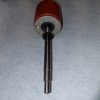
BillWojo
The other one is built like the newer Nidec Japanese motors Russco used later on in that the pulley diameters are machined into the shaft so the motor end bell can be slid off the shaft during disassembly with out disturbing anything.
The ones without the heavy pulley mounted but instead machined into the shaft seem to vibrate slightly less. Total indicated run out was less than 0.0005 on the pulley surfaces on that Bodine with the separate pulley.
Here is a picture of the rotor assembly with the integral pulley machined into the shaft from a Bodine motor.
BillWojo
KentTeffeteller
Gimpus Stereophilus!
Another note: I have actually found the Nidec motors the quietest running of the offerings in QRK and Russco turntables. Those in good condition performed very well.
KentTeffeteller
Gimpus Stereophilus!
@KentTeffeteller, I have 2 versions of the Bodine motor sitting here, one has a shorter shaft with a pulley fitted to the end. That would require a dial test indicator to check run out if it was removed and remounted. No big deal for a machinist like myself.
The other one is built like the newer Nidec Japanese motors Russco used later on in that the pulley diameters are machined into the shaft so the motor end bell can be slid off the shaft during disassembly with out disturbing anything.
The ones without the heavy pulley mounted but instead machined into the shaft seem to vibrate slightly less. Total indicated run out was less than 0.0005 on the pulley surfaces on that Bodine with the separate pulley.
Here is a picture of the rotor assembly with the integral pulley machined into the shaft from a Bodine motor.View attachment 2591650
BillWojo
Your machinist background is a major asset in terms of know how in keeping these classics in top mechanical condition. I know one broadcast engineer in my life who spent a few years as a machinist. He knew more about motor repair than several motor shops I've known. High respect to you on this skill set. It's very useful to have. You can repair these motors better than most I've known or do the mechanical work on the motor to higher standard.

rockdoc
Active Member
Hi Bill, in the Vinylengine page, it says "The Syntec S-220 was designed for broadcast applications using high compliance cartridges." Might be a mistake on their site..... Does it work well for you with the DL103? And, how would you say it compares to the AT 1503 and ATP-12 arms?https://audiokarma.org/forums/index.php?threads/russco-studio-pro-plinth-build.966246/
Lots of useful information in this plinth build thread as Andy, @adnick, and I rebuild our turntables and he does his incredible woodworking magic.
In the end I used a Syntec S-220 tonearm with a Denon DL-103 cartridge. Period correct and sounds awesome.
BillWojo
Steve T
Last edited: