• The move to the new server is done. There are some software and database maintenance updates in process. This has us passing the hat around to help out. We appreciate any donations. Seriously, even a dollar helps. The payment page may be found here - https://www.audiokarma.org/support.html

SAE MARK XXXIB needs some help

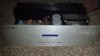
I acquired a SAE MARK 31B PA today under the assumption that it had some damage as it was being sold AS IS and "untested" for very cheap. It came from a "garage sale warehouse" so unfortunately I had no way to speak with the seller beforehand or run any tests without buying it first. I figured I would take a chance on it since the price was right but sadly it does seem to be in need of repair.

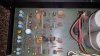
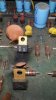
I did a quick DC offset test to see how it looked before I hooked it up to anything and found a reasonable 30mv on the right channel but a scary 3.6v on the left channel. After popping the top I found the mainboard to have some burn marks near a completely burnt out component. I have very little electronic repair experience and a DC offset test is about the extent of my knowledge in testing for issues, but I will be visiting a friend next weekend that does a lot of amp repair and plan on bringing it with me. I have taken a few pictures in hopes that someone can recommend any parts I may need or any additional tests I should do before I head to my friend's house across state next weekend. I'm hoping to get out ahead of this one so he will have a better chance of getting it fixed in the limited time we will have.

Any advice y'all can offer would be greatly appreciated!
 

Attachments

  • 20180728_192846.jpg
    20180728_192846.jpg
    68 KB · Views: 155
  • 20180728_192905.jpg
    20180728_192905.jpg
    76.1 KB · Views: 161
  • 20180728_192917.jpg
    20180728_192917.jpg
    79.7 KB · Views: 153
  • 20180728_193545.jpg
    20180728_193545.jpg
    44.8 KB · Views: 163
  • 20180728_194121.jpg
    20180728_194121.jpg
    38.3 KB · Views: 160
Register to hide this ad
If you are visiting a friend who does amplifier repairs, best you can do is some homework to make his work easier, try to find (or buy online) and print the schematic. That's all your friend will need to have it working again.

Search the web for SAE MARK XXXIB SERVICE MANUAL or SCHEMATIC, or replace the XXXI with "31".

Free schematics are usually found at hifi-engine (no affiliation) and "elektrotanya" (no affiliation), and the AudioKarma database among other sites. Paid printed copies can be found at "stereomanuals" and other similar sites (no affiliation), and for sure there are some SAE collectors or groups on the net that can help tracing the schematic.
 
Looks like one of the 10 Ohm decoupling resistors, R17/18 let the smoke out, probably a shorted part somewhere in the input or VAS stages. Should be no big deal to repair. Hopefully the black is just soot and not fried FR4 board material.

Craig
 
Fried board material isn't too hard to deal with. I've repaired boards with holes burned into them.
 
Minor alert - if you change outputs, the outputs are Darlington. Not regular as in the schematic, but the parts list is correct with description as Darlington. (11-0064 and 11-0070 or SAE 103 and SAE 204)
 
I just got a black face 31B in the shop for rebuild/update. I'm going to use 2SC4793 and 2SA1837 to replace the old oddball TO-202 transistors in the VAS and VI limiter locations. The rest will be the usual Bongiorno upgrades.

Craig
 
Thank you everyone for all your assistance! Sorry it took me so long to get back to this thread but all your help is much appreciated. I passed along this info to my friend who just yesterday returned the SAE to me in working condition! He ended up finding a faulty driver board transistor I believe. He went ahead and replaced all the driver board transistors, the blown resistors, and as a nice bonus he also recapped everything but the power filter caps. It's reading 25mv and 35mv on the terminals now and sounds great!

One quick question for anyone who has experienced one of these amps personally. Does it tend to run a bit hot? After about 20-30min idle the heatsinks are quite warm to the touch, not enough to burn your hand but much warmer than I've experienced with any other amp. Thanks again to everyone that contributed for all the help, your expertise and assistance is always much appreciated!
 
Sorry about the late reply, what? Some folks take a year, especially if a qualified, full-time tech did the work as the wait can be that long.

Are you driving speakers when you notice high temps? What speakers. Does it get that hot just sitting there fully open to the atmosphere for cooling? Hot to the touch but not making you move your hand is not too hot for electronics. Heat at idle is related to idle current and if correct that temp would be normal, too, generally.
 
I just finished the rebuild and alignment of a 31B, adjusting the bias according to the service manual, 1W into 8 Ohms @ 20KHz adjust to .03-.04% THD and it runs just barely warm.

Craig
 
Sorry about the late reply, what? Some folks take a year, especially if a qualified, full-time tech did the work as the wait can be that long.

Are you driving speakers when you notice high temps? What speakers. Does it get that hot just sitting there fully open to the atmosphere for cooling? Hot to the touch but not making you move your hand is not too hot for electronics. Heat at idle is related to idle current and if correct that temp would be normal, too, generally.

The amp gets quite warm just idling fully open. Currently I have a pair of Mission 731i's hooked up for testing. I came across an infrared thermometer and used it to take some readings on the heatsink after about 60min of warm up. The left side of the heatsink is consistently about 10f cooler than the right side. I tested it after 60min of idle 99f left side 109f right, and tested again after 60min of music at moderate volume 103f left side, 114f right side.

I just finished the rebuild and alignment of a 31B, adjusting the bias according to the service manual, 1W into 8 Ohms @ 20KHz adjust to .03-.04% THD and it runs just barely warm.

Craig

Thanks for the info Craig it would seem something isn't quite right with mine. Perhaps the bias isn't quite dialed in correctly. The deviation in temperature along the heatsink seems to reinforce the idea in my mind, but in all honesty I know very little about this sorta stuff. I'll be in contact my buddy that fixed the amp for me when I return home in a few days. If we both have the time hopefully he can assist me with checking the bias and adjusting if necessary.
 
Those temps are not too high but they should be the same side to side. Be good to have it looked at again.

I have gear that idles at about 125 and it works fine.
 
Those temps are not too high but they should be the same side to side. Be good to have it looked at again.

I have gear that idles at about 125 and it works fine.

Will be getting it looked at one more time when the opportunity arises. Thanks for the info Blue!

The heatsinks on this amp are in the high 80s at idle in a 82F room.

Craig

Good to know Craig thanks for the info. I'm definitely going to have my buddy take another look next time I'm in his area. Spoke with him last night and he mentioned that it was probably worn out bias diodes and/or the adjustable variable resistors. He said we would go ahead and replace them next time and re-adjust bias.
 
The bias IC is a CA3086 transistor array, when it's bad you'll know it because the output transistors will be bad and the line fuse blown. Since yours still plays it's probably OK, just needs the bias set correctly. If he wants to replace the bias IC he can go with a CA3046 also which the same as the CA3086 but the transistors are matched, the CA3046s were easier to find when I was looking to buy. Does he have a distortion analyzer?

Craig
 
The bias IC is a CA3086 transistor array, when it's bad you'll know it because the output transistors will be bad and the line fuse blown. Since yours still plays it's probably OK, just needs the bias set correctly. If he wants to replace the bias IC he can go with a CA3046 also which the same as the CA3086 but the transistors are matched, the CA3046s were easier to find when I was looking to buy. Does he have a distortion analyzer?

Craig
Very good to know thanks for the heads up Craig. I've passed this info along to my tech buddy and inquired about the distortion analyzer, at the moment he does not own one.
 
If no analyzer he'll have to use the first procedure in the Service Manual. I have the manual if needed. As usual with SAE there is NO set the voltage across the emitter resistors to a specific number.
 
I acquired a SAE MARK 31B PA today under the assumption that it had some damage as it was being sold AS IS and "untested" for very cheap. It came from a "garage sale warehouse" so unfortunately I had no way to speak with the seller beforehand or run any tests without buying it first. I figured I would take a chance on it since the price was right but sadly it does seem to be in need of repair.

I did a quick DC offset test to see how it looked before I hooked it up to anything and found a reasonable 30mv on the right channel but a scary 3.6v on the left channel. After popping the top I found the mainboard to have some burn marks near a completely burnt out component. I have very little electronic repair experience and a DC offset test is about the extent of my knowledge in testing for issues, but I will be visiting a friend next weekend that does a lot of amp repair and plan on bringing it with me. I have taken a few pictures in hopes that someone can recommend any parts I may need or any additional tests I should do before I head to my friend's house across state next weekend. I'm hoping to get out ahead of this one so he will have a better chance of getting it fixed in the limited time we will have.

Any advice y'all can offer would be greatly appreciated!
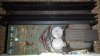
One of the issues with the 31B is that it went through a couple of mid production changes and I have never seen a schematic for any of the early versions. The ceramic disc caps on the original main boards were .1uf with half being rated 50v and half at 16v. In the later versions all of the caps were 100v rated. Can only assume there was a issue with the lower rated caps. Another change was the diodes on early production were 184 marked to those marked IN4148. Not sure if they were the same specs but there is no reference or cross reference anywhere for 184 diodes. Main darlington output transistors on the early models used SAE-11's where later production used SAE 104's. These changes can complicate a rebuild.
 
Last edited:
Back
Top Bottom