• The move to the new server is done. There are some software and database maintenance updates in process. This has us passing the hat around to help out. We appreciate any donations. Seriously, even a dollar helps. The payment page may be found here - https://www.audiokarma.org/support.html

Sansui AU-417 Issues Ongoing

bornonatrain

New Member
Hi All,

Long time first time. I have owned my Sansui AU-417 for over 12 years. Purchased through Craigslist in tandem with an AU-217. I believe it cost $150 total. Since then I have used KLH Model 5 speakers and this AU-417 as primary for Tape/CD/Tuner/Aux (Home theater > DAC). I'm not neophyte to electronics, but I am pretty much a novice, i.e. I don't know how to read a schematic, but if you tell me what to do I can get in there and solder a clean joint or replace a part.

The amp has had basically the same continuing issue that returns every few years, though I can't say for certain that what is happening now is exactly as it erred in previous instances, but it's pretty similar. The left (or right?) channel will begin coming and going or making unprompted intermittent, LOUD, scary Ka-CHUNK noises. It is pretty much a no-go to use the amp like this, it's scary loud and could damage my speakers. Eventually, in time (months? years?) it goes altogether. Turning the input selector between Phono 1 and Phono 2 will make that ka-chunk noise happen and I generally toggle back and forth as often as possible because it seems the more I turn it, that it calms down. Vague, I know.. Recently I left it on overnight and when I flicked it off I heard a zap sound, which is now what it does every time I turn it off. Additionally, I plugged in my headphones the other day and now there is a steady buzz noise..

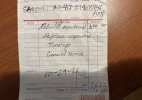
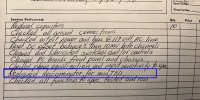
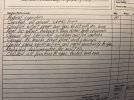
I have brought it for repair to 2 service shops in Manhattan. I won't name names unless encouraged to, but one is a small storefront and repair shop on the LES in Manhattan and the other is purely a service shop in a nondescript midtown elevator building. The latter is supposedly THE place to go for vintage electronics repair, but also has a lot of negative reviews. The LES shop turned it around in 1 day, which was pretty frustrating because I knew there was no way they did an adequate and thorough job. They charged $326.62 including tax and provided a receipt with vague notes ("Rebuild mainboard / Replace Capacitors / Tune-up / General Service) (see picture 1). I hate feeling duped but what am I going to do, such is the nature of entrusting into the hands of so-called specialists complicated equipment I marginally understand. The second shop I went to about a year later, and they took almost 4 weeks, so I was anticipating that I finally found a reputable shop. They even complimented my amplifier and they were just super nice and professional. This shop listed many more services performed on the receipt--mostly that they checked such and such, but also "reset DC offset.." and "realigned discriminator..." (see picture 2). I was, however, slightly peeved when they suggested that I just make sure to turn the knobs more often... I understand what a scratchy pot is, and the issues that that kind of poor connection may cause. That is definitely not what this is. Well, that bill was $381.06 including tax, which I forked over with a dumb smile on my face. My hunch is that it is the DC offset and somehow it is wayward.

Of course, the issue has returned recently about a year after the last repair and I've decided this amp is dead to me. And maybe all vintage amplifiers. I'm not skilled enough to diagnose it myself and I can't afford to pay to fix them. So I think I'm in over my head. Currently, I just set up a random amplifier + preamp gifted to me by a friend's husband that works perfectly fine for now. I'm going to use it until I figure out my next move...It's a GFA-535 + GTP-540 with no phono stage :/ My friend bought a Yamaha A-S801 and I'm considering that. I'm also considering getting smaller speakers so I don't need such a powerful amp.

I've now put about $800 into my Sansui AU-417 (principal cost + 2 repairs). We've had some really good memories, but I think it's over. Am I getting duped by poor service technicians or is this just the nature of amplifier repair? Should I try to find a reputable service station (I will even mail it), or should I just move on? Somewhere inside of me I feel responsible, that somehow it is my fault, but I'm pretty sure that's not true.

Thank you for your thoughts.
 

Attachments

  • IMG_0072 (1).jpg
    IMG_0072 (1).jpg
    148.8 KB · Views: 21
  • IMG_0073.jpeg
    IMG_0073.jpeg
    117.9 KB · Views: 14
Register to hide this ad
What a story, all this amp needs is probably a couple of noisy small signal transistors replaced, fusible resistors check and replacement (if no shop replaced them), and check if corrosive glue which holds big capacitors messed up neighbouring components. That's to get it working, whole recap would be desirable, but also more expensive. Your best bet is to find local Exclusively Sansui forum members who privately service equipment, they are usually top notch experts. Repair shops capable of this are very few and therefore extremely busy and with long wait times.
 
+1 for what @CrSens said. Not one mention of ANY transistor replacements. Any vintage gear tech that has it going on should know all about noisy "trouble" maker transistors.

I will admit I don't know everything but I would bet a real nice bottle of single malt that no Sansui AU-417 has a discriminator circuit to align for minimum THD.

417.jpg

They do have nice penmanship though. :D
 
Last edited:
+1 for what @CrSens said. Not one mention of ANY transistor replacements. Any vintage gear tech that has it going on should know all about noisy "trouble" maker transistors.

I will admit I don't know everything but I would be a real nice bottle of single malt that no Sansui AU-417 has a discriminator circuit to align for minimum THD.

View attachment 3305838

They do have nice penmanship though. :D
i would be asking them how they performed the minimum thd alignment as it appears its ready to do again and i would like to do it myself this time .
 
Thank you @CrSens and @mrk229 I should have checked in on this forum a long time ago. If I can find a local trusted technician through this network, I would definitely cough up more money and do my best to to forget about my passed sins--no magic wand will wave away the fact that I have already sunk into repairs more than the value of the amp itself. But I would prefer to keep it. As someone capable with a soldering iron, do you think it's be possible that I could get it functioning myself?
 
Thank you @CrSens and @mrk229 I should have checked in on this forum a long time ago. If I can find a local trusted technician through this network, I would definitely cough up more money and do my best to to forget about my passed sins--no magic wand will wave away the fact that I have already sunk into repairs more than the value of the amp itself. But I would prefer to keep it. As someone capable with a soldering iron, do you think it's be possible that I could get it functioning myself?

If you are competent with electronics safety, can solder, and can post photos of the amplifier and components you will most certainly find the help you need here.

Start by building one of these - (I'd recommend watching all of his videos)

Here's a cleaner version not built from spare parts. In a metal box.

Another good channel -

My DBT station -
IMG_9594 2.JPG

My AU-417 restoration -
 
Last edited:
Thank you @CrSens and @mrk229 I should have checked in on this forum a long time ago. If I can find a local trusted technician through this network, I would definitely cough up more money and do my best to to forget about my passed sins--no magic wand will wave away the fact that I have already sunk into repairs more than the value of the amp itself. But I would prefer to keep it. As someone capable with a soldering iron, do you think it's be possible that I could get it functioning myself?
@JimEGR gives some very good advice, and I will add a little more. IMO being able to remove components without messing up the circuit boards is a skill that is much harder than soldering them back in. Again my opinion, solder wick and manual solder suckers are OK for limited repairs, but you really need a decent solder and desolder station. There are some decent low priced ones out there.

If you go down the road take LOTS of pictures as you go along. If a wire breaks off from moving a circuit board around you can refer back and see where it goes. Or if there is any question about how an original component was installed (orientaton, polarity, etc) you can go back and look. Where did that one screw I have left over come from!

Go slow, work on one board and then test for proper operation before moving on to another one. The mechanics of working on some of the old gear can be quite a puzzle, I enjoy the challenge. How does it come apart, what needs to move to get access to X, etc.

Watch some youtube videos and decide if it is something you would like to attempt.
 
I second getting in there yourself, as you already have adequate soldering skills. I can also solder and not much else but with the help of the forums did a full recap and restoration on my AU-517 went on too do 3 more 517's. a 717 and a 555a. It's most rewarding to get in there yourself and have a well restored unit.
Worth thinking over.
 
@JimEGR gives some very good advice, and I will add a little more. IMO being able to remove components without messing up the circuit boards is a skill that is much harder than soldering them back in. Again my opinion, solder wick and manual solder suckers are OK for limited repairs, but you really need a decent solder and desolder station. There are some decent low priced ones out there.

If you go down the road take LOTS of pictures as you go along. If a wire breaks off from moving a circuit board around you can refer back and see where it goes. Or if there is any question about how an original component was installed (orientaton, polarity, etc) you can go back and look. Where did that one screw I have left over come from!

Go slow, work on one board and then test for proper operation before moving on to another one. The mechanics of working on some of the old gear can be quite a puzzle, I enjoy the challenge. How does it come apart, what needs to move to get access to X, etc.

Watch some youtube videos and decide if it is something you would like to attempt.

Thanks @mrk229 you are 100% right regarding the circuit board skillset--I followed a YouTube walkthrough to add a rocker switch to my Tascam Portastudio 414MKII that allows the unit to run at 1/2 speed and whilst doing it I burned off a solder pad. I ended up attaching a wire between the 2 points to resolve it. It looks awful but it's mine and I didn't totally blow it, at least. I have also done little bits of work with CRTs and I'm still alive (I revived an 80s Trinitron by replacing a thermistor), but I have a lot of refreshing of safety protocol to do.
 
If you are competent with electronics safety, can solder, and can post photos of the amplifier and components you will most certainly find the help you need here.

Start by building one of these - (I'd recommend watching all of his videos)

Here's a cleaner version not built from spare parts. In a metal box.

Another good channel -

My DBT station -
View attachment 3305887

My AU-417 restoration -
This is great, thank you. I am aware of the dim bulb tester (i.e. watched a video once) but I'm now determined to build one. I have a closet that I can put a table in so maybe I'm finally going to set up the workbench I've dreamed of for a long time. I have a decent multimeter and soldering iron, as well as spare set of speakers. As far as safety goes, I am absolutely terrified of killing myself (have minimally worked on CRTs--hand in back pocket etc.), so I just need to learn the basics of electronics safety and develop a logic to the protocol so I'm not so nervous about it. Looking forward to reviewing your 417 restoration!
 
I second getting in there yourself, as you already have adequate soldering skills. I can also solder and not much else but with the help of the forums did a full recap and restoration on my AU-517 went on too do 3 more 517's. a 717 and a 555a. It's most rewarding to get in there yourself and have a well restored unit.
Worth thinking over.
This is really encouraging. Can't wait to get into it.
 
This is great, thank you. I am aware of the dim bulb tester (i.e. watched a video once) but I'm now determined to build one. I have a closet that I can put a table in so maybe I'm finally going to set up the workbench I've dreamed of for a long time. I have a decent multimeter and soldering iron, as well as spare set of speakers. As far as safety goes, I am absolutely terrified of killing myself (have minimally worked on CRTs--hand in back pocket etc.), so I just need to learn the basics of electronics safety and develop a logic to the protocol so I'm not so nervous about it. Looking forward to reviewing your 417 restoration!

You'll inspire me to get back to the workbench! Winter and short daylight hours are coming, and so then is the sanctuary of quality indoor time with Sansui gear. There are others here with far more experience than me. I am still learning. I am pretty good at following instructions and the mechanical and electrical execution of the work. I still have a lot to learn with the troubleshooting. There are many generous folks here who will help you succeed. Great fun and great community.

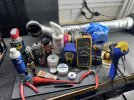
Here is my workbench "quiver" -

IMG_9606.JPG
 
Last edited:
You'll inspire me to get back to the workbench! Winter and short daylight hours are coming, and so then is the sanctuary of quality indoor time with Sansui gear. There are others here with far more experience than me. I am still learning. I am pretty good at following instructions and the mechanical and electrical execution of the work. I still have a lot to learn with the troubleshooting. There are many generous folks here who will help you succeed. Great fun and great community.

Here is my workbench "quiver" -

View attachment 3306271
You sir have all of the "good" basic tools needed to be successful. Lots of info, and plenty of knowledge to be shared past and present will be found here on AK.

If you are not ready to dive right in see if you can find a good "starter/practice" project at a thrift store or garage sale.

Oh and only buy your components from reputable sources.
 
Wondering if anyone spotted the nail polish. Used for "locking in" the nut/threads of speaker binding post terminals. A pro tip from The Great @Leestereo!

Screenshot 2024-09-26 at 2.26.36 PM.png

And @bornonatrain (just read your name in a little more detail too - really?) not to get ahead of your AU-417, but if you want to take on another Sansui restoration the AU-555a is probably the most well documented integrated amplifier restoration here. And the mods turn a really good classic cap coupled amplifier into a great one. Maybe another nice one for your collection.

 
Last edited:
You'll inspire me to get back to the workbench! Winter and short daylight hours are coming, and so then is the sanctuary of fun indoor time with Sansui gear. There are others here with far more experience than me. I am still learning. I am pretty good at following instructions and the mechanical and electrical execution of the work. I still have a lot to learn with the troubleshooting. There are many generous folks here who will help you succeed. Great fun and great community.

Here is my workbench "quiver" -

View attachment 3306152
Thank you for sharing. I have a lot of this stuff, including the same Hakko (I think mine is the FX-888D). I never thought of putting a spray trigger on my isopropyl...I do have needle point dropper bottles for alcohol and flux. Great vent system--I only have the Hakko Smoke Absorber right now.. but I could see setting up a vent duct out the window closest to my closet.
 
Wondering if anyone spotted the nail polish. Used for "locking in" the nut/threads of speaker binding post terminals. A pro tip from The Great @Leestereo!

View attachment 3306434

And @bornonatrain (just read your name in a little more detail too - really?) not to get ahead of your AU-417, but if you want to take on another Sansui restoration the AU-555a is probably the most well documented integrated amplifier restoration here. And the mods turn a really good classic cap coupled amplifier into a great one. Maybe another nice one for your collection.

Alas not actually born on a train. I will keep an eye out for the 555a!
 
I did couple of 417's. By the way I am in Brooklyn :))) and could have helped you. Now however I am a bit in home repairs.
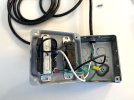
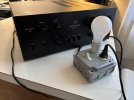
Another reason why I should have come here a long time ago…Based on the encouragement from this thread I’m going to build a DBT and get a closet workbench situated and try to tackle this thing myself.
 
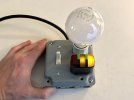
Ok, after taking the suggestion(s), and watching many YouTube videos, I built a dim bulb tester...with only a few stumbles along the way. Feeling accomplished today.

I'm pretty sure the wiring is above board and correct.

I'm using a 100 watt bulb, and seeing no glow. I can confirm upon turning it on, the bulb lit and dimmed, so the tester is doing its job.

Tips on where I should go from here?

Thank you!!

IMG_0259.jpeg

IMG_0261.jpeg
IMG_0263.jpeg
 
Back
Top Bottom