• The move to the new server is done. There are some software and database maintenance updates in process. This has us passing the hat around to help out. We appreciate any donations. Seriously, even a dollar helps. The payment page may be found here - https://www.audiokarma.org/support.html

Sansui AU-555A

Sticky

New Member
Hi all,

Long time reader, First time poster...(well second, this is a repost from the wrong forum board..)

I have a Sansui AU-555A that i have had for about 3 or so years now (That i picked up at a local 2nd hand dealer for $25!), When i first powered it up, it worked fine, apart from some sratching and popping from the volume pot and other knobs, and the power button was a bit dicky, which i fixed. After a few months i developed a nasty pop/crackle/hum and would drop the left channel in and out and sometimes stop altogether. After reading a bunch of threads on here about what components to check/replace, I decided i would get it serviced professionally to give it a proper once over and spruce up. When i got it back, it worked well, minus some minor noise from the speakers when there was no output and the volume turned down, and i lived with that for about 12 months married to some Definitive BP8B's.

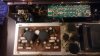
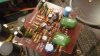
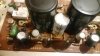
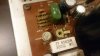
Now, It has more left channel issues, and i can only get sound if i run it in mono. I have reread a bunch of the threads i read initially to decide what i want to do, but im hoping to get some concrete facts about what caps/transistors/diodes/resistors and modifications i should be replacing/doing as im a bit conflicted with some of the info i have gathered. None of the main caps have been changed for what i can tell (all still Elna), Sanyo C875E8K are in place of the "flying saucer" transistors, and there appears to be some Nichicon Caps on the small board that sits behind the input selector.

Ive added some pics to give some ideas of what components may have been replaced.

Any help would be greatly appreciated.

Josh

PS: Sorry for the potato phone pics....
 

Attachments

  • DSC_1190.JPG
    DSC_1190.JPG
    50.8 KB · Views: 100
  • DSC_1194.JPG
    DSC_1194.JPG
    68.4 KB · Views: 100
  • DSC_1195.JPG
    DSC_1195.JPG
    78.4 KB · Views: 98
  • DSC_1197.JPG
    DSC_1197.JPG
    59.7 KB · Views: 99
Register to hide this ad
Welcome!

Those Sanyo transistors are original. The transistors on the plug-in boards may have been swapped - hard to say from the pics.

The 555A is a lovely amp and worth restoring. The examples that I've restored sounded superb.
 
Thanks for the info. I will get some better pics tonight.

Just measured the DC offset, which is 326mV right and 345mV left, What is my next step here? Ive bought some new trimmers to replace the old ones as a starting point.
 
Hi Josh,

Welcome to AK and the Sansui forum

The 555A has a capacitor coupled output, and the DC offset is not relevant - there should be no DC present with a load (speakers) connected.

From the photos the amp looks pretty much original.

Pull the pre out/main in jumpers on the rear panel and use an RCA lead to connect the left of to the right in, and right out to the left in. Does tha problem stay in the left channel, or does it move to the right channel?

Cheers

John
 
I think it's better to use capacitor multimeter instead of bombarding every old caps with new ones, don't you think ?
I know it's quite expensive to buy a cap multimeter.
And also testing every legs of trannys with avometer first before replacing everyone ?
Some multimeter has this feature.
 
Locate and fix the immediate problem, give the controls a good cleaning, check for any visibly damaged or defective components, check mica washers and re-grease the output transistors, then assess the sound at that point. If you like what you hear, you might want to leave it at that. I personally would do a full recap at that point, but that's just me.

This is an easy amp to work on. As far as the sound, that's a personal thing, but it made me sell my Marantz 2230.
 
Hi Josh,

Welcome to AK and the Sansui forum

The 555A has a capacitor coupled output, and the DC offset is not relevant - there should be no DC present with a load (speakers) connected.

From the photos the amp looks pretty much original.

Pull the pre out/main in jumpers on the rear panel and use an RCA lead to connect the left of to the right in, and right out to the left in. Does tha problem stay in the left channel, or does it move to the right channel?

Cheers

John

I will have a go at this tonight hopefully. I spent last night cleaning Pots and Switches, so once its back together i'll try that out.
 
I think it's better to use capacitor multimeter instead of bombarding every old caps with new ones, don't you think ?
I know it's quite expensive to buy a cap multimeter.
And also testing every legs of trannys with avometer first before replacing everyone ?
Some multimeter has this feature.

No... Capacitors have a finite lifespan. IMHO it is a false economy to worry about measuring all of the caps and potentially retaining them. If you care about sound quality and amplifier longevity, replace those originals! :)
 
One advice that i needed to boost my courage.
Thank you, sir

No... Capacitors have a finite lifespan. IMHO it is a false economy to worry about measuring all of the caps and potentially retaining them. If you care about sound quality and amplifier longevity, replace those originals! :)
 
Ok, so after a full DeOxit'ing, all issues seem to have disapeared, No pops, crackles, farts or humming.

That said, should i bother to do a recap if everything seems to be working?
 
Depends how far down the rabbit hole you want to go, particularly if you're looking at dipping your toes into the world of recapping gear yourself.
 
Im more than happy to recap it if it means longevity and possibly improving its overall performance. Im not scared of the process at all, i do a fair bit of circuitry repairs at for work (mostly SMD components). Im moreso looking for help in being pointed in the right direction of correct Capacitor make/type etc, obviously swapping like for like for the majority of them. Ive read some people using Nichicon FG series, with Elna Silmics or Panasonics etc. I just want to know what is best!
 
There are dozens of threads here on various capacitor brands and lines. Keep it simple. Electrolytic caps are either in the signal path or not.

For signal path caps, and the output coupling caps in the 555a, the various Nichicon audio grades or Elna Silmics are fine. So are film caps (WIMA MKS2, Panasonic ECQ, Kemet R82, Vishay MKT) for smaller values like 3.3uf and 1uf. Film caps are physically larger, and sometimes too big to fit.

For non-signal path caps, it's hard to go wrong with Panasonic (FC, FM, or FR) or Nichicon (PW or HE). Chemicon is also a quality brand, but they have so many lines that it can get confusing, at least for me.

Same brands for the big filter cap, plus Kemet and CDE are well regarded.

You may find some "low leakage" electrolytics. They are usually a different color, often pink or pale orange. These can be replaced with films or with low leakage electrolytics like Nichicon KL.

I think the general, but probably not universal, consensus is that an equivalent film cap is preferable to any electrolytic, unless there is a fit or price issue.

All of these are available at Digikey or Mouser. EDIT: Last time I checked, Digikey did not carry WIMA
 
Hi c.coyle,
How much US dollars did you spend recapping all of those old caps ? You bought those from Mouser ?
 
I don't remember. I would have bought them from Mouser and/or Digikey. You can answer the price question by going through your unit, making a list of the caps there now, and pricing replacements on either web site. No obligation until you click "buy".

Capacitance, voltage, diameter, and pin spacing are the parameters I pay attention to. Height is usually not an issue outside big filter or coupling caps (it is bad if you can't put the cover back on) or unless you have board over board.
 
Last edited:
We've rebuilt at least 20 of the 555A and 505. In my opinion, stay away from the hi zuit audio caps for the two output caps. These coupling caps flow hi current, and Audio grade caps are not necessarily designed for high current.

I recommend caps made for switching power supply use (snap in), which is high current and high frequency use (abuse, really). Sansui used pretty much the highest value caps they could reasonably fit in such a small amp. We go to 10,000uf at 50 or 63v for the outputs. The voltage doesn't matter as much as you might think, as the only time the full voltage at the input would appear across the cap is if you hooked the output to ground.

Here's a mouser link
http://www.mouser.com/Passive-Compo...apacitors-Snap-In/_/N-75hr0?P=1yztzazZ1yx4avv

Check out the ESR and Ripple current rating of the few caps they usually have in stock, just what you want for a capacitor coupled amp. They don't have normal leads, but you can make them work.

Every single 555A or 505 we have seen, the output caps are destroyed, not even measurable for value, with tons of leakage, and high ESR. They should be immediately changed before use. The improvement in sound quality is huge.
 
Last edited:
Coyle,
Hey, no offense. Just my two cents about the output caps. I agree with everything else.
 
Hi Trnsfmr,

Could you explain more about these terms, please ?
- hi zuit audio caps
- two output caps...which ones are they ?
- coupled amp capacitors...which ones are they
How huge is the improvement ?
Thanks

We've rebuilt at least 20 of the 555A and 505. In my opinion, stay away from the hi zuit audio caps for the two output caps. These caps flow hi current, and Audio grade caps are not necessarily designed for high current.

I recommend caps made for switching power supply use (snap in), which is high current and high frequency use (abuse, really). Sansui used pretty much the highest value caps they could reasonably fit in such a small amp. We go to 10,000uf at 50 or 63v for the outputs. The voltage doesn't matter as much as you might think, as the only time the full voltage at the input would appear across the cap is if you hooked the output to ground.

Here's a mouser link
http://www.mouser.com/Passive-Compo...apacitors-Snap-In/_/N-75hr0?P=1yztzazZ1yx4avv

Check out the ESR and Ripple current rating of the few caps they usually have in stock, just what you want for a capacitor coupled amp. They don't have normal leads, but you can make them work.

Every single 555A or 505 we have seen, the output caps are destroyed, not even measurable for value, with tons of leakage, and high ESR. They should be immediately changed before use. The improvement in sound quality is huge.
 
Last edited:
Back
Top Bottom