• The move to the new server is done. There are some software and database maintenance updates in process. This has us passing the hat around to help out. We appreciate any donations. Seriously, even a dollar helps. The payment page may be found here - https://www.audiokarma.org/support.html

Seeking opinions about best place to store extra/uninstalled McIntosh glass

Best storage option for UNINSTALLED replacement McIntosh Glass besides 72F Climate controlled spaces

  • Attic (Really Hot-but REALLY dry)

    Votes: 0 0.0%
  • Garage (Not as hot-but with variable seasonal humidity-still moderate though)

    Votes: 1 33.3%
  • Third option, not already mentioned, but that won't include paying a rental fee.

    Votes: 2 66.7%

  • Total voters
    3

Ricktptman

High Fidelity Enthusiast
Subscriber
Since I started collecting McIntosh pieces, I've slowly been acquiring replacement glass for them.

Some I had to use immediately because of well...UPS, et al, in all their respective resplendent glory. One piece in particular, I had to replace because I did not know that the screening on the interior of the faceplate was not resistant to moisture (it was very much vintage and it was a painful "live and learn" learning curve) but most are still "new" and "held in reserve" for a later time when I might feel like replacing the slight to moderately aged faceplates that still present very well.

So my question is posted to ascertain what home/non-commercial environment would be best for storing this glass? I keep the glass in its original source packaging (nearly all direct from McIntosh, but a few from the other "usual suspect" suppliers-all really well packaged and re-sealed after inspection) and I have two pieces stored in a garage, one in my attic and another one on its way. TIA for all the thoughtful responses! Hopefully, it will help others with similar concerns.
 
Register to hide this ad
Glass laminates will probably not do well in temperature extremes at either end of the range and humidity cannot be good either. Given the nature (& value) of the beast, I'd do whatever was needed to make the necessary closet space. Aside of that, the garage sounds like the better choice over the attic.
 
Glass is a liquid. Thus it ages and ge waves from flow and gravity. The hotter the more it flows. Still I wouldn’t lay it flat. Upright with the least longitudinal dimension in the most temp stable climate environment. Therefore re duplicate installed in piece as much as possible versus on end. Perhaps flip every few years.
 
62Caddy, BillWojo, Seacliffe301, and Velocityboat,

I appreciate your responses.

Billwojo, in a word, "Yes". We're in a slightly above (Sq/ft.) average-sized home as defined by the HIGHLY suspect rubric of the real estate industry "Matrix". BUT, our (By '90s standards-when we built) "entry-level" home was the biggest of their off-the-rack plans. What wasn't as apparent to us was they fudged on room dimension stats by stealing it from the closets. (Or eliminating them altogether.) So yes, we have walk-in closets. But no, you can hit the back wall in all of them except the master BR closet.

We've upgraded the Hades out of it, and we really like it because it's just the two of us, and the ONE irreproducible feature we can't find anywhere in the local hyper-inflated marketplace is one we like better that comes with a pre-installed FREE AND CLEAR TITLE, lol...

I have a free-standing workshop (hotter than my garage unless I'm in it with the heat/AC going) that has the amplifier 2x4 fortified boxes in it and my Sunfire Signature boxes.

I'm working on a closet right now (my gear/vintage room closet) but that room is the SMALLEST in the house, and the two guest BR's are the two where we REALLY feel pinched. The other rooms are "could be bigger, but we're okay with it as is".

I'm installing an extra shelf (up high) above the shelf that's already there. We'll see if the three glass boxes (again, they're not out of the original shipping/packing. These boxes are original McIntosh shippers or one of their famous service proxy's boxes.

If I can get all of them (it's five total, including old glass already swapped out) in a single place, it'll be a miracle. I'm prioritizing the new, uninstalled glass first. That's the first three out of the five.
 
I’ve been hoarding these also, and keep them in the original boxes, stored on a bookshelf in my office. One if them is likely close to 10 years old, hasn’t changed at all.
 
Well, as is too often the case (or so my friends tell me) I can argue it from both sides and that's the reason I'm seeking the opinions of others, so-again-I appreciate everyone's responses.
In the case of faceplates with fuse lamps and/or Meters, those faceplates faced nearly "Hades-ish" temperatures every day of their "work lives" and so heat shouldn't be a big deal.

(I have upgraded all my Mac Gear with LED's so that's no longer an issue, but I'm just pointing it out...)

One response interestingly points out that glass is a liquid and they are almost correct. (Citation follows.) Glass is actually classified as an amorphous solid.

https://www.scientificamerican.com/article/fact-fiction-glass-liquid/#:~:text=Glass, however, is actually neither,for changes to be visible.

But that doesn't deflect the commenter's well-taken point that temperature extremes aren't ideal. If I thought they were, I wouldn't have posted the question in the first place. : - )

Short of a flood event (I'm not in a flood plain, I'm just saying that if that happens I'll have bigger problems than looking after my faceplate glass), I think I'm going to go with the isolated (up high) garage storage option for the older and lesser expensive pieces. It doesn't get much higher than 90 degrees F. in the Summer. It's pretty well insulated so it never gets lower than about 60 degrees F in the Winter. I'll use the soon-to-be-completed, remodeled closet for the priciest (the amplifier faceplates I'm reckoning) examples.
 
Glass isn't a liquid in its frozen / solid state, but it does cold-flow, very very slowly. The glass will far outlast the paint on the glass.

A little depends on the glass (faceplate) versions you're storing. The early glass / original process, if you're buying NOS like I am, with the black back had problems with the paint lifting from the glass. You see this around edges and holes most, and of course anywhere that there is something stuck to the back (paint).
The next version added the white sealer over the paint, and this makes it last much longer.

Also some had problems where adhesive foam was stuck to the glass, especially over lettering (MC2205/2155/2255 for example) and the lettering turned black from the adhesive. Fortunately the foam wasn't stuck to the back of replacement glass over the lettering I believe, added later.

Mostly, the painted glass should last a long time stored in the original packaging and I woudn't worry too much about it. As long as there's nothing laying against the painted back surface that will degrade the paint or stick to the paint, ... or outgass like PVC, it should be okay to store and of course cool is better than warm.
 
...A little depends on the glass (faceplate) versions you're storing...
...The next version added the white sealer over the paint, and this makes it last much longer...
...As long as there's nothing laying against the painted back surface that will degrade the paint or stick to the paint, ... or outgass like PVC, it should be okay to store and of course cool is better than warm...

I just purchased a used C28 glass that has the white sealer on the rear surface. It has various pieces of dodgy-looking tape over some of the lettering and indicator light transparencies. I could only begin to guess why - maybe it was someone's attempt to control the brightness of various lamps - possibly they had a mixture of old and new and incandescent and LED...

Anyway, as far as storage goes:
  1. Any opinions on best choice of material for contact with the rear surface? Having never seen the original Mc packaging, any thoughts on using paper (specific type?), cardboard, mylar film, bubble wrap, other?
  2. Once the rear surface is correctly protected, I feel fine with storing this in bubble wrap and cardboard inside my house (i.e. climate controlled.).
  3. Also, does anyone have thoughts on trying to remove the various bits of tape from the rear of this thing?
Thanks in advance! - Steve
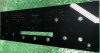
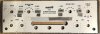
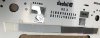
IMG_1669.JPG IMG_1671.JPG IMG_1673.JPG
 
Thanks - but I'm actually interested in storage questions - looking to store this glass for future use.
 
Mine are stored in polyethylene bags, then sandwiched between a couple of sheets of open-cell foam, and in boxes. I have no indication that they are degrading due to the storage (inside in a bookshelf).
 
Hey Jeff, that's very helpful! So any quick thoughts on those bits of tape? Those couldn't be there from the factory, could they? If not, I may attempt to carefully remove them. Thanks! - Steve
 
The factory puts the silver tape on there, and also the color filters over the indicator areas.

NewGlassR.jpg s-l1600.jpg 2255 Counterfeit 2.jpg

The first photo is the early process, the second photo the new(er) process, the third photo is a counterfeit.
There is actually a photo that should be between the 2nd and the counterfeit that shows the current process where McIntosh is no longer provinding glass for these units that have the green-light-through-gold lettering, you ether get gold without backlight or green backlighted legends that disappear with the lights off. The counterfeit (from the far-east) is actually better (IMO) than the current McIntosh glass in that it still has backlit gold like the originals.

I hope that this helps.
 
That makes sense to use the gels (or color films or whatever the correct terminology is) to provide the yellow/red/green/blue indicators. Okay, fair enough, but wow, the random/uneven cuts and the little bits and scraps of scotch tape holding them in place just look dodgy to me. I dunno, seems kind of amateurish - or maybe that's just the one (of unknown provenance) that I happened to buy. At least it seems to be the authentic second process with the white coating on the back plus the green-light-through-gold lettering that is still visible when off. But anyway, apparently the gels and tape works well and are never seen once assembled, so I'll just leave well enough alone!

Back to the original topic: I've now bagged it, taped it loosely between a sandwich of cardboard and foam, and then wrapped in several layers of bubble wrap for storage on a shelf in a dry basement.

Thanks so much for sharing the pictures and your knowledge, this is what makes AK so awesome. Cheers! - Steve
 
Last edited:
The chipping around the holes from mechanical drills is the old McIntosh process also, surprising it took them so long to move to waterjet cutting. But, it's McIntosh and they tend to change these things slowly, which in most cases has worked well for them.
 
That makes sense to use the gels (or color films or whatever the correct terminology is) to provide the yellow/red/green/blue indicators. Okay, fair enough, but wow, the random/uneven cuts and the little bits and scraps of scotch tape holding them in place just look dodgy to me. I dunno, seems kind of amateurish...

Just the quirks of old school carriage trade - as opposed to "high tech" mass production is how you have to look at it.
 
Back
Top Bottom