• The move to the new server is done. There are some software and database maintenance updates in process. This has us passing the hat around to help out. We appreciate any donations. Seriously, even a dollar helps. The payment page may be found here - https://www.audiokarma.org/support.html

Sharp VZ-3000: Dead Turntable - Bad Microcontroller?

YALE70

New Member
Hey guys,

This is probably going to be long and complicated but I'm frankly struggling to figure this out and could use some advice. I'm not exactly experienced when it comes to diagnosing these sorts of problems.

I picked up a Sharp VZ-3000 last week and I'm in the process of attempting to restore it. Other than the stench and filth that came with decades of sitting in a smoker's home, everything on it works except for the turntable. I initially chalked it up to the usual culprit of bad belts for both the platter and the door, so I took care of those. However, the cause of the turntable not functioning seems to run a lot deeper than I was originally anticipating.

The turntable is flat out unresponsive to button presses from the unit. I'll switch the output to 'Phono', hit the buttons for the turntable and... nothing. No solenoids engaging, no platter spinning, nothing. The only responses I got are the LEDs on the dust cover for 'Both Sides' and 'Repeat' turn on when I hit their respective buttons, and the orange LED illuminating the A-side tonearm comes on when I power the unit on.

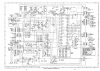
I decided the best place to start tracing the faults would be from the main 42-pin microcontroller itself and I used the service manual for the VZ-3000 as a guide. The first thing I did was check to see if the voltages on the pins were consistent with what their expected values on initial powerup would be with the schematic on page 27-28, and all of them looked correct except for the following:
  • PIN 3 (Reverse): Expected 2.8V, Actual 0V
    • Handles the reversing of the cartridge motor when "low".
    • Fault unknown.
  • PIN 8 (Muting): Expected 5.2V, Actual ~4.8V
    • When "high", cuts off the signal to the cartridge not playing.
    • Fault unknown, but the actual value might be okay?
  • PIN 28 (Tonearm Position): Expected 1V, Actual ~4.8V
    • States if the tonearm is in the lead-in or return position by reading the position of a gear drum with a light sensor (LED505).
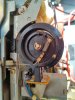
    • Possible cause: the initial resting position of the gear drum didn't appear to be correct so this pin was reading "high" when it wasn't supposed to.
      • Cable to the tonearms seemed to have some slack in it. Not sure if that's problematic.
  • PIN 29 (Rest Position): Expected 0V, Actual ~5.0V
    • States if the tonearm is in the rest position.
    • Same possible cause as above. Gear drum was not engaging the microswitch (SW504), resulting in a "high" reading at the pin.
I had also tested each of the buttons for the record player and found that they were seemingly being registered at their respective pins (11-13 Key Strobe, 22-24 Key In), but weren't actually triggering their respective functions. For example, pressing the 'open/close' button for the door (SW505) should cause PIN 7 to go "high" and engage the solenoid for the door, but PIN 7 remains at 0V despite the button press. I theorized that fixing the resting position of the gear drum for the tonearms might finally free up the rest of the turntable since the microcontroller was effectively reading the tonearms as 'not at rest' from both PIN 28 and 29. While this got me the correct initial values on 28 and 29 and allowed the tonearms to move (also turned the 'Side A' LED on) when I pressed the 'open/close', but it still didn't engage the solenoid.

This is all kind of a mess and like I said, I'm a total rookie when it comes to this kind of fault tracing with electronics. What am I missing? What could possibly be the root of the problem here? I'm concerned that the microcontroller is basically dead since I can't get any of the primary functions of the turntable working despite what I was reading with the multimeter. It's entirely possible there's more to this problem but I honestly don't know where else to look. I really hope I don't have to give up on this gorgeous machine.

I'll greatly appreciate anyone's input and hopefully it'll point me in the right direction with this repair.

Please let me know if you need any more info and I'll do my best to get it.
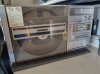
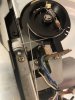
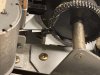
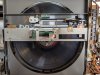
IMG_20230105_133409812_HDR.jpg IMG_20230106_140231942_HDR.jpg Screenshot 2023-01-09 205801.png IMG_20230109_155458207_HDR.jpg IMG_20230109_165224368_HDR.jpg
 
Last edited:
Register to hide this ad
Did a little more probing over the past few days and honestly, it seems like the state of this entire board is concerning. I found about two dozen resistors (mostly 10kΩ) that have resistances far lower than they should. Capacitors physically look okay, but they're probably worth replacing anyways. I'm at the point where I think I'll just have to replace the whole lot and pray that further isolates (or even fixes) the faults related to the IC. That job will be a breath a fresh air compared to the 'probe, take notes, probe, take notes' crap I was subjecting myself to over the past few nights.

Also means it's probably worth inspecting the rest of the unit for dying components, but since those work and the turntable doesn't, I'll save that for another time... assuming I don't go insane before then.
 
Did a little more probing over the past few days and honestly, it seems like the state of this entire board is concerning. I found about two dozen resistors (mostly 10kΩ) that have resistances far lower than they should. Capacitors physically look okay, but they're probably worth replacing anyways. I'm at the point where I think I'll just have to replace the whole lot and pray that further isolates (or even fixes) the faults related to the IC. That job will be a breath a fresh air compared to the 'probe, take notes, probe, take notes' crap I was subjecting myself to over the past few nights.

Also means it's probably worth inspecting the rest of the unit for dying components, but since those work and the turntable doesn't, I'll save that for another time... assuming I don't go insane before then.
First off, unless you're unsoldering one end of the resistor you're testing the readings will be low due to parallel circuit paths. They're probably alright.

Microcontrollers rarely fail. Make sure it's getting its reset pulse upon power up. Check voltages at the power supplies, and resist the urge to just blanket recap; often this can compound troubles and make troubleshooting way more difficult.

Print out the schematic and notate with voltages you take. This can help to point you in the right direction.
 
First off, unless you're unsoldering one end of the resistor you're testing the readings will be low due to parallel circuit paths. They're probably alright.

Yeah you're right. That's just me dwelling on the age of this thing, assuming everything is broken out of frustration and not paying any attention to how the resistors are actually wired in the schematic.

Microcontrollers rarely fail. Make sure it's getting its reset pulse upon power up. Check voltages at the power supplies, and resist the urge to just blanket recap; often this can compound troubles and make troubleshooting way more difficult.

Print out the schematic and notate with voltages you take. This can help to point you in the right direction.

I did do some initial probing on the microcontroller's pins, which is how I determined the discrepancies above. That being said, while the IC is getting ~5V at the Vcc pin (PIN 21) as it should, it doesn't appear to getting a pulse of any kind on the reset pin (PIN 15) when I power the unit up. Just to clarify, should I be expecting a brief 'high' reading on this pin? I am just using a DMM so is it possible I could miss it?

I'll give the board a more through lookover once I have more time this weekend.
 
Last edited:
Yeah you're right. That's just me dwelling on the age of this thing, assuming everything is broken out of frustration and not paying any attention to how the resistors are actually wired in the schematic.


I did do some initial probing on the microcontroller's pins, which is how I determined the discrepancies above. That being said, while the IC is getting ~5V at the Vcc pin (PIN 21) as it should, it doesn't appear to getting a pulse of any kind on the reset pin (PIN 15) when I power the unit up. Just to clarify, should I be expecting a brief 'high' reading on this pin? I am just using a DMM so is it possible I could miss it?

I'll give the board a more through lookover once I have more time this weekend.
Well, of course this one is different, and that's what I get for not paying attention. The Reset pin is tied to ground. The manual says on Page 11 that the +5VDC supply comes up in less than 10mS, and that resets the micro. Sorry about that!

Some thing will be hard to check with just a DMM. You really need a scope for some things, like seeing if the micro is receiving strobes when a key is pressed. But you can check things like door open/door closed voltages at the micro's pins.
 
Your noted discrepancies all seem to be associated with switches and sensors. I'd check whether the switches are working, and making good open/closed contacts. Barring electrolytic caps, mechanical devices fail more often than electronic.
 
Quick update for today. Turns out things weren't quite as dead as I thought they were, but now they are!

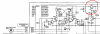
I checked the key strobe pins; all of them seem to be receiving strobes at ~4.0V, except for PIN 11 which was receiving them at 0.01V. That said, all the switches seemed to be working (microswitch SW504 for the rest position was a little messed up, but functional), and the best part: the controller was responding to the inputs! Well, more than it was initially anyways. When I had SW505 pressed, that telling the controller the tonearms were at rest, the secondary motor for the door and tonearms would spin, and I was able to get PIN 7 read 4.67V and attempt to engage the solenoid. It doesn't fully engage and I have to help it along, but it held on it's own and correctly disengaged when the 'door open' microswitch (SW503) was activated. Based on Figure 12-2 on page 12, might be the capacitor C504? I can't say for sure yet.

Also, I noticed the secondary motor that operates for the tonearms and the door activates as soon as I power the unit on - I'm assuming to reset the tonearms. Unfortunately, while I was messing around with the buttons and solenoid, I let the gear drum rotate too far the wrong way and it destroyed the rest position switch (SW504). Anyways, no big deal, switch was funky anyways. Just pull the belt and replace the switch later. Well, transistor Q535, which is apparently associated with the motor's power circuit, went up in smoke. I previously noted to myself that this transistor was hot to the touch, though I didn't really take it as a sign of impending failure.

I kept testing following this and it seems most of my woes aren't directly related to the microcontroller itself. Rather it seems like the failures of other components in the system are whats preventing it from working properly.

However, things got weird after that. Inexplicably after the transistor nuked itself, I managed to fully trigger the gear solenoid and get the platter to spin for a few seconds before shutting off. After a little while, I lost power to the turntable and was no longer seeing ~5V Vcc on the controller, nor did the turntable's relay click when the unit was powered on. During that whole time, I smelt something burning but was unable to see any smoke or pinpoint where exactly it was coming from. It seemed like it was coming from the area of the main power supply, but I'm not positive. I'm hoping I didn't do something stupid like short the board by accident...

I'll investigate it some more tomorrow, but so far this machine is really kicking my butt.
Screenshot 2023-01-14 204243.png
 
Check fuses and look for melty bits....most likely a resistor burnt up. I restore tunables all the time and only 2 have kicked my azz. Sansui fr-q and a Yamaha p850. Give it a good go, but you can not save them all.
 
Hey guys,

This is probably going to be long and complicated but I'm frankly struggling to figure this out and could use some advice. I'm not exactly experienced when it comes to diagnosing these sorts of problems.

I picked up a Sharp VZ-3000 last week and I'm in the process of attempting to restore it. Other than the stench and filth that came with decades of sitting in a smoker's home, everything on it works except for the turntable. I initially chalked it up to the usual culprit of bad belts for both the platter and the door, so I took care of those. However, the cause of the turntable not functioning seems to run a lot deeper than I was originally anticipating.

The turntable is flat out unresponsive to button presses from the unit. I'll switch the output to 'Phono', hit the buttons for the turntable and... nothing. No solenoids engaging, no platter spinning, nothing. The only responses I got are the LEDs on the dust cover for 'Both Sides' and 'Repeat' turn on when I hit their respective buttons, and the orange LED illuminating the A-side tonearm comes on when I power the unit on.

I decided the best place to start tracing the faults would be from the main 42-pin microcontroller itself and I used the service manual for the VZ-3000 as a guide. The first thing I did was check to see if the voltages on the pins were consistent with what their expected values on initial powerup would be with the schematic on page 27-28, and all of them looked correct except for the following:
  • PIN 3 (Reverse): Expected 2.8V, Actual 0V
    • Handles the reversing of the cartridge motor when "low".
    • Fault unknown.
  • PIN 8 (Muting): Expected 5.2V, Actual ~4.8V
    • When "high", cuts off the signal to the cartridge not playing.
    • Fault unknown, but the actual value might be okay?
  • PIN 28 (Tonearm Position): Expected 1V, Actual ~4.8V
    • States if the tonearm is in the lead-in or return position by reading the position of a gear drum with a light sensor (LED505).
    • Possible cause: the initial resting position of the gear drum didn't appear to be correct so this pin was reading "high" when it wasn't supposed to.
      • Cable to the tonearms seemed to have some slack in it. Not sure if that's problematic.
  • PIN 29 (Rest Position): Expected 0V, Actual ~5.0V
    • States if the tonearm is in the rest position.
    • Same possible cause as above. Gear drum was not engaging the microswitch (SW504), resulting in a "high" reading at the pin.
I had also tested each of the buttons for the record player and found that they were seemingly being registered at their respective pins (11-13 Key Strobe, 22-24 Key In), but weren't actually triggering their respective functions. For example, pressing the 'open/close' button for the door (SW505) should cause PIN 7 to go "high" and engage the solenoid for the door, but PIN 7 remains at 0V despite the button press. I theorized that fixing the resting position of the gear drum for the tonearms might finally free up the rest of the turntable since the microcontroller was effectively reading the tonearms as 'not at rest' from both PIN 28 and 29. While this got me the correct initial values on 28 and 29 and allowed the tonearms to move (also turned the 'Side A' LED on) when I pressed the 'open/close', but it still didn't engage the solenoid.

This is all kind of a mess and like I said, I'm a total rookie when it comes to this kind of fault tracing with electronics. What am I missing? What could possibly be the root of the problem here? I'm concerned that the microcontroller is basically dead since I can't get any of the primary functions of the turntable working despite what I was reading with the multimeter. It's entirely possible there's more to this problem but I honestly don't know where else to look. I really hope I don't have to give up on this gorgeous machine.

I'll greatly appreciate anyone's input and hopefully it'll point me in the right direction with this repair.

Please let me know if you need any more info and I'll do my best to get it.
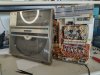


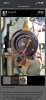
In your photo is not close the circuit for power up turntable, when you change the belt is possible that you turn in a little bit ant open switch.

chcek my photo it must by turn manualy to this possition the circuit must be close when you turn on the unit.

this was my fault. And i have sinptoms like you. Sorry for my english
 

Attachments

  • FA851D06-3CCE-4830-8E81-C6BD3623C7B1.jpeg
    FA851D06-3CCE-4830-8E81-C6BD3623C7B1.jpeg
    71.9 KB · Views: 23
  • 505E0FF8-9395-474F-8B08-026BE2F3DB62.jpeg
    505E0FF8-9395-474F-8B08-026BE2F3DB62.jpeg
    90 KB · Views: 21
But be carrefull to not broke the microswitch. (Like me)
Unscrew it, get the big black wheel on the right possition (see in my photo) and get the microswitch back
 

Attachments

  • CC095A73-FD28-4326-82A8-D621BEAF8356.jpeg
    CC095A73-FD28-4326-82A8-D621BEAF8356.jpeg
    101 KB · Views: 31
  • 48146D45-65C4-401A-A584-46918A2FA299.jpeg
    48146D45-65C4-401A-A584-46918A2FA299.jpeg
    93.1 KB · Views: 25
But be carrefull to not broke the microswitch. (Like me)
Unscrew it, get the big black wheel on the right possition (see in my photo) and get the microswitch back

Already way ahead of you (see above). And I broke the microswitch. Ugh.


Check fuses and look for melty bits....most likely a resistor burnt up. I restore tunables all the time and only 2 have kicked my azz. Sansui fr-q and a Yamaha p850. Give it a good go, but you can not save them all.

Fuses were all good. Nothing appears physically damaged apart from transistor Q535 which I watched go up in smoke. I did discover that the turntable board wasn't dead (more on that in a bit), but it seems the power supply rail for the turntable is shot. Took measurements off CNP/CNS514 referencing the power supply schematic on page 25 and 26; I found I was getting the right voltages on the pins, but as soon I load the thing with the turntable board, that voltage seems to 'vanish' and I get no response of any kind from the turntable. Again, nothing looked damaged and I would've done a deep dive on the power supply in hopes of ID'ing the fault but honestly, I'm as burned out as that transistor. At this point, the only way I could see myself getting any further with these specific boards is just blanket replacing capacitors, maybe transistors but that's not really guaranteed to fix anything. I'm sure somebody with more experience and patience than myself could correctly revive these boards no problem.

You are absolutely right about not being able to save them all. I need more practice, and tempered expectations.
 
Already way ahead of you (see above). And I broke the microswitch. Ugh.


Fuses were all good. Nothing appears physically damaged apart from transistor Q535 which I watched go up in smoke. I did discover that the turntable board wasn't dead (more on that in a bit), but it seems the power supply rail for the turntable is shot. Took measurements off CNP/CNS514 referencing the power supply schematic on page 25 and 26; I found I was getting the right voltages on the pins, but as soon I load the thing with the turntable board, that voltage seems to 'vanish' and I get no response of any kind from the turntable. Again, nothing looked damaged and I would've done a deep dive on the power supply in hopes of ID'ing the fault but honestly, I'm as burned out as that transistor. At this point, the only way I could see myself getting any further with these specific boards is just blanket replacing capacitors, maybe transistors but that's not really guaranteed to fix anything. I'm sure somebody with more experience and patience than myself could correctly revive these boards no problem.

You are absolutely right about not being able to save them all. I need more practice, and tempered expectations.

I have restored countless turntables and I have been fighting a stubborn 1229 all week. Finally had it play as intended today with the stacker spindle. Stubborn relentlessness sometimes does payoff, as doez countless hours of reading. I never had the issue I was experiencing before. Oh well live and learn.
 
Stubborn relentlessness sometimes does payoff, as doez countless hours of reading.

Ain't that the truth. Unfortunately, this Sharp seems to be quite a bit more stubborn than I am! Definitely learning experience though. Only piece of audio equipment I ever successfully restored was my $12 thrift store Garrard 770, but that's a largely mechanical device and an entirely different animal than this beast. This kind of electronics repair in general is not something I'm usually accustomed to.

I did manage to procure a parts unit this week, so hopefully I have some good news coming.
 
Alright, dragging this thread out of the grave for some closure.

I set the Sharp aside for a few months and took care of some smaller, less brutal projects (well, except for the PL-518 I had to re-veneer) until I was well and truly motivated to take another crack at it. Since I broke the rest position microswitch and transistor Q535 burned itself out, I ended up just swapping the entire turntable over from the parts unit. It wasn't working any better than the original and I was right back to square one, but it was a clean slate.

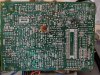
I ordered the electrolytic caps for the entire unit off Digi-Key, which cost about $55 including tax and shipping. I then re-capped the entire turntable board, which was honestly easier and more fun than I expected. Obviously not top-notch problem solving but considering that it's forty years old and what the vast majority of DIY equipment repair folks seem to say, it's going to need it's electrolytics done sooner or later. I also found two bodge caps underneath the PCB. No idea why they were there, other than maybe some a later spec change that didn't warrant a re-engineering of the entire PCB. I removed them, keeping with the original schematic.

And it worked! The door, cueing, dual-play - everything on the turntable was working again. So that's a big hurdle cleared. Now I just have to get the rest of the unit dialed in, but there is light at the end of the tunnel.
 

Attachments

  • IMG_20230513_105240120_HDR.jpg
    IMG_20230513_105240120_HDR.jpg
    190 KB · Views: 46
  • IMG_20230513_170119669_HDR.jpg
    IMG_20230513_170119669_HDR.jpg
    145.2 KB · Views: 45
  • IMG_20230514_182036841_HDR.jpg
    IMG_20230514_182036841_HDR.jpg
    114.2 KB · Views: 40
Alright, dragging this thread out of the grave for some closure.

I set the Sharp aside for a few months and took care of some smaller, less brutal projects (well, except for the PL-518 I had to re-veneer) until I was well and truly motivated to take another crack at it. Since I broke the rest position microswitch and transistor Q535 burned itself out, I ended up just swapping the entire turntable over from the parts unit. It wasn't working any better than the original and I was right back to square one, but it was a clean slate.

I ordered the electrolytic caps for the entire unit off Digi-Key, which cost about $55 including tax and shipping. I then re-capped the entire turntable board, which was honestly easier and more fun than I expected. Obviously not top-notch problem solving but considering that it's forty years old and what the vast majority of DIY equipment repair folks seem to say, it's going to need it's electrolytics done sooner or later. I also found two bodge caps underneath the PCB. No idea why they were there, other than maybe some a later spec change that didn't warrant a re-engineering of the entire PCB. I removed them, keeping with the original schematic.

And it worked! The door, cueing, dual-play - everything on the turntable was working again. So that's a big hurdle cleared. Now I just have to get the rest of the unit dialed in, but there is light at the end of the tunnel.
Nice. The fact that you didn't give up and kept at it brought another unit back from the scrap heap. Maybe in 35 years another dude will do the same thing to the table..

I love restoring turntables. Very gratifying to resurrect a unit.

Here is to you.
 
Back
Top Bottom