• The move to the new server is done. There are some software and database maintenance updates in process. This has us passing the hat around to help out. We appreciate any donations. Seriously, even a dollar helps. The payment page may be found here - https://www.audiokarma.org/support.html

Sherwood SEL-200 w/ withering Channel and Questions

JCHaywire

Member
This SEL-200 is in fairly good cosmetic condition, but comes to me with a channel that comes on equal in volume to the other, but after about 5 seconds emits a small fizzing sputter and the most frequencies below about 500hz drop out. This happens every time I cycle power and always in the same channel. I'm working without a schematic so far. Somebody posted a low res jpg of the schematic and parts list on another thread, but it's not detailed enough to be useful. The receiver has been recapped--however I do wonder about the tantalum caps. Are they as subject to deterioration with age as the aluminum electrolytics?
If you have a schematic and/or service manual to share, it would be much appreciated.
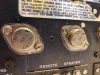
Also, the power transistors heatsunk to the back panel--labeled RCA SEL 200 CCN 2A--is there a known equivalent? How would I evaluate them to choose an equivalent?
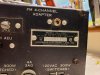
I could use some steering in the right direction. This one's going to be a learning experience. Thank you for your advice in advance. I always enjoy the spirit of this group.SEL200a.jpeg SEL200b.jpeg SEL200c.jpeg
 
Register to hide this ad
Is it popping and crackling in one channel? If so, probably one of the pre driver (differential) transistors may be bad (noisy).
 
Is it popping and crackling in one channel? If so, probably one of the pre driver (differential) transistors may be bad (noisy).
No. She's smooth as silk all around as far as popping and crackling is concerned. Just a lower level. I swapped the power output transistors and it didn't make any difference. A schematic would be very helpful in this case. Thanks for your guess. Appreciated.
 
Okay, then i will next suggest to clean all pots and switches. You wouldn't believe the channel drop/fuzz/distortion you get from them especially the tape monitor, tone defeat, and loudness buttons.
 
I have seen a similar problem to this on other Sherwood receivers (specifically 7100A and 7200). In those cases it was a bad coupling capacitor on the driver board input.
 
I have a SEL-200. A real nice receiver. I had to replace a bunch of signal caps that were bad in it. Coupling as well as output capacitors. I have the Service Manual and have uploaded it to HFE. It should appear in a few days. I tried uploading here, but couldn't find the email address I have sent them to in the past.
 
Okay, then i will next suggest to clean all pots and switches. You wouldn't believe the channel drop/fuzz/distortion you get from them especially the tape monitor, tone defeat, and loudness buttons.
I will recheck those. It's typically my first step to dust, examine, and deoxit all moving parts as a matter of course. However the obvious stuff has eluded my eye on more than one occasion. Thank you.
 
I have a SEL-200. A real nice receiver. I had to replace a bunch of signal caps that were bad in it. Coupling as well as output capacitors. I have the Service Manual and have uploaded it to HFE. It should appear in a few days. I tried uploading here, but couldn't find the email address I have sent them to in the past.
I'd love to see it, and can wait for HFE. jct.haynes at gmail is my address if you wish to attach it to me. Thank you. I will check some caps under the board again. Rest assured, I went at them with my ESR meter at first. There are tantalum caps that I have not replaced, but I'm assuming their failure rate is not similar to aluminum electrolytics. Thank you for your remarks.
Jonathan
 
Okay, then i will next suggest to clean all pots and switches. You wouldn't believe the channel drop/fuzz/distortion you get from them especially the tape monitor, tone defeat, and loudness buttons.
I do wonder about the specific five or six second pause before this channel rapidly fades out at each power cycle. That indicates a capacitor charging/discharging/failing to charge to me--but my experience pales to many's here.
Jonathan
 
Not a capacitor! :no:

Maybe a faulty connection or ground. Try poking around with a pencil eraser or chopstick or some such thing.
 
I'd love to see it, and can wait for HFE. jct.haynes at gmail is my address if you wish to attach it to me. Thank you. I will check some caps under the board again. Rest assured, I went at them with my ESR meter at first. There are tantalum caps that I have not replaced, but I'm assuming their failure rate is not similar to aluminum electrolytics. Thank you for your remarks.
Jonathan
I sent it to you. let me know if it makes it.
 
So after cleaning and selling our home, I'm back to diagnosing this beast. R sounds lovely. Smooth bass, clear mids and sparkly highs (Jose Feliciano is my test signal from a CD). The L channel, however, still has the same anemic futzy signal. Just sounds like it's half dead. I would like to replace these SEL200's just as a sort of prophylactic measure if possible. Is there an equivalent that is known? I have them here in my hands. How would I go about finding, or finding who knows of--a replacement for them? Thank you.
 
I should say that when I power the SEL-200 up on a current limited power supply (a 100W incandescent bulb in series), it draws enough current to light the bulb, so I know something's wrong. When I power it up on regular mains the thermostat shuts it down with very hot output transistors within 20 seconds. The service manual states that if power consumption drops considerably with both driver transistors removed from their sockets, then they should be suspected faulty. If that is not the problem, then pre-driver or bias-regulator transistors or associated components should be suspect. Actually, I'm learning a lot in this process.
So what power transistors might be equivalents today? Thank you.
 
I would suggest you do the following before replacing any transistors.
As you had said previous this unit had been recapped.
I suggest that you examine the caps on both driver boards and make sure that none are reversed on the problem side.
Check the drivers and others if they are plug in ones, make sure they arent reversed pin wise, or swapped with others.
Look for signs of transistors being replaced, and verify the replacements are suitable and installed properly
I would then suggest that you lift up the bad driver board and look at the connections to see if any are bad, or broken foil by the connections as can happen in a recapping.
I suggest that you check the transistors using an old analog meter if you can find on. use the RX1 scale. B-E and B-C should show mid scale deflection in foward direction (Black to E or C and Red to Base on an NPN transistor) , and should show open or very little deflection on reverse direction. E-C should read open or very little deflection in both directions. This can be tested in circuit with power off. If everything looks good reassemble, and connect a DC voltmeter across the 2 leads of one of the 5W (0.47 ohm emitter resistors on the bad channel.power the unit on and make sure you get around 15mv across the resistor. Shut the unit down, and connect to the other emitter resistor. power on and check for the 15mv. If both readings are very high, try adjusting the bias pot R283 to bring it down.
Respond back and let us know what you found.
 
Back
Top Bottom