Shinjitsu Audio speakers - anyone heard them?

BmWr75

Top octave? pfffffftttttt
Subscriber
These have peaked my interest. Wondering if anyone has experience with any of the models this company sells?

 
Register to hide this ad
These have peaked my interest. Wondering if anyone has experience with any of the models this company sells?

Never heard of them but the specs look very good and the design is interesting. Nice!
 
Nice looking! Surprised to not see any power handling specs.
 
Last edited:
True they do look interesting, and some of them even sports the Beyma TPL150 AMT driver.
I prefer big woofers though, but for small speakers they look really cool.
 
I like the offering of the HORN 1 PLUS 2 and HORN 2 PLUS 2 2 way crossover engines. The HORN 2 PLUS 2 would fit well with my JBL woofer cab.
One only has to offer the values needed for their crossover choice. Shinjitsu also offers assistance if needed to obtain the proper crossover values.
 
I saw an 8+ watt amp is recommended for the Little Hiro that has 90 dB sensitivity and 8 nominal ohm impedance.
 
I like the offering of the HORN 1 PLUS 2 and HORN 2 PLUS 2 2 way crossover engines. The HORN 2 PLUS 2 would fit well with my JBL woofer cab.
One only has to offer the values needed for their crossover choice. Shinjitsu also offers assistance if needed to obtain the proper crossover values.

You could even pair them with your own DIY big woofer in cab.
Beyma woofers, as far as I can find out, don't suffer from phase shift at high frequencies, and they barely have breakup before roll off, so they might just work fine without as lowpass filter at all.
Those Caladans use Beyma woofers, and are well liked.
 
I saw an 8+ watt amp is recommended for the Little Hiro that has 90 dB sensitivity and 8 nominal ohm impedance.
I would take from their statement that any amp above 8 watts would do. I could be wrong, but I'm not sure I believe there's no chance of damaging these speaker with a high powered amp.
 
I would take from their statement that any amp above 8 watts would do. I could be wrong, but I'm not sure I believe there's no chance of damaging these speaker with a high powered amp.

Isn't that true of pretty much any speaker if you got enough power to throw at them. :-)
 
Nice looking! Surprised to not see any power handling specs.
I've been saying for years now that power handling specs on speakers are pretty much meaningless. Aside from PA gear with very clearly defined testing parameters, of course. How loud do we expect to play a little pair of bookshelf speakers?

As to the OP, they look like commercial econowaves.
 
Isn't that true of pretty much any speaker if you got enough power to throw at them. :)
I've been saying for years now that power handling specs on speakers are pretty much meaningless. Aside from PA gear with very clearly defined testing parameters, of course. How loud do we expect to play a little pair of bookshelf speakers?
True, but how much power can one safely throw at them is what I'd like to know. Is that too much to ask?
I suppose some people don't care about those specs, but some do and apparently most speaker manufacturers care enough to include it in their specs. If the buyer places importance on that spec then the manufacturer should include them if they plan on making a sale. What do they have to hide?
 
True, but how much power can one safely throw at them is what I'd like to know. Is that too much to ask?
I suppose some people don't care about those specs, but some do and apparently most speaker manufacturers care enough to include it in their specs. If the buyer places importance on that spec then the manufacturer should include them if they plan on making a sale. What do they have to hide?
You know as well as I do that when the vast majority of home speakers that get damaged ("blown"), it is due to over driving an amp. Very, very rarely do speakers in a home setting get burned out from being flat out over powered. Power ratings really only mean something if the testing parameters are clearly defined. Frequency range, amplitude, crest factor, duration, and such.
Maybe a recommended amplifier range would suffice?
 
True, but how much power can one safely throw at them is what I'd like to know. Is that too much to ask?
I suppose some people don't care about those specs, but some do and apparently most speaker manufacturers care enough to include it in their specs. If the buyer places importance on that spec then the manufacturer should include them if they plan on making a sale. What do they have to hide?

So what are you wanting the seller to state? The wattage rating of the overall speaker? Honestly I've never found wattage ratings on speakers to be meaningful. How loud a speaker gets before distorting is partially dependent on the size of the room and how close a person is sitting to the speakers.
 
Well, we have to know which drivers are used, the TPL150 is a mighty PA tweeter, you'll have a hard time burning that one at least.
The efficiency of their horns should prevent damage also, they'll go really loud without a lot of power, so less heat.
The woofers are unknown to me.

Edit: oh wait, they mention them in the description.
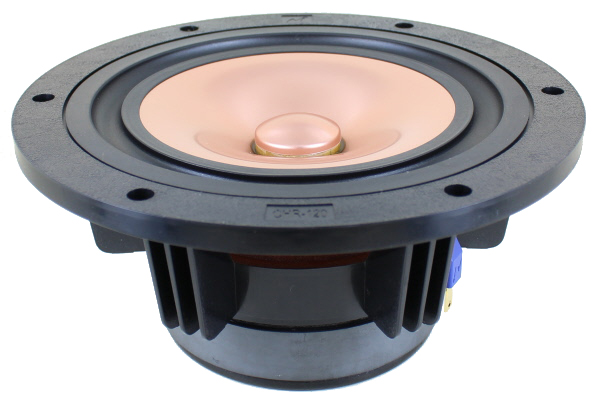
Edit2: no mention of the power handling of the Mark Audio CHR120, on the manufacturer site either.
Donno what the cheaper models are using.
 
So what are you wanting the seller to state? The wattage rating of the overall speaker? Honestly I've never found wattage ratings on speakers to be meaningful. How loud a speaker gets before distorting is partially dependent on the size of the room and how close a person is sitting to the speakers.
The power handling capability, usually shown in watts.
I emailed Shinjitsu and asked them this question, and the designer was gracious enough to provide a quick and thorough response:

The maximum power ratings for our speakers are:

he Hiro Aire and Hiro utilize the CHR-120 driver, with a maximum power handling of 50W RMS (100W peak), making them suitable for moderate to high-power amplifiers. The Little Hiro uses the CHR-70 driver, with a maximum power handling of 20W RMS (40W peak), ideal for lower-power systems.
You can safely pair these speakers with any amplifier wattage, provided you don’t exceed the driver’s power rating or allow the amplifier to clip, as this can cause damage. Clean, undistorted signals ensure optimal performance, so monitor for signs of stress or distortion and reduce volume if necessary. Both designs deliver excellent sound quality when used responsibly within their power limits.

Best regards,

Morris
Designer
Shinjitsu Audio
 
Last edited:
Back
Top Bottom