• The move to the new server is done. There are some software and database maintenance updates in process. This has us passing the hat around to help out. We appreciate any donations. Seriously, even a dollar helps. The payment page may be found here - https://www.audiokarma.org/support.html

ShouId I try a passive preamp?

z-adamson

Addicted Member
Lately I have been using my active preamps as nothing more than a glorified volume knob and I use only the aux in. As such I began to ponder a passive preamp.

What do you think? Under what conditions is a passive preamp prefered? I am happy with my current active preamps, but I wonder what a passive would offer.
 
Last edited:
Register to hide this ad
Lately I have been using my active preamps as nothing more than a glorified volume knob and I am only the aux in. As such I began to ponder a passive preamp.

What do you think? Under what conditions is a passive preamp prefered? I am happy with my current active preamps, but I wonder what a passive would offer.

In theory a passive preamp would add no 'color' to the sound. If that's your goal, I would suggest trying one out, assuming your source is strong enough to drive the volume you like.

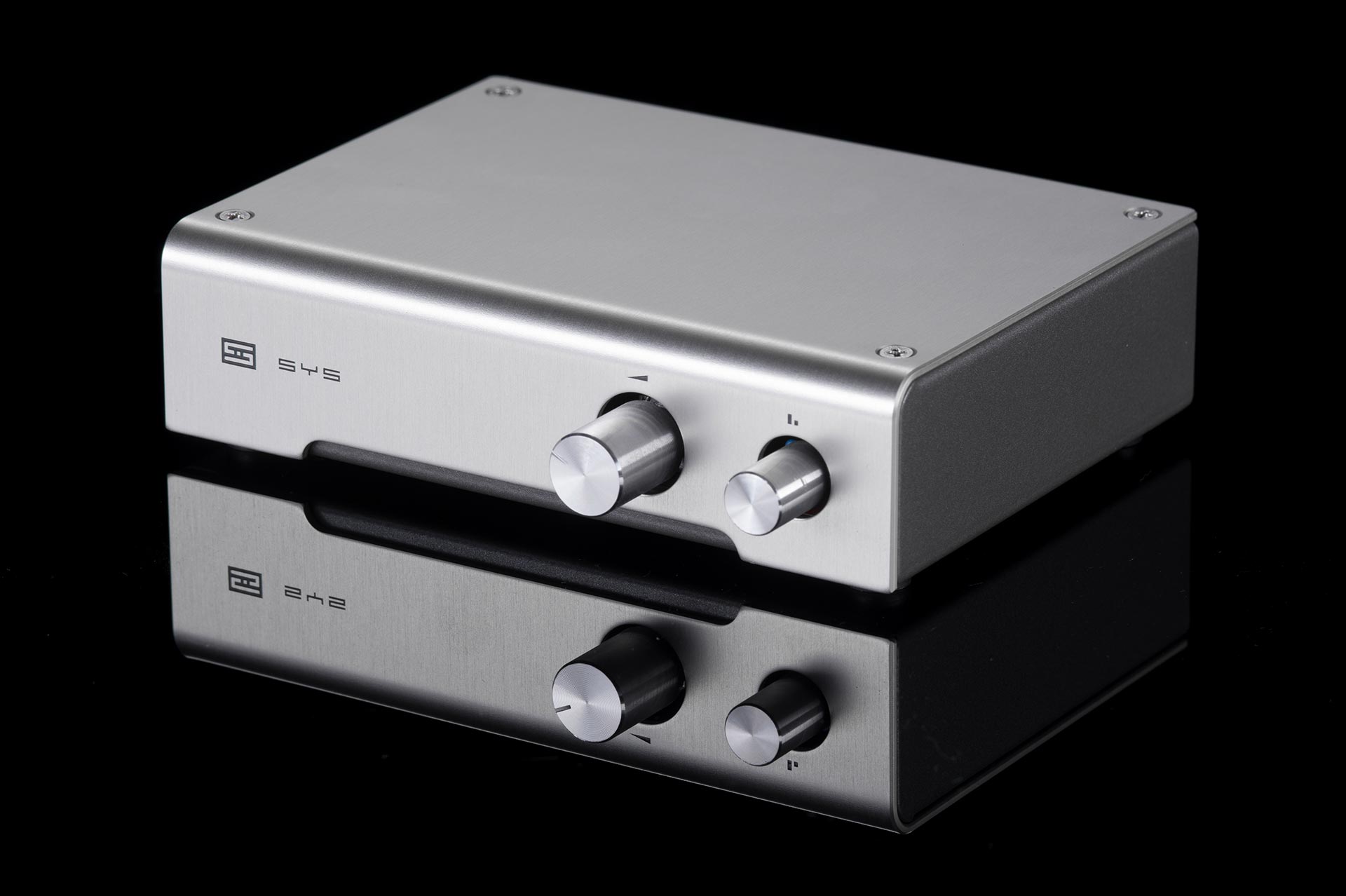
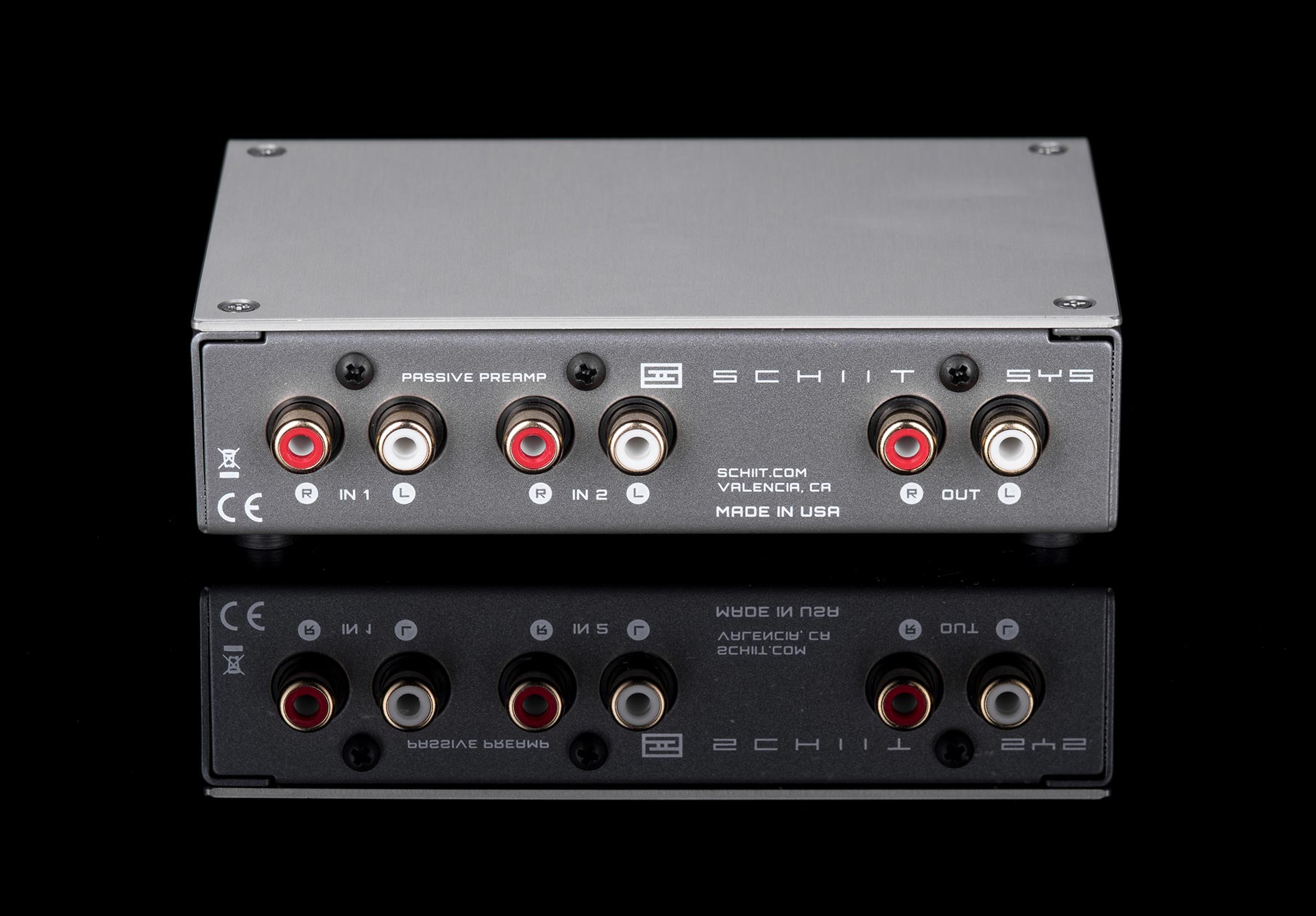
For what it's worth, I have a $49 Schiit Sys passive pre that I use periodically. I like it, but lately have been getting into small $31 tube preamps that add a little color and gain.

sys-front.jpg


sys-rr-1920.jpg
 
Yes you should try a passive preamp, IMO.

As a rule of thumb, the input impedance of the power amp should be at least ten times the output impedance of the passive, which is usually the value of the potentiometer. For the Schiit Sys, that is 5K ohms, so you want a power amp with a 50K ohm input impedance, or higher. If yours qualifies, go for it. :music:
 
Yes you should try a passive preamp, IMO.

As a rule of thumb, the input impedance of the power amp should be at least ten times the output impedance of the passive, which is usually the value of the potentiometer. For the Schiit Sys, that is 5K ohms, so you want a power amp with a 50K ohm input impedance, or higher. If yours qualifies, go for it. :music:
My amps are all 47k ohms input impedance. What is the worst that could happen being just outside of the "ten times" rule?
 
In theory a passive preamp would add no 'color' to the sound. If that's your goal, I would suggest trying one out, assuming your source is strong enough to drive the volume you like.

For what it's worth, I have a $49 Schiit Sys passive pre that I use periodically. I like it, but lately have been getting into small $31 tube preamps that add a little color and gain.

sys-front.jpg


sys-rr-1920.jpg
Source is modern cdp, should be strong enough, right?

I have seen that schitt sys. I also see many other options in the several hundred dollar range. What exactly do you get for the big money passive preamps? A better volume knob?
 
Source is modern cdp, should be strong enough, right?

What exactly do you get for the big money passive preamps? A better volume knob?

Yes, line level out from a CDP should be plenty. And the volume pots may well be better in the more expensive units. The knobs will most certainly be larger -- the Sys's isn't very big.
 
My amps are all 47k ohms input impedance. What is the worst that could happen being just outside of the "ten times" rule?
None, as long as your source(s) can wdrive a ca 5-8k load. Low output levels and reduced low end response is the worst that can happen.
 
Last edited:
Yes you should try a passive preamp, IMO.

As a rule of thumb, the input impedance of the power amp should be at least ten times the output impedance of the passive, which is usually the value of the potentiometer. For the Schiit Sys, that is 5K ohms, so you want a power amp with a 50K ohm input impedance, or higher. If yours qualifies, go for it. :music:

None, as long as your source(s) cab drive a ca 5-8k load. Low output levels and reduced low end response is the worst that can happen.
The output impedance of a potential divider is equal to the upper resistor and lower resistor in parallel. That means for a 10k pot the output impedance is 2.5k at its worst case, ie when the upper and lower halves of the track are both 5k. For all other setting of the pot the output impedance is lower than 2.5k. When the pot is fully on or fully off, the output impedance is zero (assuming a zero output impedance for the signal source driving the pot).

If a power amp has an input impedance of 47k and you want to keep the source to < 4.7k you will need a pot of no more than 18.8k. In reality a 20k pot should be ok. A 10k pot will definitely be ok, so long as the source driving the pot is happy driving 10k. Nearly all modern stuff will be fine driving 10k but some valve (tube) equipment might not like it.

With a passive preamp you have to have the volume control set higher than you usually do with an active preamp and in my experience people get a bit alarmed at seeing the volume at around 3 o'clock on the dial. For that reason I think people tend to listen at lower SPLs when using a passive preamp, hence the (false) claim that they lack dynamics.
 
Source is modern cdp, should be strong enough, right?

I have seen that schitt sys. I also see many other options in the several hundred dollar range. What exactly do you get for the big money passive preamps? A better volume knob?
The better units will have a stepped volume, most likely, rather than a pot. often a resister ladder type. It does make a difference in sound quality. Something like a Khozmo, Goldpoint and others. With my 47k amp the volume is around 80db with the knob of my khozmo at about 9 o'clock.
 
Low output levels and reduced low end response is the worst that can happen.

Wouldn't the *high* frequencies be more attenuated? Shunt capacitance of the cables and the high source impedance of the passive pre makes for a low pass filter.
 
Wouldn't the *high* frequencies be more attenuated? Shunt capacitance of the cables and the high source impedance of the passive pre makes for a low pass filter.
Yes, that's true, but when you put some numbers into the equations it doesn't look bad at all. Take 2.5k as the output impedance and 150pF as the cable capacitance for a meter of cable and you get -3dB at over 400kHz. Of course, a higher source impedance and longer cable makes things worse.

The LF response will be determined by the output coupling capacitor in the source component, but it should cope with a 10k load easily enough.
 
I swapped a valued integrated amp for a passive pre, simply because it was a Superphon. It was...kind of disappointing, sort of flat, no balls. Then I bought one of those preamps as mentioned by poster #2. There is a 90+ page AK thread on it, so it has quite a following. Currently, I am using another active pre, a Marantz AV600 tuner/preamp. Good sound.
 
Wouldn't the *high* frequencies be more attenuated? Shunt capacitance of the cables and the high source impedance of the passive pre makes for a low pass filter.
The low load Z tends to negate the shunt capacitance loss, but will affect the LF roll-off factor of any series coupling capacitance by elevating it. DC coupled sources need only be sufficiently robust to drive it.
 
You might want to try one of the two Schiit Freya models. Both have an active and passive mode. One has a tube gain stage, and one a transistor gain stage.
 
The low load Z tends to negate the shunt capacitance loss, but will affect the LF roll-off factor of any series coupling capacitance by elevating it. DC coupled sources need only be sufficiently robust to drive it.

Gotcha. You're looking at the input side of the pre, and accounting for a series coupling cap at the source. I was thinking of the output side of the pre, and the shunt capacitance of the cable.

So a passive pre limits the bandwidth at both ends (not necessarily a bad thing if hum and ultrasonic/RF noise is a problem!), but doesn't cause audible problems itself if used with well-designed gear (low output Z source with large coupling caps, low Z interconnect cables, reasonably high input Z amp).

Edge case: Splitting the signal to multiple amps using splitter cables from a passive pre might drop the impedance bridging below the 1:10 rule of thumb. You know *somebody* out there is passive triamping solid-state amps from a passive pre fed by a tube-output CD player...
 
Yeah, I ran into this recently while trying to "squeeze" a pot into a tight-ish output/input ratio.
Tube preamp no like!
Attenuator acted like a tone control.
That's what happens with a relatively feeble cap coupled source drive. Anode follower tube line stages particularly vulnerable.
 
I too was that guy who suffered a impedance mis match with a Promitheus tvc preamp.

And what a perfect storm it was. And clearly no fault of the tvc.

Had a don allen modded Philip's cd player with a tube output stage into the tvc then into some 300b mono amps. Yeah that didnt work. Lol

But with a solid state source all was fine.

I plan to snag another tvc preamp of some make. Now that I know more about properly implementing such things. The Promitheus unit sounded great imo. Kinda regret selling it years ago. I was a VERY early purchaser of their gear. I even helped source what was used for a stereo volume switch. It was a massive industrial piece. Really had to put some force behind turning that sucker. I imagine someone out there is still using it. :)

And yes most definitely try a passive pre of some type. I feel most folks should just to see if they like the sound or not. No biggie either way.
 
Magnetic attenuation. At least with some. Solves impedance problems, and lowers noise even further.

Inserting a transformer with gain makes the impedance bridging *worse*, not better. +6dB of gain means now the impedance seen by the source output is four times smaller, and the impedance seen by the amp input is four times larger. Using a TVC with *-6dB* gain (insertion loss be damned) makes more sense. Of course, the source needs to be capable of sufficient output voltage, but that's a prerequisite for choosing a passive pre in the first place...

Leakage flux from the TVC can cause frequency response issues when resonant with cable capacitances far below what would matter with resistive preamps. Adding damping just screws up the Z bridging more.
 
Back
Top Bottom