• The move to the new server is done. There are some software and database maintenance updates in process. This has us passing the hat around to help out. We appreciate any donations. Seriously, even a dollar helps. The payment page may be found here - https://www.audiokarma.org/support.html

Sibilance caused by my tweeter design or my crossover components?

King Browne

New Member
I picked up some vintage Canton speakers at auction recently, model Quinto 540's, well made German 3 way speakers from the early 80's in great condition. Very high quality sounding speakers, but a little bright on the top end even to the point of exhibiting a bit of sibilance. Once you hear it you can't unhear it! Should I bother replacing the capacitors in the crossover with fresh high quality capacitors or is the sibilance a function of the tweeter design alone? I would upgrade the crossover components and keep the speakers if the caps might be contributing to the problem. Any thoughts or experience on the how crossover components affect brightness and sibilance? For what its worth my source is Tidal streaming over a Blue Sound Node through a solid state preamp (Classe CP-50) and amplifier (Classe CA-100). Both are very detailed and musical with other speaker combinations. Thanks in advance!
 
Register to hide this ad
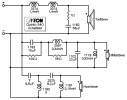
Sibilance usually manifests itself in the 5-10kHz frequency range. So it could be in the mid range or the tweeter, depending on crossover frequency. Does it happen regardless of the recording or just some of them? Some recordings can be the problem. Doubtful it's crossover caps unless they're grossly out of spec. The only way to know is to pull the crossover and measure the individual capacitors.
 

Attachments

  • Quinto 540_pepoyaso.png
    Quinto 540_pepoyaso.png
    15.9 KB · Views: 22
The sibilance is a speaker characteristic, not source, specific. I'll have to pull the caps measure their values. Will report back. Thanks for the crossover diagram!
 
The sibilance is a speaker characteristic, not source, specific. I'll have to pull the caps measure their values. Will report back. Thanks for the crossover diagram!
I respectfully disagree. Lots of recordings exhibit sibilance. Janis Ian's "At 17", Simon and Garfunkle "Sounds of Silence" are two that come to mind. Every system I've played those recordings on has exhibited the characteristic.
 
It's not only the speakers that can be a cause of it, I've never had exaggerated sibilance till I added the cheap pre amp I'm using.

As for the Canton speakers a change of caps could tame things, if chosen well. That's assuming they don't have any faults. Different speaker cables may also tame things somewhat YMMV.
 
I have not had my hands on a 540 but every Quinto 510, 520 and 530 that I have had on my bench the electrolytic caps were well out of spec, and always up in capacitance and ESR. I wouldn't hesitate to replace them.

The tweeter will not have ferrofluid in it.

:beerchug:
James
 
I respectfully disagree. Lots of recordings exhibit sibilance. Janis Ian's "At 17", Simon and Garfunkle "Sounds of Silence" are two that come to mind. Every system I've played those recordings on has exhibited the characteristic.

Good speakers can't make up for a poor recording.
 
Normally these are going to be some very clean sounding speakers. Perhaps a bit bright for some tastes but sibilance is not normal.

:beerchug:
James
 
40+ years old, with electrolytic caps in the crossovers, and you're complaining about sibilance? I'd start by replacing the electrolytic caps. Don't bother testing them, just replace them. It will probably cost less than $20 for both speakers.
 
Note that the tweeter caps are going to be MKT film and won't need to be replaced.

But the mid caps will be elcos, and they always seem to drift up. Allowing the mids to play up into the tweeter range a bit. So I can see where this can produce some harshness there.

:beerchug:
James
 
I respectfully disagree. Lots of recordings exhibit sibilance. Janis Ian's "At 17", Simon and Garfunkle "Sounds of Silence" are two that come to mind. Every system I've played those recordings on has exhibited the characteristic.
I didn't mean to imply that recordings (and other components) can't exhibit/create sibilance, just that in this case with the same system and the same source material, the introduction of new speakers introduced sibilance.
 
Or reveal what you couldn't hear on the other speakers.

Definitely replace any electrolytic capacitors in the cross-over, and verify that you don't have tears or cracks in the tweeters. Nothing like a loose edge to produce some sizzle in the sound.

And yes, Sound of Silence has plenty of sibilance, drove me nuts trying to set up a new cartridge on my turntable until I figured out it was the source, not the alignment that was causing it. Odd, oherwise that's a well recorded album, but it WAS 1963.
 
Back
Top Bottom