

You are using an out of date browser. It may not display this or other websites correctly.
You should upgrade or use an alternative browser.
You should upgrade or use an alternative browser.
SMD desoldering
- Thread starter dbxdx5
- Start date

Register to hide this ad


In my experience, irons are good for attaching and reflowing. For removing parts, you'd need something like Chipquik. I have it but haven't tried it (see the video below).
In general, I recommend hot air. There are some hot air stations on eBay for <$100.
+1
I have used Chipquik and it works great. Amazon has practice boards you can learn on.
Tony

I've used a ChipQuik kit a couple times, finding it most useful on multi-pin devices. I have a hot air station (actually, one of those low-buck multi-function stations) and I've only used to to practice on old PC motherboards. I think I might be able to get a component off a board without turning anything to charcoal - Maybe.

elnaldo
Lunatic Member
For hobby works, not full time SMD desoldering, low temp alloys (AKA chipquick NO AFFILIATION) work very well, I use them all the time with a regular soldering iron and a regular tip. For soldering, I like a very thin tip, pencil style but that sharp one. It allow to solder each pin without creating bridges (which can be cleaned anyway with a solder wick or the same iron tip).
If you are not planning to do SMD desoldering as a profession, I'd get some of those low temp. alloys and start with that.
For 2 pins devices, resistors and capacitors, adding regular solder is enough to remove them with a regular soldering iron. Using 2 irons too, but if you have to buy a 2nd one, I'd use what you have.
If you are not planning to do SMD desoldering as a profession, I'd get some of those low temp. alloys and start with that.
For 2 pins devices, resistors and capacitors, adding regular solder is enough to remove them with a regular soldering iron. Using 2 irons too, but if you have to buy a 2nd one, I'd use what you have.

ChrisMarantz
Super Member
I do a lot of SMD rework in my business. How you learn to deal with SMD components depends on which types and which sizes you are working with. Removing components is actually the easiest thing to learn how to do, but there are many considerations.
Having a Hot Air Rework stations is a good investment if you're going to do a lot of rework. It is equally important to have the correct type of Flux for SMD rework. You do not want to use your typical Rosen type of flux - it will simply burn away. I use Amtech Flux which is designed for rework. When removing SMD components with hot air, you need to be careful (especially with multi-lead parts) to heat them thoroughly (all the leads are loose) otherwise when lifting the part - you'll pull up a pad.
Another consideration with Hot Air rework is the quality of the actual PCB Board material. Many "consumer products" have simple fiberglass board material. Overheating this type of PCB can cause it to blister and delaminate. As a comparison, some thing like a Apple Laptop won't have this problem due to the high quality of its PCB materials
ChipQuick works well, especially for components like a Quad Flat Pack. You need to know that it will likely bridge all of the pins on the QFP and often the pads on the PCB. You then need to remove the bridges - learning to clean the PCB pads is part of reworking, again this must be done correctly otherwise you will pull up pads. The other down side to ChipQuick is the cost if you're using it a lot.
Now that you have the components removed, you need to replace them. I use a Hakko FM2032 MIcro-Soldering Pencil which is specifically designed for SMD work. There are a variety of tips available and it plugs directly into my FX-951 Soldering Station. You should also buy some 0.020 solder, which is about the diamante of a hair. You can buy this on eBay in small quantities from re-sellers. You can also use solder paste and stencils - but this is much more advanced and really only useful if you're doing a lot of rework on difficult parts
Finally, this biggest challenge can be actually seeing what you're soldering. A magnifying visor is at a minimum needed. A Microscope is need if you're dealing with components like 40 - 80 pin QFP with very tight lead spacing. Bridging pins is easy to do if you can't see them clearly.
I don't use hot tweezers - they are expensive and of limited use. Buy some boards to practice on before working on your own equipment. All of this may seem easy - but it is tricky and there are lots of variables involved.
To answer your actual question - I'd buy a T18-D08 Tip - Chris
Having a Hot Air Rework stations is a good investment if you're going to do a lot of rework. It is equally important to have the correct type of Flux for SMD rework. You do not want to use your typical Rosen type of flux - it will simply burn away. I use Amtech Flux which is designed for rework. When removing SMD components with hot air, you need to be careful (especially with multi-lead parts) to heat them thoroughly (all the leads are loose) otherwise when lifting the part - you'll pull up a pad.
Another consideration with Hot Air rework is the quality of the actual PCB Board material. Many "consumer products" have simple fiberglass board material. Overheating this type of PCB can cause it to blister and delaminate. As a comparison, some thing like a Apple Laptop won't have this problem due to the high quality of its PCB materials
ChipQuick works well, especially for components like a Quad Flat Pack. You need to know that it will likely bridge all of the pins on the QFP and often the pads on the PCB. You then need to remove the bridges - learning to clean the PCB pads is part of reworking, again this must be done correctly otherwise you will pull up pads. The other down side to ChipQuick is the cost if you're using it a lot.
Now that you have the components removed, you need to replace them. I use a Hakko FM2032 MIcro-Soldering Pencil which is specifically designed for SMD work. There are a variety of tips available and it plugs directly into my FX-951 Soldering Station. You should also buy some 0.020 solder, which is about the diamante of a hair. You can buy this on eBay in small quantities from re-sellers. You can also use solder paste and stencils - but this is much more advanced and really only useful if you're doing a lot of rework on difficult parts
Finally, this biggest challenge can be actually seeing what you're soldering. A magnifying visor is at a minimum needed. A Microscope is need if you're dealing with components like 40 - 80 pin QFP with very tight lead spacing. Bridging pins is easy to do if you can't see them clearly.
I don't use hot tweezers - they are expensive and of limited use. Buy some boards to practice on before working on your own equipment. All of this may seem easy - but it is tricky and there are lots of variables involved.
To answer your actual question - I'd buy a T18-D08 Tip - Chris
Last edited:
I've had pretty good success lifting parts with hot air. Practice on old PC motherboards or adapter cards for a while and you can get a feel for it.
The bigger problem is getting the leads from a Simpson 260 on the parts to test. I still have hair, but it isn't conductive enough to replace the meter leads:
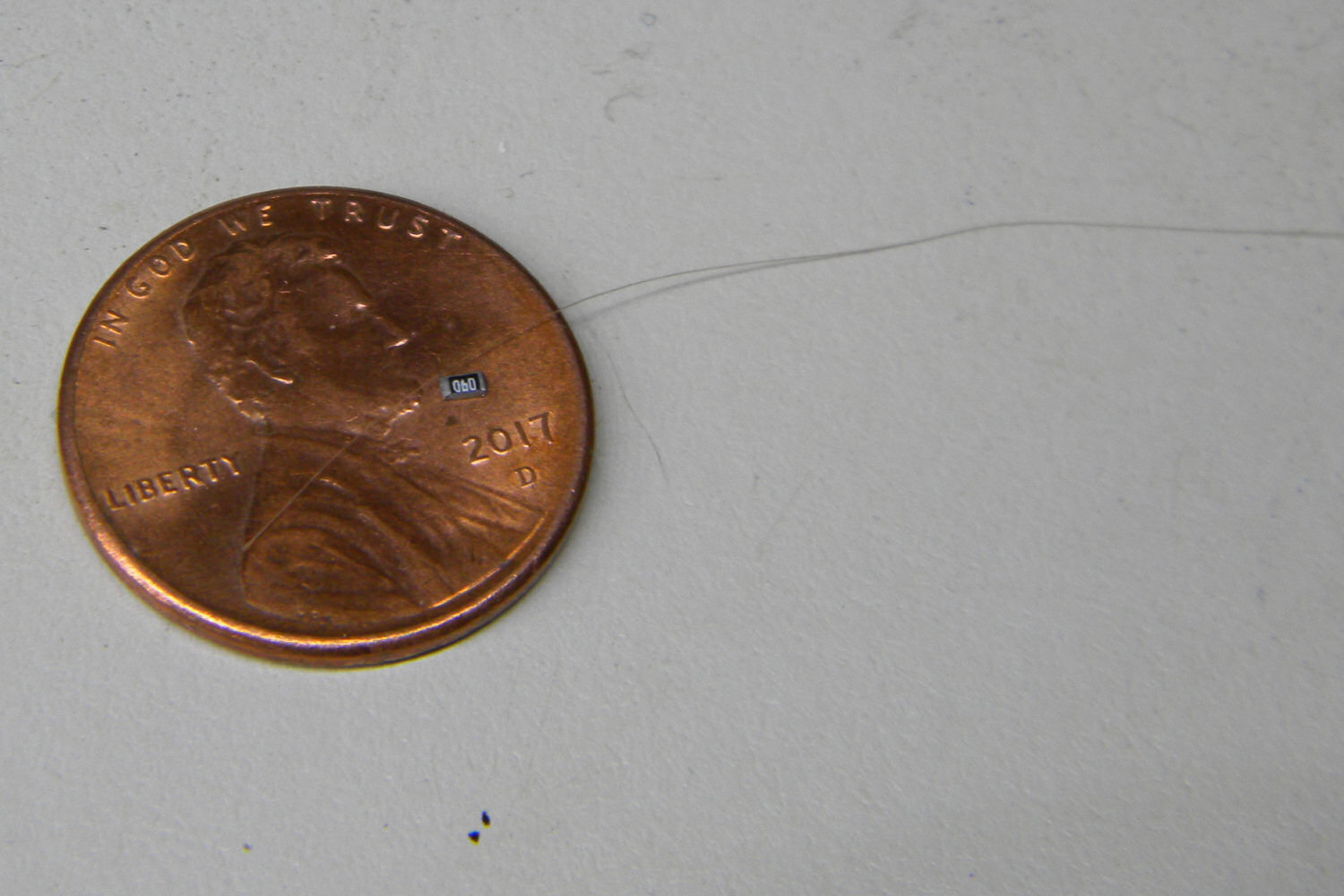
The bigger problem is getting the leads from a Simpson 260 on the parts to test. I still have hair, but it isn't conductive enough to replace the meter leads:

dr*audio
Fish fingers and custard!
For resistors and caps as in the picture above, an easy way to remove them is to apply solder to both pads, then gently lay the tip of the iron next to the part so it touches both pads. Add a bit of solder across the 2 pads and gently sweep the iron sideways, toward the part. The part will stick to the tip and come off. For larger SMT components, like electrolytic caps, you need a hot air tool. The Weller 6966 is inexpensive and works well.

mister-fixit
Active Member
@dr*audio 's method can work well. You can use solder or extra flux .
Not sure what size devices your are looking to remove but a hot air gun will work if you have space around them to avoid nearby components.
Kapton tape helps in that regard.
At my age, any SMD 0402 or larger is my limit of success when doing replacements..
Not sure what size devices your are looking to remove but a hot air gun will work if you have space around them to avoid nearby components.
Kapton tape helps in that regard.
At my age, any SMD 0402 or larger is my limit of success when doing replacements..