• The move to the new server is done. There are some software and database maintenance updates in process. This has us passing the hat around to help out. We appreciate any donations. Seriously, even a dollar helps. The payment page may be found here - https://www.audiokarma.org/support.html

So I bought some 60 watt incandescent light bulbs

Years ago we switched out all our incandescent bulbs to CFL, then later to LED.
Honestly, we didn't see any savings in our electric bill...it keeps going up no matter what we do. So, now as the LED bulbs are starting to fail, i'm putting the old 60w incandescent bulbs back .

I did replace the halogen lamps in our stove hood with LED....those halogens got really hot.
 
my 130v lights came today... Its not night time yet but the porch looks amazing and I will feel less guilty when it comes to ordering pizza at night that it will now be easier to see my house and stairs.

I also put one in the upstairs hall because the current LED light in it didn't allow the fixture to be on the ceiling lamp but that is now fixed with these and again looks amazing. Can't wait to see em at night time.
 
I almost bought a pallet of old incandesent bulbs from Gov Auction site when LEDs were coming out. These are the type that had been used in traffic signals. Yes, traffic lights use standard 115 V bulbs. Except, these are extreme duty, given the ON - OFF duty and the cost of failure and replacement. In a lamp they will last 20 years. My college job was with the Highway Dept and I used to change these bulbs from the gravel shield of a dump truck. There were step brackets and hand holds welded there. Stop in the intersection. Climb out and up, and the driver raises the bed. Voila. Open the case and change the bulb. I don't think anyone does it that way anymore.

They were clear bulbs and kind of harsh. I think they cost about $15 each back in the late 80s. High quality for sure.
 
I almost bought a pallet of old incandesent bulbs from Gov Auction site when LEDs were coming out. These are the type that had been used in traffic signals. Yes, traffic lights use standard 115 V bulbs. Except, these are extreme duty, given the ON - OFF duty and the cost of failure and replacement. In a lamp they will last 20 years. My college job was with the Highway Dept and I used to change these bulbs from the gravel shield of a dump truck. There were step brackets and hand holds welded there. Stop in the intersection. Climb out and up, and the driver raises the bed. Voila. Open the case and change the bulb. I don't think anyone does it that way anymore.

They were clear bulbs and kind of harsh. I think they cost about $15 each back in the late 80s. High quality for sure.

Very interesting. I always wondered about those. Thanks for sharing.

I don't know what they use for stop lights now, but some of the new ones are awful.....you can't see which bulb is illuminated until you're at a certain angle.
 
Very interesting. I always wondered about those. Thanks for sharing.

I don't know what they use for stop lights now, but some of the new ones are awful.....you can't see which bulb is illuminated until you're at a certain angle.
Afaik, gone to HI LED arrays. Lower maintainance redundancy.
 
Yes. They look to be an array of LEDs now.

Another story. The State DOT did a repaving project through our small town and "upgraded" all the traffic signals. The old ones were handed over to the town and were stockpiled in the back of one of our garages. Don't know what they were being saved for, but these old timers were sort of hoarders when it came to town property. I wanted them bad. Not going to happen. I must admit that I liberated a handful of them, enough for me and some of my friends. This was 1989 or so, and the signals were at least 20 years old at the time. That makes them very old now and quite collectable. Not the 50s style, but close. Mid century traffic signals. Die cast aluminum and stylish. I wish I had them now. Mine was last seen in a fraternity house in Oxford OH 1991. I donated it to whoever lived there next.
 
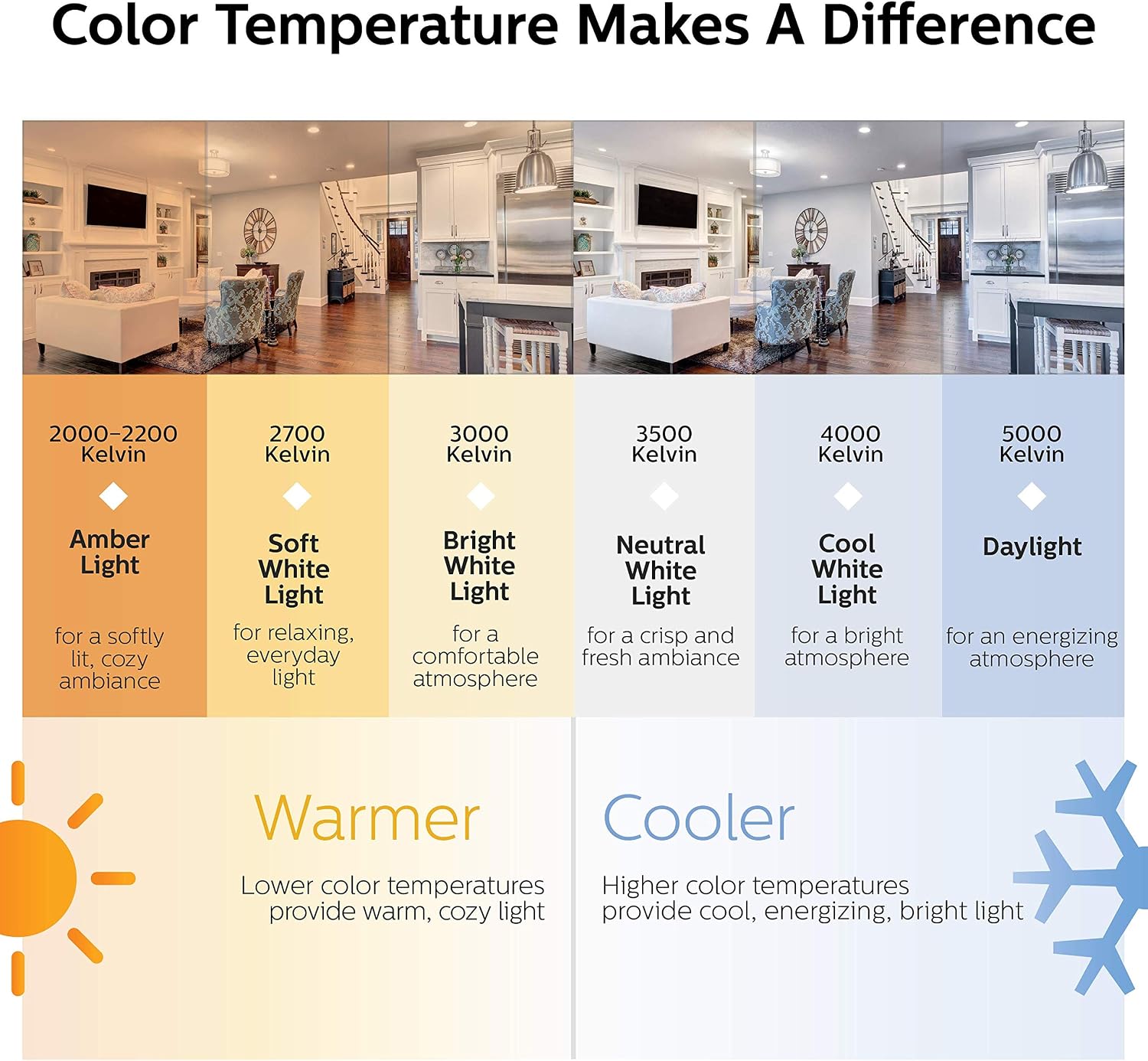
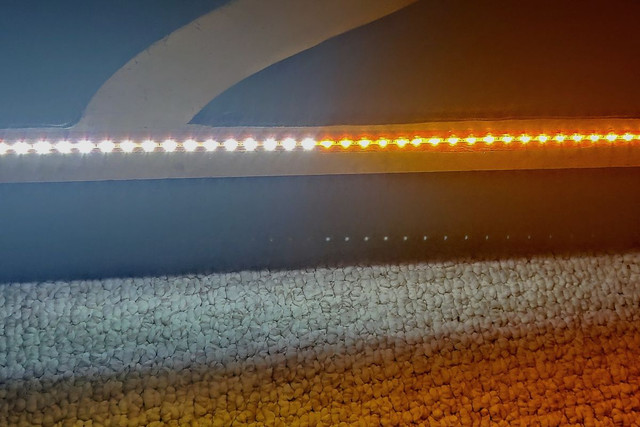
I've replaced literally every bulb in the entire house with the LED's. If you get a good brand (Phillips, Feit, EcoSmart) in 2700k color temperature -- they should be indistinguishable from incandescent. Sometimes 3000k bulbs are labelled "warm", but they are a lot whiter than 2700k and do not look like incandescents. LED's in 4000k, 5000k (daylight), 6000k are awful to look at. Our outside lights were too white with either incandescents or 2700k's, so I used 2500k LED and they look great (that's a flexibility that doesn't exist with incandescents).

I hated CFL's, but am "all in" on LED's.

My deck light fixture, which was limited to 100w incandescent, can handle 300-watt equivalent LEDs in equivalent 2700k color, still using half the energy of the 100w incandescent, and now it lights the whole deck.

The only bulbs I didn't change to LED for a long time were the foyer overhead lights, because while the 2700k LED's looked the same as incandescent at full brightness, the incandescents turn to a softer yellow when dimmed that the LED's would not do. However, Phillips recently came out with 2700k LED's that yellow when dimmed, like incandescents, so now I'm using those. I've convinced a number of people to move the LED -- and when they have the proper bulbs (typically 2700k), none have ever said incandescents look better.

For lava lamps you need heat, so incandescents are the only option. I have some vintage Ballantine Beer lights that are motion lights from an hot air turbine spinning on a needle above the incandescent bulbs -- they spin with incandescents but don't move at all with LED's.

 
Last edited:
Even the stove, microwave/convection, and fridge (AKA appliance) bulbs ?
With the exception of my fridge/freezer (in which I installed certain type small LED type almost 10 yrs. ago) all other appliance bulbs can`t be any other type bulb like CFL/LED, because those elevated appliance in use temperatures would kill them in short order, at least that`s my thoughts !

Definitely the case for oven lights -- I looked hard for LED (mostly because I wanted brighter oven lights -- not concerned about energy since the oven light is seldom on), but couldn't find any.

In the refrigerator and freezer, LED's make a huge difference -- I replaced the 40 watt incandescent (max wattage allowed) with 60-watt equivalent 2700K LED's and it's feels like a completely new fridge every time you open it -- a lot brighter. The LED's also run cool versus the old incandescents that generate a LOT of heat, even when the door is open very briefly, which is the last thing you want in the confined space inside a refrigerator or freezer.
 
Years ago we switched out all our incandescent bulbs to CFL, then later to LED.
Honestly, we didn't see any savings in our electric bill...it keeps going up no matter what we do. So, now as the LED bulbs are starting to fail, i'm putting the old 60w incandescent bulbs back .

I did replace the halogen lamps in our stove hood with LED....those halogens got really hot.

You should have seen a large savings back when you changed from incandescent to CFL, but it makes sense that you didn't see much of a difference between CFL and LED. I hated CFL's with a passion (awful color, slow turn-on, flicker, contain mercury, non-dimming, unreliable, etc.) but they were fairly efficient. CFL's use I think (very roughly) around 1/6th the energy of incandescents and LED's use about 1/8th energy. It's not surprising you didn't see much energy reduction going from CFL to LED, but you will see energy use increase substantially as you move back to incandescent.
 
Once I burn out throu my now 12 bulbs worth ill give those LEDs with the those color ranges a try thanks for mentioning them.
Found this cool chart on amazon

8176ggm3xaL._AC_SL1500_.jpg
 
I keep all my incandescent bulbs and some of them are still in use, in fixtures with dimmers.
I have replaced a couple of them with halogen versions that are still incandescent but 30% energy saving and happily give out the same warm light. We can still buy such bulbs.

I also have a couple of 150W large incandescent bulbs. Planning to build a dim bulb tester. How will DBTs be built 10-20 years from now when all bulbs will be gone?

I thought this thread was going to be about dim bulb testers! Still, I agree that the light produced by a good incandescent is hard to beat. For what it's worth, 60W is plenty for a DBT to test lower powered amps and receivers. There's probably a thread somewhere about which wattage to use for a given power range (assuming a standard class A/B amp).

Addendum: I absolutely HATE bright white/cool LED bulbs. My neighbor has several yard lights in a standard sized lot and I'm totally blinded if I go out back in the evening because of his super bright LEDs. I've mentioned this to him and he won't change them. It seems he's worried about being robbed, even though we live in a very low crime area. By the way, light pollution, and its effects on human health, is a real thing.
 
In Kalifornia, incandescent is not legal to buy or sell. Wish I could go back but the energy saving is too great.

I was curious, so I went to lowes.com and entered a San Francisco area Zip code. The San Bruno store has two pages of incandescent bulbs listed as in stock, or available for delivery. They even have a 50/100/250W 3 way bulb for $2.78. Hurry, they only have 42 left!

I like good quality LEDs with the right color temperature. They run cool and last a long time. No more crispy wiring in my lamps. There's nothing worse than cheap LEDs with poor color, and horrible 60Hz flicker.
 
I was curious, so I went to lowes.com and entered a San Francisco area Zip code. The San Bruno store has two pages of incandescent bulbs listed as in stock, or available for delivery. They even have a 50/100/250W 3 way bulb for $2.78. Hurry, they only have 42 left!

I like good quality LEDs with the right color temperature. They run cool and last a long time. No more crispy wiring in my lamps. There's nothing worse than cheap LEDs with poor color, and horrible 60Hz flicker.


Hmmm. Maybe someone has been lying or I have been lying, lol. I haven't seen a single way filament bulb at Home Depot is ages. Quality of LED and CFL light really bugs me. Maybe it is the flicker or maybe they are not full spectrum?
 
I don't see ant regular incandescent bulbs at Homedepot.com, but they do have halogen, which is a type of incandescent. I see the same selection in Texas as in CA, so I don't think it's a state law. I guess Home Depot has decided not to sell regular incandescent anymore.
 
Back
Top Bottom