And for most of the gear I work on, JIS is a lifesaver. I think Adcom is the only modern-ish gear I have that isn't made in Japan, or somewhere in Asia.As you implictitly mention -to those that did't know- there is a difference between Phillips, Pozidriv/Supradriv and JIS.


You are using an out of date browser. It may not display this or other websites correctly.
You should upgrade or use an alternative browser.
You should upgrade or use an alternative browser.
So You Want To Repair Audio gear, Eh? Here's the tools you need...
- Thread starter EchoWars
- Start date

ukfan4sure!
Expert Smoke Releaser
I haven't read the entire thread... 29 pages, but I find a row of RCA and other audio type jacks important for testing purposes. It's mounted to the first tier shelf of the test bench. I have a Technics receiver with it's inputs/output cables running to the back of the row. They are each labled, like "Aux, phono, tape 1". This way, I never have to turn it around to make connections. Also, I have multiple outlet boxes mounted conveniently in various places.

Yamaha5000
Never settle for 2nd best
Photo?I haven't read the entire thread... 29 pages, but I find a row of RCA and other audio type jacks important for testing purposes. It's mounted to the first tier shelf of the test bench. I have a Technics receiver with it's inputs/output cables running to the back of the row. They are each labled, like "Aux, phono, tape 1". This way, I never have to turn it around to make connections. Also, I have multiple outlet boxes mounted conveniently in various places.

Pio1980
AK Member
We had similar setups in my shop, when I had it. The forman was industrially ingenious and practical. If I'd only had a bookkeeper as good.I haven't read the entire thread... 29 pages, but I find a row of RCA and other audio type jacks important for testing purposes. It's mounted to the first tier shelf of the test bench. I have a Technics receiver with it's inputs/output cables running to the back of the row. They are each labled, like "Aux, phono, tape 1". This way, I never have to turn it around to make connections. Also, I have multiple outlet boxes mounted conveniently in various places.
Mr. Dennis
New Member
Being retired I decided to pick up electronic component repair recently as a hobby if for no other reason than to maintain my own 2 CH audio and Ham Radio equipment. All of my stuff is old like me so I took the approach of I can use old stuff to fix old stuff. Some of it is new but I try to be thrifty when I can and some of this I already had from years past. What I have got so far is the following;
Oscilloscopes, a digital Siglent SDS 1052DL I found new on eBay for $140 and an analog Tektronix Type 503 for $50 off FB Marketplace.
Wavetek 144 Signal Generator off eBay for $150
Tektronix Type 106 Square-Wave Generator off FB Marketplace for $50
HP 5314A Universal Counter off eBay for $85
Toroid ISB-060W Medical Isolation Transformer off eBay for $115
Heathkit IP-2715 6-15V DC, 25 Amp linear power supply at a thrift store for $5
Heathkit IT-28 Capacitor Checker off eBay many years ago for $35
Heathkit V-7A Vacuum Tube Multimeter off eBay many years ago for $10
Heathkit IN-37 Resistance Substitution Box at an estate sale for $5
FLUKE AN/77 DMM I have had forever, free
FLUKE 8840A bench DMM off eBay for $160
HAKKO FX-888-D soldering station from Amazon $124
HAKKO FR-301 desoldering gun from Amazon $254, most expensive splurge item to date.
DIY Dummy Load and DIM Blub Tester for about $120 total.
That hits all the high-water marks, for consumables & test leads another couple C-Notes so about $1,500 total. For repair parts anything I need new Digikey seems to be the best game in town and if used I go dumpster diving on eBay. Everything else seems to be Amazon, give Bezo another dollar.
My first successful repair was the Heathkit IP-2715 that needed a new IC and transistor. Next up was a Sansui R-70 Receiver with a dead channel and some bad Caps, Caps are repaired but still on the hunt for a 11907600 selector switch.
In the hopper I have the Tektronix Type 503 (waiting on a tube), B+K Precision 2040 CB Signal Generator (waiting on a test lead), Hallicrafters SX-100 Receiver (waiting on a tool), Hammerlund HX-500 Transmitter (haven't touch) and a Realistic 999B RTR that won't power up.
Speaking of tools, WTF is up with a Bristol Spline Tool (fancy allen wrench). I need one to remove the knobs off the vintage 1962 SX-100 Receiver so I bought the $24 set only to need a size that wasn't in that set and had to go buy the $34 set. I could have bought a fist full of allen wrenches for that amount.
On the educational front YouTube University is my go to place for all things electronic and a couple vintage equipment forums.
Anyway, new here and just wanted to contribute to this thread.
Dennis
Oscilloscopes, a digital Siglent SDS 1052DL I found new on eBay for $140 and an analog Tektronix Type 503 for $50 off FB Marketplace.
Wavetek 144 Signal Generator off eBay for $150
Tektronix Type 106 Square-Wave Generator off FB Marketplace for $50
HP 5314A Universal Counter off eBay for $85
Toroid ISB-060W Medical Isolation Transformer off eBay for $115
Heathkit IP-2715 6-15V DC, 25 Amp linear power supply at a thrift store for $5
Heathkit IT-28 Capacitor Checker off eBay many years ago for $35
Heathkit V-7A Vacuum Tube Multimeter off eBay many years ago for $10
Heathkit IN-37 Resistance Substitution Box at an estate sale for $5
FLUKE AN/77 DMM I have had forever, free
FLUKE 8840A bench DMM off eBay for $160
HAKKO FX-888-D soldering station from Amazon $124
HAKKO FR-301 desoldering gun from Amazon $254, most expensive splurge item to date.
DIY Dummy Load and DIM Blub Tester for about $120 total.
That hits all the high-water marks, for consumables & test leads another couple C-Notes so about $1,500 total. For repair parts anything I need new Digikey seems to be the best game in town and if used I go dumpster diving on eBay. Everything else seems to be Amazon, give Bezo another dollar.
My first successful repair was the Heathkit IP-2715 that needed a new IC and transistor. Next up was a Sansui R-70 Receiver with a dead channel and some bad Caps, Caps are repaired but still on the hunt for a 11907600 selector switch.
In the hopper I have the Tektronix Type 503 (waiting on a tube), B+K Precision 2040 CB Signal Generator (waiting on a test lead), Hallicrafters SX-100 Receiver (waiting on a tool), Hammerlund HX-500 Transmitter (haven't touch) and a Realistic 999B RTR that won't power up.
Speaking of tools, WTF is up with a Bristol Spline Tool (fancy allen wrench). I need one to remove the knobs off the vintage 1962 SX-100 Receiver so I bought the $24 set only to need a size that wasn't in that set and had to go buy the $34 set. I could have bought a fist full of allen wrenches for that amount.
On the educational front YouTube University is my go to place for all things electronic and a couple vintage equipment forums.
Anyway, new here and just wanted to contribute to this thread.
Dennis

Indeed there is --As you implictitly mention -to those that did't know- there is a difference between Phillips, Pozidriv/Supradriv and JIS.
Before I knew about JIS; and what that little dot on the screwhead means, I stripped ONE screwhead on a very expensive piece of kit that I own.. Ahem.
Very deep and hard to get at -- a lesson that cannot be forgotten.
I also have a Vessel Impacta JIS screwdriver which you hit the head of the driver, and it works like an impact, way cool IMHO.
Oh and,
Welcome Mr Dennis -- very nice set of tools you have there as well --electronically speaking!
Yes, your, (and my) Hakko 301 is a jewel as well -- wouldn't be without it, after the initial bite it took out of my wallet.
Just bought the Hakko FA-400 while Hakko had it on sale, YES!
Being without a fume extractor, is a nasty way to work.
Last edited:


We used those at Hughes Aircraft. Pretty neat, and I'd forgotten about them.
Available at McMaster-Carr...
Available at McMaster-Carr...


Cdrat
Active Member
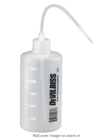
Push DispenserThis is the one I bought
I hate the price, think there has to be something half this price, but when you need it, pretty nice

I hate the price, think there has to be something half this price, but when you need it, pretty nice


Markoneswift
Quartz locked n ready to rock
AudioKarma, YouTube.What reading materials to you suggest for a beginner with very little knowledge?
AK and UT are not going to teach you much theory if that’s what your after. DIYAudio would do a better job as many more EE’s hang out there. If it’s books on electronics then there is a long list of them if that’s what your looking for. There’s lots to learn from reading service manuals as well. These days understanding to use Ltspice is of great benefit in circuit analysis and operation.

Bill Ferris
Lunatic Member
I understand scanned Military electronic teaching course`s manuals that are available free on the web are an excellent source, from the basics on up, if one really wishes to learn and understand.AK and UT are not going to teach you much theory if that’s what your after. DIYAudio would do a better job as many more EE’s hang out there. If it’s books on electronics then there is a long list of them if that’s what your looking for. There’s lots to learn from reading service manuals as well. These days understanding to use Ltspice is of great benefit in circuit analysis and operation.

Dan13105
Well-Known Member
My favorite YouTube channel for being entertained and learning stereo repair at the same time has been Xraytonyb. He not only shows the diagnosis and repair steps, but gets into theory, parts matching, and even designing and building an amp from scratch. I've probably learned more about stereo equipment repair from his channel than anywhere else. Reading books is nice, but having someone explain ot while showing it is even better for me.

I would suggest the book "The Theory and Servicing of AM, FM andd FM Stereo Receivers" or the 2nd edition, "Troubleshooting, Servicing, and Theory of AM, FM and FM Stereo Receivers"What reading materials to you suggest for a beginner with very little knowledge?
The first edition seems to have a bit more detail on tube gear than the 2nd, but they are very similar. I own both. If I had to pick one book when I first got started repairing audio gear, it would have been this one.
It's somewhat expensive but you can find the first edition for around $65 usually. There is no eBook or anything, and it's been out of print for a long time.
Bill Ferris
Lunatic Member
I have quite a bunch of various Howard W. Sam, and some Radio Shack published electronic books that I bought in 1974~75 to self teach myself to understand and repair A/V/RF electronics, while employed as a $2.50 hr. lowly security guard, taking advantage of the usually boring sedate hrs. at various static guard posts that I would be assigned to.I would suggest the book "The Theory and Servicing of AM, FM andd FM Stereo Receivers" or the 2nd edition, "Troubleshooting, Servicing, and Theory of AM, FM and FM Stereo Receivers"
The first edition seems to have a bit more detail on tube gear than the 2nd, but they are very similar. I own both. If I had to pick one book when I first got started repairing audio gear, it would have been this one.
It's somewhat expensive but you can find the first edition for around $65 usually. There is no eBook or anything, and it's been out of print for a long time.
I was 19 and living at my parents home at that time, and my engineer father encouraged me and allowed me to setup a repair bench in the garage to experiment with various RS purchased resistors, capacitors, inductors, some low v/a transformers, and a variable DC power supply, and a VOM kit to get a grasp on the mathematics of fundamental electrical circuits and their cause and effect in their operation.
What reading materials to you suggest for a beginner with very little knowledge?
Indeed BIll Ferris is correct, I believe one of the better one is called NEETS.I understand scanned Military electronic teaching course`s manuals that are available free on the web are an excellent source, from the basics on up, if one really wishes to learn and understand.
Search -- maybe archive.org.
Also, as stated above AK. -- Look for one our most genereous contibutors lonnng thread on "So you want to repair audio" or thereabouts, Echowars <--- he was an institution here, and provided tons on your subject.
sae-7125 has an excellent thread -- and posts his repair experiences here. A treat, and a thread worth revisiting time and again.
Youtube also has some very informative characters -- I am currently in Test Equipment mode... Tony Albus rocks, xraytonyB, Blueglow Electronics, (who I believe is a member here).
Curious Mark provides a fast ride thorough ride throughout an amazing lab; quick mindset, the guy thinks out of the box, has more HP test equipment than one can ever imagine, and a lot of NASA/ HP stuff.
The list goes on.
Learning what components are ie: recognizing a capacitor, resistor etc symbols on a schematic. learning to read that schematic <--- my tough area of learning.
Figuring out the tools you need -- DMM for certain, and....
SO IMPORTANT -- since you will be soldering, Invest in a fume extractor <--- lungs and health are expensive,
a FE is cheap compared to the alternative.
Learning proper soldering techniques -- there are some YT vids, and also a military soldering tutorial, maybe some Nasa soldering tutorials... Soldering isn't hard, it just takes proper procedure and attention to detail. find some old useless electronics and practice on that.
Whew -- I think I wrote a book, sorry for the lonnng post
There you go ...
My absolute best to you on your journey, look forward to hearing of your progress -- lots of awesome help here at AK.
Celadon
Last edited:
NEETS MODULES Here you go!
There is also an awesome Test Equip subforum under DIY here at AK -- way great folks over there, I can only go in the shallow end. More TE knowledge than one could ever expect. LOL
They have started my drive down Nixie Tube Road ....
There is also an awesome Test Equip subforum under DIY here at AK -- way great folks over there, I can only go in the shallow end. More TE knowledge than one could ever expect. LOL
They have started my drive down Nixie Tube Road ....