• The move to the new server is done. There are some software and database maintenance updates in process. This has us passing the hat around to help out. We appreciate any donations. Seriously, even a dollar helps. The payment page may be found here - https://www.audiokarma.org/support.html

Sony N77ES blown a fuse

CRM

New Member
Hello all!
I was very lucky to find a Sony N77ES, mutivoltage, European Version (4 caps), in great working condition and visually almost perfect. Apart from the heat on the right side and a very low bzzz, also coming from the right side I never got any problem in these 4 months .

Yesterday, I was installing a new power distributor and the system was on but not playing music, when connecting the powered Subwoofer on (not connected to the N77ES, but in the same triplet AC outlet), I heard a noise on the left speaker.
Some moments later I looked at the N77Es and it was off but switched on the switch button. It was an immediate panic situation.

I decided to open it and found the fuses on the board that connects to the AC outlet, the bottom fuse was blown. I bought new fuses and replaced the blown one and the upper good one. Powered the amp up and the bottom fuse blown again - i could see kind of a little lightning on the fuse when the fuse blown.

I installed a new fuse and disconnected the cable from the transformer to the main board and switched the amp on - it made the protection check and did not blown the fuse.
When connecting the cable again the fuse blown again.

What could this be? Any easy fix or something that a non experienced on electronics could try to solve?
Even if I find a good technician for this it will be a pain to take it 3 floors down without an elevator... apart from the repair cost.

Please help and advice.

Thank you very much

Carlos
 
Register to hide this ad
Your amp needs repair. The excessive heat and buzz is not normal for this amp. Not normal at all, I’d be taking it into a shop ASAP.
Then the issue of the sub and amp on the same strip can be addressed.
 
Your amp needs repair. The excessive heat and buzz is not normal for this amp. Not normal at all, I’d be taking it into a shop ASAP.
Then the issue of the sub and amp on the same strip can be addressed.
Thank you for replying. I presume you are familiar you the N77ES. I always read that they used to rum hot and that a bias adjustment used to hellp/solve.
At this point my main concern is the problem I addressed.
.
 
Yes they run warm, that is normal. One side being hotter than the other is less normal, and those biasing pots are old, they can short when touched, taking outputs with them. It’s 32 years old now.
And they never buzz audibly at the speaker outputs unless it’s picking up noise from something else.

As far as the sub is concerned, it could be a noise related to the inrush of the turn on of the sub amp. A lot of the newer subs don’t have hard turn off switches, they are automatic. So they’ll power up as soon as they are plugged in. That surge could make a large pop noise transient which the amp picks up.
Does your sub have a physical rocker or hardware switch which you can turn it off with before you plug it in? Not a standby but a real off switch.
 
The buzzz noise I referred was never on the speakers it was just an operating noise on the amp and not to be listened from listening position. I could only hear it until about 80 cm from the amp.

Regarding the Sub it is connected to the AV receiver and auto powers up, as you refer. The noise I heard was when powering it up on the power switch on the back.
 
Schematic shows that the N77ES has quite a few fusistors (circled in green). They might be out of specs. If they are (probably they are), you can replace them with 1% resistors of same wattage.

2iu26u.png
 
Schematic shows that the N77ES has quite a few fusistors (circled in green). They might be out of specs. If they are (probably they are), you can replace them with 1% resistors of same wattage.

Thank you for the tip.
I have a new multimeter and for what I understood this should read 10 ohms with 5% tolerance (br blk blk / Gld). If they read 10,6, they are out of specs?
I read that one extrem of the fusistor should be unsoldred of the board, is this correct?
Can't I read them soldered as they are on the board?

More question:
In order to measure them (if soldered is OK) I think I have to remove the Audio Capacitor module, is this correct?

And at last, in case of them being out of specs, could this be the cause to the fuse blown when powering up?
 
Yes, you can measure N77ES' fusistors in circuit.
Note that not all of them are 10Ω... R366, for example, is 100Ω.
The one you measured 10.6Ω is fine, considering the multimeter's probes own resistance.
If the audio capacitor module is formed by C315, C316, C318 and C319 (4700uF/80V), no need to remove them, but the caps have to be fully discharged before any measurement.
Hardly they can be a reason to blow fuses, unless they are shorted, which is pretty unlikely: their main function is to rise resistance from excess of current to protect part of the circuit against overloads, and they go higher in resistance.
But I'd check all of them. It's a 32 years (beautiful) amplifier.
 
Last edited:
You know it almost sounds like the classic mistake of when someone doesn't turn on or off the system properly. In other words, with separates, the rule is:

When powering up, preamp on first, amplifier on last. When powering down, amplifier off first, preamp off last.

Reason being as that when your integrated amp is on or active but with no sound coming from the speakers (nothing playing or volume down), it is still susceptible to pops and noises in the main line like a furnace kicking in or a light switch being flipped. Now most of the time, a capacitor inside most units will prevent this. What I am thinking that happened to you was that your amplifier was on (as you say) and when you went to plug in the sub, it created that "pop" and that's what did something to the amp.

I did this unknowingly years ago and took out an STK module. So just in my experience when something like this happens, it is not a power supply problem but rather an output problem. If you know how to read an ohm meter, you can usually tell if this is the case within just a couple of seconds.
 
You know it almost sounds like the classic mistake of when someone doesn't turn on or off the system properly. In other words, with separates, the rule is:

When powering up, preamp on first, amplifier on last. When powering down, amplifier off first, preamp off last.

Reason being as that when your integrated amp is on or active but with no sound coming from the speakers (nothing playing or volume down), it is still susceptible to pops and noises in the main line like a furnace kicking in or a light switch being flipped. Now most of the time, a capacitor inside most units will prevent this. What I am thinking that happened to you was that your amplifier was on (as you say) and when you went to plug in the sub, it created that "pop" and that's what did something to the amp.

I did this unknowingly years ago and took out an STK module. So just in my experience when something like this happens, it is not a power supply problem but rather an output problem. If you know how to read an ohm meter, you can usually tell if this is the case within just a couple of seconds.

Thank you.
I know the rule of separates and usually I have attention to that but I was installing the new power distributor in a hurry and bang... I think it happened exactly what you mentioned.

Can you help this newbie to electronics where to find the STK modules and how many ohms they should present?
Regarding the output what should I check?
 
I would first check the output transistors in the hotter running channel first. Check the outputs 2SC3856 and 2SA149(?) for shorts. Plenty of "how to" info on the web on how to test for shorted transistors using a simple DVM or Digital Volt Meter. I'll bet one or more of those will be shorted.

If you find the culprit(s), you can remove the rail voltage for that channel and the other channel will work if no transistors are shorted on the that channel. You could use it as a temporary mono amp if you so choose but it can be fixed. At least I would fix it. :thumbsup:
 
Checking the outputs 2SC3856 and 2SA1492 with theMutimeter (in V transistor mode) I get readings when touching the extremes with the Multimeter wands. If I switch the wands (positive with negative) I got readings again. This happens in all the 2SC3856 and 2SA1492, except for one 2SC3856 that reads 0 both ways.
I have not pulled of the transistors of the board. Can they be tested in board?

Does my readings mean that they are all deffective, except one?
 
Yes, you can measure N77ES' fusistors in circuit.
Note that not all of them are 10Ω... R366, for example, is 100Ω.

I checked all the reistors on this board (of the image) and all seems OK, except:
R454 - 10Ω - reads 5,8Ω.
R452 - 100Ω. - reads 87,2Ω.

All the smaller ones R412, R419, R421, R469, R471 - should read 47Ω (yellow (4),purple (7) x black (0) =47) - all read 16Ω
 
You know it almost sounds like the classic mistake of when someone doesn't turn on or off the system properly. In other words, with separates, the rule is:

When powering up, preamp on first, amplifier on last. When powering down, amplifier off first, preamp off last.

Reason being as that when your integrated amp is on or active but with no sound coming from the speakers (nothing playing or volume down), it is still susceptible to pops and noises in the main line like a furnace kicking in or a light switch being flipped. Now most of the time, a capacitor inside most units will prevent this. What I am thinking that happened to you was that your amplifier was on (as you say) and when you went to plug in the sub, it created that "pop" and that's what did something to the amp.

I did this unknowingly years ago and took out an STK module. So just in my experience when something like this happens, it is not a power supply problem but rather an output problem. If you know how to read an ohm meter, you can usually tell if this is the case within just a couple of seconds.
Good info. I knew this way back, when I took the setup deadly seriously. (Measured speaker placement with tape markings). I’ll watching how I perform the orders again.
 
I checked all the reistors on this board (of the image) and all seems OK, except:
R454 - 10Ω - reads 5,8Ω.
R452 - 100Ω. - reads 87,2Ω.

All the smaller ones R412, R419, R421, R469, R471 - should read 47Ω (yellow (4),purple (7) x black (0) =47) - all read 16Ω
Usually the first two should go higher in resistance. You can measure them with one lead out of circuit and take notes on paper. Same for the smaller 47Ω ones. Please, report back.
 
If you find the culprit(s), you can remove the rail voltage for that channel and the other channel will work if no transistors are shorted on the that channel. You could use it as a temporary mono amp if you so choose but it can be fixed. At least I would fix it. :thumbsup:

If you were closer that could be different, but this way I can only count on your help from far... ;)

My thoughts is that only one transistor is bad - O407 - as it shows a value '0', that is signal of short circuit for what I could find.
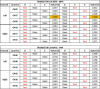
I believe that the strange values I am getting are due to the transistors are being measured in the board. I made a table with my results on these transistors, hopping that this could make some sense to you.

If the O407 is the only faulty, do you think this could be the one getting the fuse to blow?

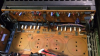
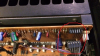
Below there are some pictures about the cable to disconnect as you are suggesting to try. Is this the cable you were referring or can you please point me in a different direction?

Thank you so much!

upload_2019-7-14_21-29-22.png

Both sides:
upload_2019-7-14_21-30-24.png

Left side disconnected but not yet tried to turn ON the amp:

upload_2019-7-14_21-31-48.png
 
It looks like it is bad if you swapped the meter wires and it came up the same reading (OL) both directions. You can also check it against the other channels same number transistors that are the same. If you get two different readings on the good one compared to the bad one, then that is your culprit.

Some people can check them in circuit but I prefer to remove them as I tend to get readings from other parts in the same circuit.
 
It looks like it is bad if you swapped the meter wires and it came up the same reading (OL) both directions. You can also check it against the other channels same number transistors that are the same. If you get two different readings on the good one compared to the bad one, then that is your culprit.

Some people can check them in circuit but I prefer to remove them as I tend to get readings from other parts in the same circuit.

O407 did not showed OL it really showed =0.0000, like when I touch the red and black wands one on the other.

Do you think that this transistor would be the cause to blow the fuse?

Regarding your suggestion to try to turn MONO, disconnecting one channel, do you think that the cable to disconnect is the one in my picture?
 
That's it! That's a short! Now compare its readings to a known good one in the other channel.

As far as that cable goes, either show the complete schematic or a overall view of your amp. Can't tell by what you have showing.
 
The readings are all in the picture I made in Excel.
The right channel seems to have the same values in the 3 transistors.
 
Back
Top Bottom