MattiaM
Active Member
Since there is no unique source of information on the bias for the Sony TA-8650, with no mention of changes from the 125mV in the original Sony Service manual in any service bulletin, and rumors from a Japanese forum of a required new value of 30/40mV, I decided to do a quick and by no means scientific experiment to see if I could spot any differences between a bias set to 35mV and 100mV (125mV make my amplifier way to hot for me to feel comfortable).
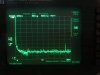
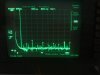
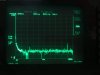
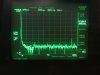
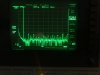
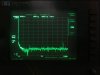
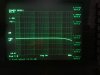
I set the segnal generator with a 1kHz signal at 800mV peak to peak directly into the power amplifier, and these are the results from the output (with 8 ohm load):
- there is no visible crossover distortion even at 35mV bias.
- there is a slight difference in output, from 9.27Vrms with bias set at 35mV to 9.47Vrms with bias set at 100mV.
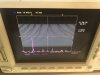
- The second order harmonics seem to be slightly more pronounced at 100mV.
- Distortion from third order harmonics appears to be slightly lower with the bias set at 100mV.
- At 35mV bias the amplifier runs MUCH cooler.
- At 35mV (preamp connected), the sound seems to me to be slightly more muddy, but it might just be my own bias...
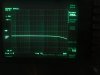
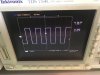
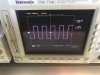
(Out of curiosity, I also tried to see how a square wave would be amplified, knowing that they're quite hard on audio amps... Piece of cake for the Sony).
(IMG_4243 and 4241: 35mV; the other 2 100mV)

I set the segnal generator with a 1kHz signal at 800mV peak to peak directly into the power amplifier, and these are the results from the output (with 8 ohm load):
- there is no visible crossover distortion even at 35mV bias.
- there is a slight difference in output, from 9.27Vrms with bias set at 35mV to 9.47Vrms with bias set at 100mV.
- The second order harmonics seem to be slightly more pronounced at 100mV.
- Distortion from third order harmonics appears to be slightly lower with the bias set at 100mV.
- At 35mV bias the amplifier runs MUCH cooler.
- At 35mV (preamp connected), the sound seems to me to be slightly more muddy, but it might just be my own bias...
(Out of curiosity, I also tried to see how a square wave would be amplified, knowing that they're quite hard on audio amps... Piece of cake for the Sony).
(IMG_4243 and 4241: 35mV; the other 2 100mV)
Last edited: