• The move to the new server is done. There are some software and database maintenance updates in process. This has us passing the hat around to help out. We appreciate any donations. Seriously, even a dollar helps. The payment page may be found here - https://www.audiokarma.org/support.html

Sony TAN-5550 Build

Wire Nut

Active Member
After building the 4650 integrated amp up and hearing it sound so good, I had a hankering to see what more power sounded like. I snagged a 5550 power amp on Ebay that was in pretty good shape.
Here is a link to the HFE page on the amp with the owner's and service manuals: http://www.hifiengine.com/manual_library/sony/tan-5550.shtml
Of course the first thing to do was to replace the "death diodes"
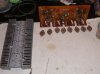
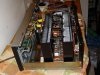
Here are the guts pre upgrade:

P1050103.JPG
 
Register to hide this ad
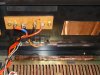
This unit has 8 VFET's rather than the 4 the 4650 has:

P1050107.JPG

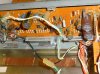
Once I had all of the boards out I damped the chassis- this photo shows a Dynamat type copper foil backed material, Sorbothane, & some loaded plastic damper (plus the back of the board for 5 way binding posts):

P1050117.JPG


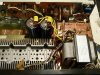
I like to use a combo of Nichicon FG & Elma Silmic's for a smooth sound that is full spectrum:
P1050118.JPG
 
I can add I have a very very late descendant in the form of a Sony Mosfet integrated(see sig.). No vintage, no cult status and also below the higher end ES-series in the product ladder at the very beginning of this millenium. Though it was TOTL of it's own QS-series. But I like it's sound, it has something.
Vfet on the other hand is legendary, I hope you can finish this restoration/improvement and also share some thoughts from subjective listening compared to more recent amplifiers of good quality.
 
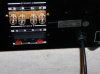
I installed 5 way binding posts in the speaker A position (which I may replace soon with ETI Kryo) and upgraded the internal speaker wire to cryo treated 14ga AQ (see photo above). The power cable you see is a twisted pair of 14ga power cable that was cryo treated.

P1050120.JPG
 
Last edited:
Wow, a working Vfet poweramp, this will be interesting!

Well, I guess I was an early adopter, as I have had my 5550 for many years now. It was restored, with replacement of the death diodes, by EchoWars.

By any chance, does anyone have the actual owner's manual for the 5550? I checked the HiFiEngine link, but I only saw the service manual and a service bulletin.
 
If you find one let me know, I would like a scan too. I searched the web for two days with different search engines- no luck.
I got the TA-8650 in the mid 70's but it couldn't run the Ohm F's I had at the time, it went into protection all the time. Wish I had that amp now!
 
Nice work, l would be interested to know your opinions on the sound when finished, also the sound of your ta-4650. l have a few earlier Sony's up to 75, but none like yours.
 
I did a search on the web to get opinions about filter caps & one guy raved about the EPCOS / Sikorel caps, how very fast they are. Well, I found out that was true, here is how I mounted them:

P1050126.JPG

I used 16ga Neotech UPOCC wire to connect them to the baord.
That fuzzy stuff you see on the transformer is Sillpoints ERS cloth, here is a review on it: http://www.tnt-audio.com/accessories/ers_cloth_e.html
 
I hooked up the amp using the 4650 that I maxed out as the preamp, it sounds fantastic. My friend Paul Speltz (Anti-Cables, Autoformers, etc) came over to drop off some stuff for cryo treating and we listened to the combo. He said the amp is "very resolving", I agree.
One thing that we did notice was the metal case gets pretty warm above the chimneys, probably in the 115- 120 degree range.
Today I did another mod to the unit, I put some maple veneer on the chimneys to do what I can to keep the heat from impacting the electrolyte caps (that kind of heat will cut the life in half). The rest of the case was cooler to the touch so I think the inside as a whole is probably just a little warmer than most solid state amps. I also painted the chimneys with VHT black spray paint for looks:

P1050183.jpg
 
Nice! I'm curious about the caps you added to the large filter caps. What's the benefit, and what do you mean by 'fast'? Would there be a benefit to doing this to my TA-4650?
 
Looks amazing, awesome job, "very resolving" sounds like you're on the right path. Wish I was as handy with electronics, just done some small soldering repairs/replacing cables so far :)
 
Ahess, you should replace all of your electrolyte caps- they get old and can take your amp down.
The two 1uf Auricaps are what is called a bypass, what it does is two fold. A large filter cap takes a while to fill up with electricity, so a small film cap will handle the small transients quickly... also the sound is changed for the better if you use good caps for bypass.
 
I installed some ETI chassis mount RCA connectors and found that to be an upgrade. Then I thought what if I bypassed the volume controls and direct wired the input with superior wire?- well, I did that this morning and it is even more revealing! The wires are burning in right now- I will upload photos next weekend when they are burned in and give a little review of the sound.
I bought a Pass VFET kit from DIY, I might not even build it now!
 
Nice work - do you still have this amplifier and have you found a need to replace any other parts - ie: any resistors on the PCB's?

Wondering where you found a "safe" procedure for setting bias - the service manual seems a bit scant on detail.

I have one of these and I want to work on it - very carefully!
 
The amp still works wonderfully, the bias is easy to set up but the manual for this unit is not great to not existing. I took a que from my 4650 on adjusting the bias.
 
FYI, all of Sony's V-FET amps run HOT... My TA-8650 top panel gets so hot, you cannot put your hand on it for more than a few seconds. I had a couple of TA-4650s and a TA-5650 as well and they also ran very hot. If the amp is not running hot, then something is definitely off somewhere, probably the bias.

I also had a Yamaha C-2/B-2 V-FET pre-amp/power amp combo... They did not run as hot as the Sony, but the heat sinks in the amp took up 75% of the insides.
 
Back
Top Bottom