• Please note that Audiokarma will be offline briefly for updates early on Monday morning, September 28th.

Speaker Switch Box - Will it Work?

gregmcm

Active Member
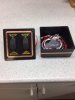
Does anyone see any issues with this plan? Have three pairs of speakers and want to be able to switch the 'B' pair using this DIY switch box. Plan is to use banana type binding posts which will connect the 'B' cables to the box and then connect two different pairs of 'B's' to the box. I would then have the option to use the three way toggle switch to select either of the 'B' pairs on depending on what sounds better with the particular source (fm, vinyl, CD, streaming, cassette). The box would be located close to the receiver. Thoughts?

Switch Box 2.JPG Switch Box 1.JPG
 
Register to hide this ad
gotta link for this switch? :D I see two connections.. perhaps 3rd position is 'off'? might be good to get two pair.
 
Last edited:
I would think what you would want is a single poll double throw relay. I'm guessing from the contacts this is single poll single throw (two contacts (+/-) for the coil, two (+/-) for the source and two (+/-) for the speaker. The double pole double throw would have two contacts for the coil, two for the source, two for speaker 'A' and two for speaker 'B'. Of course you need two relays, one for left one for right, switched together. If the option is available, you want a "break before make" relay, so both sets of speakers are not connected at the same time. This will release the active speaker before connecting the optional speaker.
 
You'd also want to avoid "hot switching" any tube amps or SS with a floating ground. Those require a load when on.
 
I would think what you would want is a single poll double throw relay. I'm guessing from the contacts this is single poll single throw (two contacts (+/-) for the coil, two (+/-) for the source and two (+/-) for the speaker. The double pole double throw would have two contacts for the coil, two for the source, two for speaker 'A' and two for speaker 'B'. Of course you need two relays, one for left one for right, switched together. If the option is available, you want a "break before make" relay, so both sets of speakers are not connected at the same time. This will release the active speaker before connecting the optional speaker.
kfalls, with regard to the switch type, I'm not certain what it is correctly called but it functions like this -- middle position both sides off, push the upper part of the switch and that side is now on, push the down side of the switch and that side is on and the top side is off - back to the middle and both sides are off. My plan is to connect one pair of speakers to the top part of the switch and another pair of speakers to the bottom side of the switch. Hopefully this makes my plan clearer. Thoughts?
 
When designing devices to do speaker switching, it is a good idea to take into account the speaker grounding (common connection) of the amplifier(s) to be used. Not all amplifiers use a common ground for the speaker output.

Some amplifiers will suffer major damage if the left and right channel speaker grounds are connected together as would be the case of single pole switching. From your description, it looks like that would be your switching.

The safest way, unless you are sure that any and all amplifiers that will be used with the switch box will have common grounds, is to switch both the hot and ground wires for each speaker and keep the grounds for the left and right speakers separate.

Using relays to do the switching is one way to do it, but is not necessarily needed and would require a source of power for the relays.
 
When designing devices to do speaker switching, it is a good idea to take into account the speaker grounding (common connection) of the amplifier(s) to be used. Not all amplifiers use a common ground for the speaker output.

Some amplifiers will suffer major damage if the left and right channel speaker grounds are connected together as would be the case of single pole switching. From your description, it looks like that would be your switching.

The safest way, unless you are sure that any and all amplifiers that will be used with the switch box will have common grounds, is to switch both the hot and ground wires for each speaker and keep the grounds for the left and right speakers separate.

Using relays to do the switching is one way to do it, but is not necessarily needed and would require a source of power for the relays.
I Like Music, just to be clear I'm using one receiver (Marantz 2275) and the plan was to have the "B" speaker output go to the switch box and then have the option of selecting one of two pairs of speakers that would be connected to the switch box.
 
I understand your goal. IIRC the 2275 does have common speaker grounds for the right and left channels, be they the A speaker output or the B speaker output.

So using a common ground in your switch box should be okay as long as it is only use with amplifiers with a common ground.

Without you supplying the amplifier/receiver to be used, I posted with the information with an abundance of caution for you and others that might read this thread that might have amplifiers/receivers that do not use common grounds.
 
Thanks for the information -- so if I understand correctly do I need to run a ground from the ground connection on the back of the Marantz 2275 to the switch box or is this already being dealt with do to Marantz having a common ground already? Thanks again.
 
You will have to have a ground (common) connection for the speakers at the switch box, unless your are planning on connecting the grounds of the speakers directly to your receiver. It will work either way, although it is common to have the amplifier speaker output ground(s) appear at the switch box and the speaker ground connection made at the switch box.

To be clear, when I am talking about the ground connection, I am talking about the speaker connection on the receiver that is labeled "-" not the connection labeled chassis ground on the lower right side. The "-" connection on speaker and amplifiers/receivers is commonly called the ground connection or the common connection.

On some amplifiers/receivers the "-" connections as labeled on the 2275 do not share the same connection point internally. They go to different parts of the circuitry and as such damage may occur if they are connected together.

This is why I made my original suggestion. Again, IIRC the "-" speaker connections for the 2275 are common to each other, that is they go to the same place internally in the 2275 and as such using a speaker switch box where these are connected together should be okay.
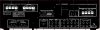
Capture44.JPG

In the picture below, these are the wires (going to the right) that go to all of the "-" speaker connections on the back of your receiver.

Note how they are connected together and to ground.

Capture32.JPG

So It will not hurt if you connect them together at your switch box instead of running them through a set of switch contacts. Just remember if you replace your 2275 and you want to continue to use the switch box that the replacement unit has all of the "-", common or ground connections (using the different terms for the same thing) connected together internally. This is commonly called a common ground. If not, then there can be damage to the amplifier/receiver.

I realize that I am biased, pedantic, OCD and a number of other things :eek: :biggrin::biggrin:, but I like to switch all connections, (both the "+" and "-" connections), all though in your situation it is not absolutely necessary.

Remember that is is not a bad idea to have the volume completely at zero when switching speakers and even a better idea to have the receiver/amplifier turned off, all though that is not always done and when switching speakers on a tube type amplifier, there is something to be said for not quickly power cycling an amplifier where the tubes are already warmed up and some like to leave their tube type amplifiers on all the time. And as mentioned before, it is not the best idea to have a tube amplifier turned on with out a load on the output, all though some have done it without issues when using speaker switching devices.

 
If you're just running a common house set and a couple speakers sets.. I've never heard of running a ground wire from my speakers to anywhere. on ss or tubes.
 
Back
Top Bottom