• The move to the new server is done. There are some software and database maintenance updates in process. This has us passing the hat around to help out. We appreciate any donations. Seriously, even a dollar helps. The payment page may be found here - https://www.audiokarma.org/support.html

Speaker volume

thomo57

Super Member
I have another thread running on these speakers that I was given yesterday.
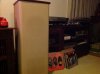
The cabinets are owner built and a very nice job.
The speakers inside are Goodman 212C Triaxiom.
On the back of the speaker it says that they are best for an enclosure of 7,800 cubic inches.
These cabinets are about 8230 cubic inches but when you deduct the amount of stuffing inside it comes very close to 7700 / 7800 give or take.
But I'm not sure if that's how the internal dimensions are calculated.

The question is
Should the enclosure be 7800 cubic inches and then add the stuffing
OR
A larger enclosure with the stuffing added to make the internal close to 7800.

If that makes sense
I've read a bit about it but it just makes me cross eyed trying to decipher the physics involved
 
Register to hide this ad
Ohhhhh... NOW I see what's going on with those. So, they're vented boxes, not OB's (I thought I remembered you saying they were OB, which didn't make sense because they have tops).

Not sure about the volume question, but hopefully someone will come along with the answers.
 
How accurately are you calculating the volume?

Are you subtracting the volume of the drivers and bracing?

With the type of bass reflex system you describe(large rectangular reflex port), i doubt that the volume is all that critical(within a reasonable few hundred cu in).

I would not stuff a reflex system. Of course i wouldn't stuff any other kind of system either as i find the whole idea of "virtual volume" via stuffing fairly amusing anyway.
 
Ohhhhh... NOW I see what's going on with those. So, they're vented boxes, not OB's (I thought I remembered you saying they were OB, which didn't make sense because they have tops).

Not sure about the volume question, but hopefully someone will come along with the answers.

I did say that didn't i gangtwanger.
I did realise quite a while after I'd posted it but didn't go back to correct it, sorry
 
How accurately are you calculating the volume?

Are you subtracting the volume of the drivers and bracing?

With the type of bass reflex system you describe(large rectangular reflex port), i doubt that the volume is all that critical(within a reasonable few hundred cu in).

I would not stuff a reflex system. Of course i wouldn't stuff any other kind of system either as i find the whole idea of "virtual volume" via stuffing fairly amusing anyway.

My speakers have dual front ports instead of vents, and the only stuffing is a square layer on the bottom and another on the inside of the rear panel. Not really stuffing per se. Just more about dampening.
picture.php


picture.php
 
How accurately are you calculating the volume?

Are you subtracting the volume of the drivers and bracing?

With the type of bass reflex system you describe(large rectangular reflex port), i doubt that the volume is all that critical(within a reasonable few hundred cu in).

I would not stuff a reflex system. Of course i wouldn't stuff any other kind of system either as i find the whole idea of "virtual volume" via stuffing fairly amusing anyway.

I couldn't see any bracing as such just the stuffing on all surfaces and two blankets of it hanging from the top and full width of the cabinet
No I didn't calculate the volume of the speaker itself.
I calculated the full volume of the cabinet to 8232 cubic inches (42X14X14)and the stuffing to 532 cubic inches and deducted that off the total which came to 7700 cubic inches which couldn't have been by coincidence I'm thinking:scratch2:
This must have been the calculation that the original builder used
 
(42X14X14)
Internal dimensions?

Those nice even numbers sound like external dimensions.

FWIW, i don't deduct damping material from the cabinet volume, usually. It's affect on volume is frequency dependent and still somewhat a subject of debate as there will be such variation in the materials used.
 
Last edited:
Have you ever had a listen to a Transmission Line Bowtie? ;)
A few.

A transmission line is not a reflex system in the traditional sense. There is more science applied, and "stuffing" is based on more empirical data, and has a more predictable effect, than simply adding stuffing to an existing reflex system because one "thinks" the system volume needs to be changed.
 
A few.

A transmission line is not a reflex system in the traditional sense. There is more science applied, and "stuffing" is based on more empirical data, and has a more predictable effect, than simply adding stuffing to an existing reflex system because one "thinks" the system volume needs to be changed.

I hear ya... I just picked up on the "any other kind of system either".
 
So what conclusion can I come to:scratch2:
That it doesn't matter about the size of the cabinet as long as it's within a few hundred cubic inches:scratch2:
And that stuffing the speakers doesn't really matter that much:scratch2:

And I thought that speaker building was an exact science.
 
And I thought that speaker building was an exact science.
Reply With Quote
Only from the outside, looking in.

Most design and engineering still relies on some amoint of estimation and prediction. Once they have a functional prototype, they can begin the measuring and correction process.

Many "very good" loudspeakers revisited the drawing board before they were introduced to the public at large while others would go into production as a work in progress to be revised and improved over time.

That it doesn't matter about the size of the cabinet as long as it's within a few hundred cubic inches
And that stuffing the speakers doesn't really matter that much
a) i suspect that very careful internal measurements would reveal your internal cabinet volume to be within 10% of what is considered "ideal", 10% being the industry standard tolerance of deviation.

b) In a bass reflex system like you describe with a large reflex port, the material's prime function is to damp standing waves, and internal cabinet reflections that can otherwise be heard thru the port. I doubt the purpose was ever to affect cabinet volume in that application, and was likely of low enough density and thickness that it had minimal effect on volume. But, that is my own personal guess.
 
Last edited:
Stuffing is 90% air anyway, isn't it? If you were really going to account for it, you'd have to get its 'compressed' solid volume, not its fluffed volume.
 
Two thumbs up...

...

b) In a bass reflex system like you describe with a large reflex port, the material's prime function is to damp standing waves, and internal cabinet reflections that can otherwise be heard thru the port. I doubt the purpose was ever to affect cabinet volume in that application, and was likely of low enough density and thickness that it had minimal effect on volume. But, that is my own personal guess.

That is widely accepted as correct. Not, of course, the only factor.

As for damping "material" I kind of agree with Toxic on how to measure the "volume" of the material. But also agree with Bowtie in that there is more going on than the "physical" volume of the material. There has been much debate over Fiberglass VS Poly fill. It's a challenging topic to say the least.
 
Back
Top Bottom