Well, I got a PM looking for private help again. As a note: I do copious PUBLIC help, and reject private requests.
But since the requester was a long time member, and the subject matter arcane enough, I decided to get it all out there, in public, and hopefully easily found during a search.
I think I will do the anonymous route, to protect the guilty. <grin>
----------------------------- the request : --------------------------------------------------------------------------------------------
Hey man I've been seeing your input around the pioneer forum and thought it worth a try to ask...
How do you clean the reed relay...like can it be done w/o destroying it?
I've got the notably rusty sheet metal covers off and spray attacking with deoxit but can't be certain any chemical is being delivered to moving contact...
The right channel must be turned up high vol to get the relay to engage as it is...
Is this part available or a better replacement...
--------------------------- end of the request ----------------------------------------------------------------------------------------
I don't do private help, I do plenty of PUBLIC help. Thus it CONTINUES to help people hereafter.
Wikipedia also supplies the answer:
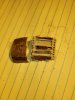
Sealed in a glass tube. NO cleaning POSSIBLE.
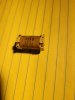
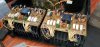
I surmise you are referring to muting RL1 / RL5 single reed relay ASR-017. This part is a known troublemaker, and is a "replace upon sight". This is a better fit for your question.
The other reed relay RL2 / RL6 (ASR-005) is a dual reed relay which only operates when 4 ohm speaker loads are selected.
RL1 (RL5) is a spst (aka: 1 FORM A ) 24v reed relay ASR-017. It carries 26mA in the front end of the Spec-2 amp, doing a muting function.
https://www.mouser.com/ProductDetail/Littelfuse/HE751A2400?qs=X8LBAgEWIKJBfoi7amFn0Q==
RL2 (RL6) is a dpst (aka: 2 FORM A ) 24v reed relay ASR-005 that shifts the current limit voltage levels down from an 8 ohm output load to a 4 ohm output load.
https://www.mouser.com/ProductDetail/Littelfuse/HE722A2400/?qs=X8LBAgEWIKJTn4NQ/9P2xA==
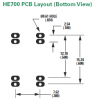
Searches through the threads on the ASR-005 should provide a multitude of other DPST / 2 FORM A 24v replacements.
There should be even more replacements available for the ASR-017 single reed 24v relay.
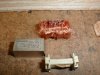
They may not fit into the PC board holes. In his thread Echowars does the "dead bug install'
where
the relay is glued onto it's back, legs pointing up, and flying wires go from the legs to the appropriate pcb pad.
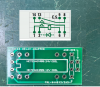
Others have made adapter boards.
neither is mandatory, both work.
Oh, and between the Amp board (AWH-045) board schematic and the unit (Spec-2) schematic they couldn't keep their nomenclature straight in the Service Manual, so I used BOTH labels to eliminate any confusion.
Those parts links are to Mouser stocked major manufacturer's relays that have parts numbers that have endured for many years, and are currently in-stock. Between 2 and 3 bucks currently.
But since the requester was a long time member, and the subject matter arcane enough, I decided to get it all out there, in public, and hopefully easily found during a search.
I think I will do the anonymous route, to protect the guilty. <grin>
----------------------------- the request : --------------------------------------------------------------------------------------------
Hey man I've been seeing your input around the pioneer forum and thought it worth a try to ask...
How do you clean the reed relay...like can it be done w/o destroying it?
I've got the notably rusty sheet metal covers off and spray attacking with deoxit but can't be certain any chemical is being delivered to moving contact...
The right channel must be turned up high vol to get the relay to engage as it is...
Is this part available or a better replacement...
--------------------------- end of the request ----------------------------------------------------------------------------------------
I don't do private help, I do plenty of PUBLIC help. Thus it CONTINUES to help people hereafter.
Wikipedia also supplies the answer:
A reed relay is a type of relay that uses an electromagnet to control one or more reed switches. The contacts are of magnetic material and the electromagnet acts directly on them without requiring an armature to move them. Sealed in a long, narrow glass tube, the contacts are protected from corrosion.
Sealed in a glass tube.
NO cleaning POSSIBLE.I surmise you are referring to muting RL1 / RL5 single reed relay ASR-017. This part is a known troublemaker, and is a "replace upon sight". This is a better fit for your question.
The other reed relay RL2 / RL6 (ASR-005) is a dual reed relay which only operates when 4 ohm speaker loads are selected.
RL1 (RL5) is a spst (aka: 1 FORM A ) 24v reed relay ASR-017. It carries 26mA in the front end of the Spec-2 amp, doing a muting function.
https://www.mouser.com/ProductDetail/Littelfuse/HE751A2400?qs=X8LBAgEWIKJBfoi7amFn0Q==
RL2 (RL6) is a dpst (aka: 2 FORM A ) 24v reed relay ASR-005 that shifts the current limit voltage levels down from an 8 ohm output load to a 4 ohm output load.
https://www.mouser.com/ProductDetail/Littelfuse/HE722A2400/?qs=X8LBAgEWIKJTn4NQ/9P2xA==
Searches through the threads on the ASR-005 should provide a multitude of other DPST / 2 FORM A 24v replacements.
There should be even more replacements available for the ASR-017 single reed 24v relay.
They may not fit into the PC board holes. In his thread Echowars does the "dead bug install'
where
the relay is glued onto it's back, legs pointing up, and flying wires go from the legs to the appropriate pcb pad.
Others have made adapter boards.
neither is mandatory, both work.
Oh, and between the Amp board (AWH-045) board schematic and the unit (Spec-2) schematic they couldn't keep their nomenclature straight in the Service Manual, so I used BOTH labels to eliminate any confusion.
Those parts links are to Mouser stocked major manufacturer's relays that have parts numbers that have endured for many years, and are currently in-stock. Between 2 and 3 bucks currently.
Last edited: