
• The move to the new server is done. There are some software and database maintenance updates in process. This has us passing the hat around to help out. We appreciate any donations. Seriously, even a dollar helps. The payment page may be found here - https://www.audiokarma.org/support.html

Stanton 681eee stylus replacement

I see what you mean by the cobra profile. I checked all my Stereohedron styli (which aren’t that many) and compared them to the ellipticals for the Stantons and Pickerings and they are consistent with your descriptions. None of the ellipticals have the cobra profile and it does appear that the Stereohedrons are mounted on the flat “spatula” surface and is bent so that the stylus is parallel to the record surface. At least the cobra profile is a good first step in determining whether or not it’s a Stereohedron.
Let me send some overhead shots of the same styli

Here's the Hollywood 881s
View attachment 864214

Here's the Hollywood 681
View attachment 864220

The 681 is definitely not flared, but I'm not sure about the 881S. What do you think?

I know I have a Pickering XSV3000 and an old New York 881S. I'll get shots of their styli.
Does it say elliptical special high polish? Any chance you could take a photo of those specs? I'm wondering if it could possibly be a typo. I guess the best thing to do would be to have someone scope it. @marcmorin

Also, could you compare it to another D81-IIS to see if there's anything different about it that might be used as a way to differentiate it from a Stereohedron version?
The Instruction Manual for the Hollywood 881 Mk IIs says "881 Mk IIs with Stereohedron II Stylus". The intro talks about the 881 being the "Professional Calibration Standard", and "individual Calibration test results are packed with your unit." but there is no blue calibration card that normally comes with the cartridge. "The new 881 MkIIs uses a new Stereohedron II diamond shape to give improved groove tracing while reducing groove wear." but the Specification List has the tip dimensions for an elliptical stylus.
881S-X.jpg

There is no mention of a special high polish. I believe the intro was just lifted from an old version that talks about features that no longer applies.
I also have a sheet from a N.Y. Stereohedron II 681 cartridge. There is no Instruction Manual, but it does have the blue calibration card and a info sheet with the Stylus Type and Dimensions specification: "Stereohedron II, Scanning radii: .0002 - (scanning); Contact radii: .0030 (Contact). Stylus Color: Black with EEE-II-S.

I don't have any other D81-IIs styli to compare but I do have a product sheet from Stanton that states the Stereohedron II 881s stylus is designated as "D81IIs" The Hollywood stylus is designated as "II-D81S" but that could be because there wasn't enough room on the stylus grip.
 
Thanks for that info. I saw the "special high polish" on an eBay auction for a Hollywood 881S. Could have been later than yours. It wasn't on the spec sheet but the outside of the package.

I have a D81 IIS that I believe is New York. I can put photos up and you can put photos of yours up. We can compare and see if there are any differences.
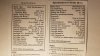
That will be interesting to see if there are visual differences. I found a spec sheet from the CS100 (NY Stereohedron II). The sheet on the left is NY, the sheet on the right is Hollywood. The difference is how the Stylus Tip is described; the NY version lists the tip dimensions as a line contact stylus (contact radii, scanning radii) while the Hollywood has the typical elliptical bi-radial numbers. Also this is the correct dimensions for the Stereohedron II. The Stereohedron I has a contact radii of 2.8 mil and a scanning radii of .3 mil. The Stereohedron II has a longer contact radii of 3.0 mil and a smaller scanning radii of .2 mil.
SPECS-1.jpg
 
The Stereohedron II has the same specification as some Shibata specifications. :music:
Shibata has 2 types (large and small). Both have the same scanning radius at 0.24mil. The Shibata large has a longer contact radius at 2.95mil compared to 2.0mil for the small version. The Stereohedron II has a smaller scanning radius at 0.20mil and a larger contact radius of 3.0mil. I think the whole idea for these line contact shapes is to contact as much of the record groove and still be able to track the modulations. So far the shape with the sharpest scanning edge is the Jico SAS stylus at 0.10mil. I'm not sure if this is a good thing. Tracing a record groove with such a sharp edge could lead to accelerated record wear. Shure's Microridge had a edge of 0.15mil but they polished the tip to reduce abrasion.
 
Shibata has 2 types (large and small). Both have the same scanning radius at 0.24mil. The Shibata large has a longer contact radius at 2.95mil compared to 2.0mil for the small version. The Stereohedron II has a smaller scanning radius at 0.20mil and a larger contact radius of 3.0mil. I think the whole idea for these line contact shapes is to contact as much of the record groove and still be able to track the modulations. So far the shape with the sharpest scanning edge is the Jico SAS stylus at 0.10mil. I'm not sure if this is a good thing. Tracing a record groove with such a sharp edge could lead to accelerated record wear. Shure's Microridge had a edge of 0.15mil but they polished the tip to reduce abrasion.

Agree. :music:
 
You need the paperwork or the packaging. Other than that, I don't know. I'm not even sure if the later 881S or 681-EEE were actually calibrated and etched with a serial number, so if it's got a serial number hand etched on the side of it there's a good chance that it's a NY Stanton. But if you just have a stylus alone, and no packaging, and it says D81-IIS on it, well, it seems that you could have a genuine Stereohedron II or a .3 x .7 elliptical with "special high polish" or maybe not a "special high polish."

I actually have a later Florida 681EEE and there's no calibration paperwork. I might have a look and see if the box and packaging even says "calibration standard" anymore. But I definitely know that it's a .3 x .7 as well, and most likely bonded. The stylus is really nothing more than the old D680 or the equivalent of the Pickering D625. A shame, really. I reoriented back to six o'clock an EEE "III" stylus for fellow AKer @Stanton and though I don't have a scope, I could tell by the naked eye that it was a beautiful, clear, sparkly, tall and slender nude-mounted diamond rod, much like what you'd see on a Shure V15-VMR, VxMR, or higher end Ortofon styli like the Stylus 30 or Stylus 40. Mine is just a dark and dirty cone-shape.
Hi, this is a 681EEE that is mounted on a table I just picked up. Table and cart don't appear to have many hours on either. The JVC table was only manufactured for a couple of years in the late 70's........found out, this table has one of JVC's top motor units.......but this is thread crapping.
 
Thanks again for that info! Where did you find that spec sheet for the CS100?
I have a CS100 or at least that’s what’s stamped on the stylus grip. The presentation box is nice so I’m guessing it’s a high-end cartridge.

I worked as a stock boy in the 70’s for a HiFi store. I wasn’t into audio back then, but I learned a lot listening to the owner talking to his customers. When the CD rage took over, the owner switched out the turntables and cartridges with CD players and put all the remaining cartridges and styli in a box and gave it to me. Most of the stuff is product literature and low-to-mid priced items, but there are some gems. The box sat in the closet until a couple of years ago when I started to listen to vinyl again. I first used the Shure and ADC cartridges and a year ago, I started listening to the Stanton 881 and Pickering XSV3000; I’m happy with the sound so I haven’t auditioned any others. I find models within the same make have the same sound characteristics. I have yet to try the Empires so I may swap the Stanton and Pickering out for the Empire.
 
Thanks for that info. I saw the "special high polish" on an eBay auction for a Hollywood 881S. Could have been later than yours. It wasn't on the spec sheet but the outside of the package.

I have a D81 IIS that I believe is New York. I can put photos up and you can put photos of yours up. We can compare and see if there are any differences.
I always thought if there was an "S" on the stylus designation, it meant it was a Stereohedron tip. But I have an 881s stylus with only "D81" on the stylus grip (no "S"). As far as I know, all 881s were Stereohedron, except for the Hollywood versions which does have the "S" on the stylus grip. Good grief, Walter O Stanton must be rolling over in his grave.
 
Only one of the highest performing and yet underrated cartridges of all time . . .

Wait--1970s? You must have quit working there by the time CD's and the CS100 came out. CD's weren't out until like 1982--I was in seventh grade. The CS100 I though also didn't come out until the 1980s.

In either case, good for you. That was a nice thing for that boss to do.
You are testing my memory. I started in the mid-late 70's and left in the late 80's which was well past the time the owner cleared out his vinyl inventory. I remember there were times when we wouldn't see any vinyl customers for months.
 
Nice haul. He didn't know that he gave you thousands worth of cartridges--of course it would take forty years for the value to go up. How many Shure V15's did you get?
I didn't know what he gave me either. Since I got caught up in the CD craze myself, I didn't bother to take inventory until I dusted off my turntable several years later. I have one type IV and one type V. I was hoping to find an x-MR, but I guess that came out after the owner cleared his inventory.
 
That makes sense, then. The CS100 didn't come out until the 1980s and was still in production in the 1990s from what I can tell--even into the early 2000s from what I can tell based on date stamps on literature that I've found on the net.
When did Stanton move to Florida? Is that when they stopped making Stereohedron tips? I'm guessing I have an early model of the CS100.
 
Not really, in my opinion. It's relevant anyway. Since you have a scope, though, and know how to use it, you could certainly have a look for yourself to see if you've got a nude .2 x .7 elliptical or not. If it's not an EEE "III" though, (with a little III on the side of the stylus), you're in the clear and what you should have is a nude .2 x .7 elliptical.

View attachment 864700
mine is marked different than that. On the side that you're showing there is nothing on mine. the other side in the vertical says Stanton 681. running across the bottom say EEE. This an old one? Gonna take the dingleberry off this, because I think I hear the brush adding some "hiss"
 
That ought to be a .2 x .7 nudie. If your deck has a light arm, the brushes can really generate a lot of noise, particularly if you can hear noises from your fingertips when touching the headshell. On my SL-1200, touching the headshell doesn't generate any sound and the brushes are dead quiet too. But on the Luxman I had where softly touching the headshell resulted in a rather sharp and high pitched amplified rendition through the speakers, the brush, predictably, made a racket.
yeah, I looked at it under scope before it saw any vinyl. clean, clear, nude mount, perfect size little round bright "balls" in the scanning areas.
 
You said it. Well, he didn't do Norman Pickering any favors, so he probably deserves it . . .

No, the original D81 was alwaysl a Stereohedron to my knowledge. I'm not familiar enough with the evolution of the D81 to know when the "S" came about, but maybe it was a retronym after the D81E was released or something. I've got three D81 and two in original packaging and they are Stereohedron with the proper dimensions listed.
Rummaged through my box and found a II-D81s. The paperwork has the NY address, but the designation is the same as the Hollywood Stylus. Here is a picture of the NY stylus:
D81IIS-NY.jpg
Here is the Hollywood:
D81IIS-HW.jpg
The Hollywood does not look like a nude mounting.
 
That is so awesome!!! Thanks for those pics!

The designation is the same? Not the dimensions, though, right?
Both have "II D81s" on the stylus grip. The NY came in a plastic cube and the card inside the cube has the New York address, but it only says "Stereohedron II" with no dimensions. The Hollywood came from my cartridge with the elliptical dimensions on the spec sheet although it has "Stereohedron II' as the stylus type. Since both have the same D81s designation, you won't be able to tell what you have unless you have a microscope.
 
Definitely no engraved number on the Florida Stanton 681EEE, which means it's really a 680EEE. And because the stylus is a .3 x .7 bonded elliptical, it's not an EEE either. It's really a 680E under traditional decades-old Plainview nomenclature.

View attachment 865080

The stylus would then be the functional equivalent of this one:

View attachment 865090

View attachment 865092

Of course, the calibration only applies to the original stylus equipped with the cartridge at time of purchase, and, I imagine at some point it stops performing at the calibration numbers so there's a gradual transition of your 681 to a 680 as you use it.
Now I'm really confused.....on the side of the cartridge is a sticker that says 681EEE, below that it says calibration standard. The other side of the cart has 49995 etched in it. on the same side as the sticker, the stylus grip has Stanton in the vertical, and at the bottom of the grip has EEE.
the diamond couldn't be more nude mount if it tried, and overall size of the diamond is small
 
Now I'm really confused.....on the side of the cartridge is a sticker that says 681EEE, below that it says calibration standard. The other side of the cart has 49995 etched in it. on the same side as the sticker, the stylus grip has Stanton in the vertical, and at the bottom of the grip has EEE.
the diamond couldn't be more nude mount if it tried, and overall size of the diamond is small
Ok if it's an older D6800EEE it's a 0.02 X0.07 stylus. If it's the newer Florida one it would be 0.03X0.07 stylus especially if it's from the time they started making Black body ones. As to that 49995 are you saying it's on the black stylus gripe or on the body. If it's the body that is the serial number.................
 
Ok if it's an older D6800EEE it's a 0.02 X0.07 stylus. If it's the newer Florida one it would be 0.03X0.07 stylus especially if it's from the time they started making Black body ones. As to that 49995 are you saying it's on the black stylus gripe or on the body. If it's the body that is the serial number.................

the body of the cart is basic bare metal color. the stylus grip is black. the ser no is etched in the body. if this is a 6800EEE why would they put 681EEE on the body?
 
Back
Top Bottom