• The move to the new server is done. There are some software and database maintenance updates in process. This has us passing the hat around to help out. We appreciate any donations. Seriously, even a dollar helps. The payment page may be found here - https://www.audiokarma.org/support.html

Stereo imaging and visual localization

PROJECT 2501

Active Member
Whenever the topic of stereo imaging and soundstages are discussed you'll often hear people claim to be able to pick out and identify the locations of where each instrument is being played by the musician as if they were on stage in front of them... this of course is very much true and my favorite part of the hifi audio experience. What I dont understand is that a good number of these people that claim as such, is that they claim to do it while sitting back in their seat with their eyes closed....

Closing my eyes is stereo imaging kryptonite.... personally speaking...
I NEED to be looking at space between my speakers to "physically see" the audio. And when I say "physically see.. its "almost" in the literal sense.. if that actually makes sense..
My brain can not locate these phantom audio sources without looking in the direction of where they are supposed to be. Looking away and closing my eyes prohibits detection and visualization of the sound.... is this a phenomenon that is exclusive to me? Or do any of you share my experiences and must use your sense of sight to pick up on spacial audio cues like I've described?
 
Last edited:
Register to hide this ad
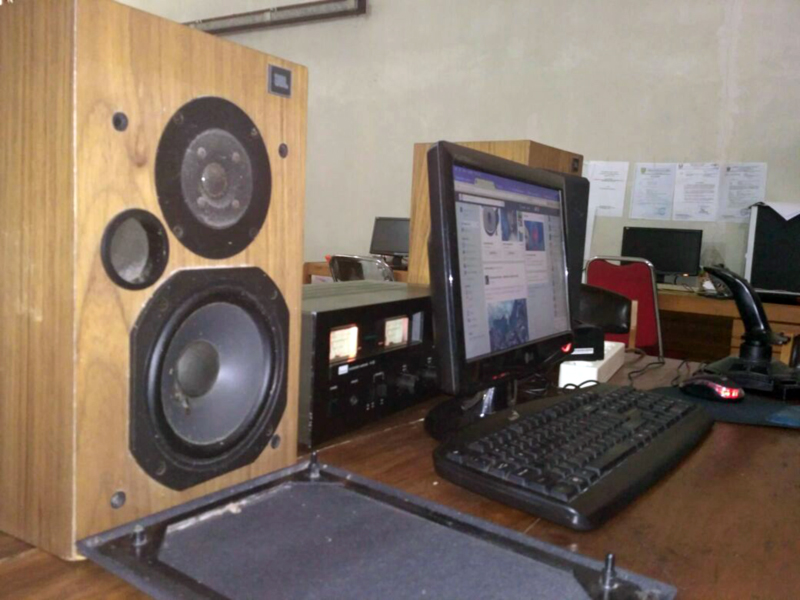
I often watch movies on my PC. Once the PC had Sansui A-40 and JBL L20Ts. Stereo imaging is excellent and pinpointed, albeit rather 2D.

Kreshna-Aryaguna-Nurzaman-JBL-L20-T-pic-01.jpg


When I watched the movie, stereo imaging is rather narrow and constricted by the small PC monitor I watched the movie on (see how small the PC monitor is compared to the L20T flanking it). However, when I turned off the monitor (but leaving the PC on), or minimzed the VLC Media Player software I'm using, stereo imaging gets wider, and even deeper, as if it was 'released' from the confines of such small PC monitor.

My guess? Stereo imaging is an illusion based on aural and visual cues. When I watch a movie on such small PC monitor, visual cues give me illusion that a particular sound comes from a particular area on the screen (for example, gunshots, or clashing swords), giving the suggestion of a narrow stereo imaging. Once I ignore visual cues (by turning off the monitor but not the PC), I got aural cues alone, which probably give better, more accurate representation of the speakers' spatial accuracy.
 
Last edited:
I often watch movies on my PC. Once the PC had Sansui A-40 and JBL L20Ts. Stereo imaging is excellent and pinpointed, albeit rather 2D.

Kreshna-Aryaguna-Nurzaman-JBL-L20-T-pic-01.jpg


When I watched the movie, stereo imaging is rather narrow and constricted by the small PC monitor I watched the movie on (see how small the PC monitor is compared to the L20T flanking it). However, when I turned off the monitor (but leaving the PC on), or minimzed the VLC Media Player software I'm using, stereo imaging gets wider, and even deeper, as if it was 'released' from the confines of such small PC monitor.

My guess? Stereo imaging is an illusion based on aural and visual cues. When I watch a movie on such small PC monitor, visual cues give me illusion that a particular sound comes from a particular area on the screen (for example, gunshots, or clashing swords), giving the suggestion of a narrow stereo imaging. Once I ignore visual cues (by turning off the monitor but not the PC), I got aural cues alone, which probably give better, more accurate representation of the speakers' spatial accuracy.

Your monitor might have been screwing with the audio and collapsing the soundstage, just sayin.

I've found the ears work much better when not competing with the eyes for the brains attention.

To the OP, I would think there's something amiss with your setup if needing visual cues to help with imaging.
 
Never gave it a thought until one night I was still spun up from the day but to tired to keep my eyes open. I NEEDED some music. But the light hurt. Turned it off.
That night in the dark I heard home music like I never had before. Definitely a "they are here" night.
Tempted to try the scotch darkness combo.
 
Myself, I don't need my eyes open for localization within the image. I often close my eyes while listening. For me, it's easier to slip into the zone with my eyes closed. When my wife wants my attention but doesn't want to startle me, she'll stand in front of one of the speakers. That gets my attention, alright!
 
I often watch movies on my PC. Once the PC had Sansui A-40 and JBL L20Ts. Stereo imaging is excellent and pinpointed, albeit rather 2D.

Kreshna-Aryaguna-Nurzaman-JBL-L20-T-pic-01.jpg


When I watched the movie, stereo imaging is rather narrow and constricted by the small PC monitor I watched the movie on (see how small the PC monitor is compared to the L20T flanking it). However, when I turned off the monitor (but leaving the PC on), or minimzed the VLC Media Player software I'm using, stereo imaging gets wider, and even deeper, as if it was 'released' from the confines of such small PC monitor.

My guess? Stereo imaging is an illusion based on aural and visual cues. When I watch a movie on such small PC monitor, visual cues give me illusion that a particular sound comes from a particular area on the screen (for example, gunshots, or clashing swords), giving the suggestion of a narrow stereo imaging. Once I ignore visual cues (by turning off the monitor but not the PC), I got aural cues alone, which probably give better, more accurate representation of the speakers' spatial accuracy.
I like your post, a lot. Interestingly enough, I have a pair of JBL L20t3's, which are are my rear surround sound speakers for movies, as well as multi-channel music. Several years ago the foam surrounds on my front left and right JBL L100t3's disintegrated causing me to use the L20's temporarily for stereo pleasure. These were placed on top of the L100's about 8 feet apart and about 8 feet from my listening chair. My surprise was sound more detailed than what I was getting from the L100's. I attributed this to the L20 speaker height, which placed tweeter and woofer more on axis with my ears. At any rate, this gave me great appreciation for the L20's, which nevertheless are now back in their role of surround sound.
 
I like your post, a lot. Interestingly enough, I have a pair of JBL L20t3's, which are are my rear surround sound speakers for movies, as well as multi-channel music. Several years ago the foam surrounds on my front left and right JBL L100t3's disintegrated causing me to use the L20's temporarily for stereo pleasure. These were placed on top of the L100's about 8 feet apart and about 8 feet from my listening chair. My surprise was sound more detailed than what I was getting from the L100's. I attributed this to the L20 speaker height, which placed tweeter and woofer more on axis with my ears. At any rate, this gave me great appreciation for the L20's, which nevertheless are now back in their role of surround sound.
Thanks. I'm not sure why, but L20Ts always give me very detailed, very pinpointed stereo imaging. Soundstage is rather flat and 2D though.
 
Its all a matter of personal experience and education over a rather long period of time and training. No two people listen to sound the same way. We all have preferences and different experiences that influence the way we listen to sound being reproduced. I spent many hours listening to head phones both as a kid and while doing remote broadcasts for a radio stations. When listening to headphones everything is spread across an arc on top of my head from one ear to the next. When listening to speakers the sound is revealed in an arc the circle about me 360 degrees. With some speakers depending on how directional they. are and the acoustics of the room the arc can only be just as wide as the placement of the speakers. As to the arc having the same diameter with some speakers the arc may be suppressed as the source travels across the stage, where with others the arc may move to far forward towards me. Its an art to be able to set up your speakers so that. the shape of the arc makes you happy. May be you want a straight line between your speakers where the emissions sound the same with the same instrument at the left right or center. Maybe you want the center to be a little forward. Some times I wish I had more control of the center and is why I have always had a center channel speaker for times when other s are listening and can't sit on axis between the two speakers. Some record producers like DG among others over emphasize sectional instruments through the recording destroying the picture presented by the speakers. Pop recordings are a joke being cooked up on a mixing board in a recording studio. Same goes for most movie sound tracks even when they are using symphonic orchestras. Most of the time I listen with headphones first to get the direct sound off the recording to hear what games the recording engineers and producers have. been playing. Then I listen with my speakers. Being line arrays they reveal a lot o the hanky panky that has been portrayed as an authentic recording. So placing instruments between your two speakers is possible with the number of multichannel mono recordings out there its just a false illusion cooked up most of the time with the judicious use of the pan pot on each input of the mixing board. I use to do it all the time. Find your self some old Mercury Living presence 3 channel recordings. With those you can mentally place instruments.. Try some of Commands recordings just using one stereo microphone. Those will shake your listening foundations. They made Classical recordings and Jazz recordings with Harry James group just using one stereo microphone. I wish I still had my SM70 it was a great stereo mic. Telefunken made a large diaphragm stereo mic based on the M250. It was a little bright but you could get some fantastic recordings with the mic pulled back a bit and using the power supply to change the pick=up pattern. I used it for recording Barbershop Quartets first. Thhey only wanted one mic for concerts and contests. I gave them one mic, but it just so happened to have two elements. Talking about being able to focus on voices spread across between two speakers. I made recordings of the Norad Band and the USN Navy Band that way, too. Local massed church choirs, All City Band and Orchestras, too. College groups I preferred the 3 micMercury set up. That Neumann stereo mic also made beautiful piano and string quartet recordings. It worked well with Church pipe and electronic organs, too. You didn't have to worry about holes in the middle with a stereo mic. Set up a Stereo mic for the main pick=up and have a solo mic or two to bring the sound more forward and you were set. All you need was a 4 channel mixer, no tone controls or pan pots or auxiliary mixes or effects channels. Beautiful sound by keeping things simple.
 
Last edited:
Your monitor might have been screwing with the audio and collapsing the soundstage, just sayin.

I've found the ears work much better when not competing with the eyes for the brains attention.

To the OP, I would think there's something amiss with your setup if needing visual cues to help with imaging.

I cant imagine how an improperly set up, or improperly functioning stereo system would or could provide the effects I'm experiencing but I'm not in a position to challenge the claim so perhaps you could explain how or why that's possible and maybe someone else can confirm.
 
I cant imagine how an improperly set up, or improperly functioning stereo system would or could provide the effects I'm experiencing but I'm not in a position to challenge the claim so perhaps you could explain how or why that's possible and maybe someone else can confirm.

Post pictures of your setup.
 
I can place the direction of sound, such as imaging in stereo recordings, regardless of whether I close my eyes or not. I didn't know there was a difference.
 
Back
Top Bottom