
• The move to the new server is done. There are some software and database maintenance updates in process. This has us passing the hat around to help out. We appreciate any donations. Seriously, even a dollar helps. The payment page may be found here - https://www.audiokarma.org/support.html

Stu Hegeman Citation II, Lafayette KT550

stanko

Old with too much stuff.
Subscriber
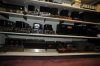
My two favorite vintage amps are the Citation II and Lafayette KT 550. I've had a lot of them over the last 40 years, starting with my first 550 in 1977 for fifty bucks. The Lafayette has a powerful sound, much larger than it's 40 watts would indicate it should, if the power supply caps are replaced and maxed out. As far as the Citation goes, I rebuilt a few over the last few decades, orange drops in the audio and maxing out the power supply, and I never had a problem with one of them. I was always confident selling one to a friend because I knew it would be reliable. The guy that designed them was gifted. Thought I'd show a picture of a few of these beasts I took today, 2-2-13. Just my opinion.
 

Attachments

  • stuff1.jpg
    stuff1.jpg
    64.4 KB · Views: 244
Register to hide this ad
My two favorite vintage amps are the Citation II and Lafayette KT 550. I've had a lot of them over the last 40 years, starting with my first 550 in 1977 for fifty bucks. The Lafayette has a powerful sound, much larger than it's 40 watts would indicate it should, if the power supply caps are replaced and maxed out. As far as the Citation goes, I rebuilt a few over the last few decades, orange drops in the audio and maxing out the power supply, and I never had a problem with one of them. I was always confident selling one to a friend because I knew it would be reliable. The guy that designed them was gifted. Thought I'd show a picture of a few of these beasts I took today, 2-2-13. Just my opinion.

Beasts is a good description. They should come with a lifting warning. :yes:

Unfortunately UPS destroyed one that I shipped recently. It was packed to survive most anything but UPSs gorillas can even destroy things that's are packed in wood crates. :no:

BTW what power tubes do you use in your Cit II Deuces?

Cheers

Lar
 
The amps should come with a cart, that's for sure. I found that putting wood blocks between the transformers really stiffened the units up for shipping. As far as tubes, I stick with old stock USA stuff.
 
I don't care for moving the Citation II around, and I do some stretching exercises and verify a large clear landing pad before I even think of moving the 550. That is a sweet lineup you have there, Stanko! :yes:
 
My two favorite vintage amps are the Citation II and Lafayette KT 550. I've had a lot of them over the last 40 years, starting with my first 550 in 1977 for fifty bucks. The Lafayette has a powerful sound, much larger than it's 40 watts would indicate it should, if the power supply caps are replaced and maxed out. As far as the Citation goes, I rebuilt a few over the last few decades, orange drops in the audio and maxing out the power supply, and I never had a problem with one of them. I was always confident selling one to a friend because I knew it would be reliable. The guy that designed them was gifted. Thought I'd show a picture of a few of these beasts I took today, 2-2-13. Just my opinion.

Wow...I bet those would be fun to listen to! Someday I'll find that Citation. :thmbsp:
 
I had a Citation II for a number of years, but eventually sold it. I had trouble keeping the amp fed with good 6550/KT88 tubes. Once the supply of GE 6550A tubes became dry, that started me looking for alternatives. Current production 6550/KT88 (IMHO) is not worth the expense, as they are too questionable from both Sonics and reliability.

I always found the Citation II to be a bit bright. After looking into why that was, came to the conclusion that the OPT's were a bit too low in impendence. Don't get me wrong, they are great iron. I just think that they are better suited for DIY with say, a quad of 6L6 tubes, which is a better match for them. In fact,the guy I sold the Citation II to is doing just that with the output iron.

So, now my tube itch is scratched with a pair of 1625 mono blocks. Much easier to keep the amps in power tubes, better reliability, and (IMHO) sounds better than the Citation II.

http://audiokarma.org/forums/showthread.php?t=379160&page=2


I never had the pleasure of listening to a 550, but would someday like to.
 
Last edited:
Beasts is a good description. They should come with a lifting warning. :yes:

Unfortunately UPS destroyed one that I shipped recently. It was packed to survive most anything but UPSs gorillas can even destroy things that's are packed in wood crates. :no:

BTW what power tubes do you use in your Cit II Deuces?

Cheers

Lar

Did you ever start your project? I bookmarked the thread.Been checking every now and then.
 
Quote:

"Freo-1 always found the Citation II to be a bit bright. After looking into why that was, came to the conclusion that the OPT's were a bit too low in impendence. Don't get me wrong, they are great iron. I just think that they are better suited for DIY with say, a quad of 6L6 tubes, which is a better match for them."


Do you mean a quad of 6L6 as in PPP per channel as I thought the 6L6 types are best suited for a higher primary like 6.5K or higher?

Randy
 
Randy, for a pair per side, sure, 6.6K is desired. Having said that, he said that a quad of of 6L6 with the Citation II output transformer would match up.
 
Man, I just looked at the Lafayette KT550 schematic again. That is indeed an unusual design!

A combination of a pentode input gain stage, a triode auto-balancing paraphase inverter, with a pentode diff-amp/driver stage!

That's something that I don't think was ever done anywhere else...

Regards,
Gordon.
 
I've seen that phase inverter before, even in a small Newcomb distribution amp. It's a great way to get a whole bunch of gain out of the PI stage that you normally don't get with conventional configurations.

As I recall however, the tail on the driver stage is pretty small in that design since the PI is R/C coupled into it, so I don't know how much "diffing" is really going on with that stage -- but it certainly can't hurt.

You gotta love the output stage though. Did Leo steal it from Stu -- or is it the other way around? :):)

Dave
 
From looking over his designs, all I can say is that Stu Hegeman was a genius...and probably more than a bit nuts.
 
I've seen that phase inverter before, even in a small Newcomb distribution amp. It's a great way to get a whole bunch of gain out of the PI stage that you normally don't get with conventional configurations.

As I recall however, the tail on the driver stage is pretty small in that design since the PI is R/C coupled into it, so I don't know how much "diffing" is really going on with that stage -- but it certainly can't hurt.

You gotta love the output stage though. Did Leo steal it from Stu -- or is it the other way around? :):)

Dave

It looks like the way it's balanced, that the triode is actually contributing very little gain, if any. With the input resistors being almost balanced (220K to 240K),and the resulting almost total negative feedback from the output of the triode to the input, that triode has to be just about unity gain, if not exactly unity...

Regards,
Gordon.
 
From looking over his designs, all I can say is that Stu Hegeman was a genius...and probably more than a bit nuts.

For me, I find it only seems nuts, if I don't understand why or how they did it... :D

In this case, the "why" is still a little unknown to me.

Regards,
Gordon.
 
In all the paraphase designs, the inverter section is always set up to operate at unity gain -- either because of the divider network used at the input grid of the inverter in a normal paraphase design, or because of the feedback applied around it in the floating paraphase design. It is ideal for the inverter to operate at unity gain, because all that it's supposed to do is to invert the phase. Any change in gain then represents an imbalance in the push-pull output.

In fact, for those schooled in more modern SS design, the inverter section of the floating paraphase inverter takes on the look of a classic unity gain inverting op amp configuration, where the feedback resistor is in fact the same value as the input resistor -- similar to what Gordon is describing in this design. Because modern op amps have such tremendous gain, the input and feedback resistors can in fact be made all but equal, where as with the triode's lower gain, a slight imbalance is required to produce unity gain at it's output.

Interestingly, if both sections operated with pentodes, not only would the high overall stage gain be available, but the input and feedback resistors of the inverter section would be nearly equal as well for balanced drive into the driver stage.

Dave
 
That's what's funny about this one- Hegeman went everywhere else with pentodes, but left a single triode in here. In a place where a pentode might have been beneficial. Guess there must have been at least SOME cost constraints...

Regards,
Gordon.
 
Back
Top Bottom