• The move to the new server is done. There are some software and database maintenance updates in process. This has us passing the hat around to help out. We appreciate any donations. Seriously, even a dollar helps. The payment page may be found here - https://www.audiokarma.org/support.html

Surge Protectors or Power Conditioners

Notnilc

Member
Hello All,
I was at the local HiFi store today, and the gentleman I was speaking with is what I consider a very knowledgeable man. We started talking about power amps and the use of power conditioners. I mentioned that I have all of my gear plugged into surge protectors. He recommended that I plug the amps directly into the wall, or use a power conditioner. Is he trying to make a sale or is this legitimately the case? I understand the amp draws more power, but does the use of a surge protector hinder or harm the amp in any way?
 
Register to hide this ad
Not all surge protectors are created equal. If you can't hear the difference between going through the surge protectors and going directly into the wall, then no need to worry, sonically at least. I like the TrippLite IsoBar models, and have two of the six-outlet ones:
https://www.amazon.com/gp/product/B0000513US/
I can't see how they would hurt an amp. Hinder? A super-system, maybe. They don't seem to hinder mine! :)

BTW, this protection technology gets "used up" by absorbing events. There is a "protection present" light on this model. If it ever goes out, they give you a new unit.
 
Last edited:
Not all surge protectors are created equal. If you can't hear the difference between going through the surge protectors and going directly into the wall, then no need to worry, sonically at least. I like the TrippLite IsoBar models, and have two of the six-outlet ones:
https://www.amazon.com/gp/product/B0000513US/
I can't see how they would hurt an amp. Hinder? A super-system, maybe. They don't seem to hinder mine! :)

BTW, this protection technology gets "used up" by absorbing events. There is a "protection present" light on this model. If it ever goes out, they give you a new unit.
Thanks so much. I bought a nice surge protector (trip lite) for the upstairs system, and I have a more expensive surge protector for my basement system that was removed from an AV rack that originally cost $180. I’m thinking both of these are fine but I wanted to see what the consensus was here on AK.
 
For the price of your discrete surge protectors, you could get a whole house protector that is installed near your service entrance and protects everything connected to the main panel. It is connected through a single 220v breaker. All surge arrestors route surges to ground.
A strip of outlets type arrestor lets the surge enter your house wiring before acting on it. It then shorts to ground which has to make the trip back to your panel and then to grnd to dissipate. The whole house arrestor will have a short path to grnd and act on surges before they have run through your house wiring.
 
For the price of your discrete surge protectors, you could get a whole house protector that is installed near your service entrance and protects everything connected to the main panel. It is connected through a single 220v breaker. All surge arrestors route surges to ground.
A strip of outlets type arrestor lets the surge enter your house wiring before acting on it. It then shorts to ground which has to make the trip back to your panel and then to grnd to dissipate. The whole house arrestor will have a short path to grnd and act on surges before they have run through your house wiring.
Thanks for the tip. I’ll look into that. However, I still need surge protectors at the system to accommodate the amount of plugs.
 
I believe the concern for amplifiers (potentially high peak current demand) is that some surge protector/power conditioner units (regardless what you call them) have series inductors to act as noise filters. An inductor opposes changes in current, which is not really what you want in a supply circuit for an amp if the amp is trying to pull high peak current demand though the circuit.

Lots of variables; the specifics of the individual power conditioner, the amplifier's output (hence power draw) capability, how much of the amp's capability do you actually use, etc., etc.
 
Last edited:
I use garden variety power strip/surge protectors and have never had a problem with them, functionally or audio-wise. Every time an audiophool, especially the HiFi sales guy, tells you that you need something to protect, or even worse to 'condition', your power, I suggest you smile and disregard every other thing they have to say. Watch your wallet around them as well.
 
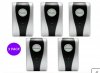
I was looking into one of these "power saver" devices. When I found out it was a hoax (as advertised) and did not save on electricity cost, I also heard they act as power conditioners, good for audio and equipment longevity, by helping keep the 120VAC constant, without dips or peaks as they use a smoothing capacitor inside. I might try one, not as a power saver, but as a cheap power conditioner.

Screenshot_20210304-231632_Chrome.jpg
 
I use garden variety power strip/surge protectors and have never had a problem with them,

"Garden Variety" Surge/spike protector plastic power strips never have current restricting inductors inside, just a few small value capacitors & 1 or more MOVs, & maybe a couple of status LEDs, with the better ones having a fail safe internal fuse !

So use of them with moderate power amplification should not be mains current restrictive & affect the performance under normal use, but some of the cheaper ones when hit with a very strong surge/spike have been known to catch fire afterwards.

I use 120/240 volt 20 amp rated HQ ones that have 20 amp wire gage rated inductors inside on my more powerful systems that are powered by dedicated 120/240 volt 20 amp circuits, but that`s just my OCD mindset..
 
FWIW

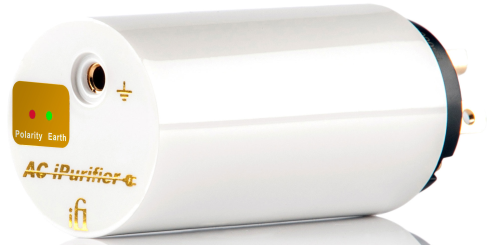
If you have slightly noisy AC this works... I use two

001.png


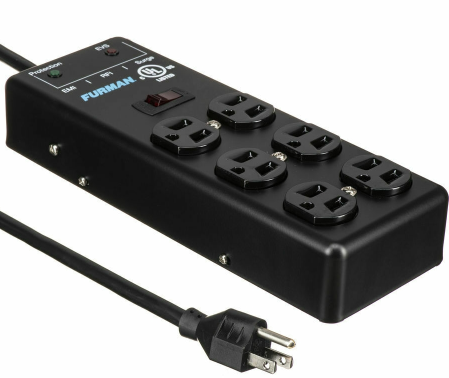
I Plug those ^ ahead of this


002.png


Works for me
 
Last edited:
Most amplifier manufacturers recommend you plug them directly into the outlet. I use conditioners for sources only.


True about manufacturers

In my new personal experiences... Chip amps will benefit with 'conditioning' --- Old school A/B amps maybe not
 
Back
Top Bottom