• The move to the new server is done. There are some software and database maintenance updates in process. This has us passing the hat around to help out. We appreciate any donations. Seriously, even a dollar helps. The payment page may be found here - https://www.audiokarma.org/support.html

Suspension Speaker Seal

Two Steps

Active Member
I picked some Epi M202's the other day. I know with Epi 100's and other suspension speakers, they NEEED to be tightened up and all seals need to be intact. Epi's are easier than AR' I think because those need actual sealant to be brought up to spec. The Epi's foam or rubber just need to be intact and the gasket behind the woofer needs to be intact and all screws need to be tightened...

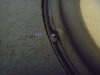
Would this pose a problem? It looks like the original butyl rubber is coming unglued from the frame. Normally I worry about the butyl rubber cracking on the surrounds, but this is different.

Is it correct to assume the seal will be compromised due to this potential air leak?
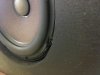

image.jpeg

The surrounds are in great pliable condition otherwise...

Thanks!
Craig
 
Register to hide this ad
It probably won't affect the sound at the moment, but I suspect it'll get worse. Should be easy to fix with contact cement or Ailene's tacky glue.

Actually, just had a closer look. Why does it look like there is something between the part of the surround that's coming up and the frame rim? Is that the glue that's cracked?
 
It probably won't affect the sound at the moment, but I suspect it'll get worse. Should be easy to fix with contact cement or Ailene's tacky glue.

Actually, just had a closer look. Why does it look like there is something between the part of the surround that's coming up and the frame rim? Is that the glue that's cracked?

That's exactly it swechsler, I think it's the residue of the old glue. There is a gap between the rubber surround and the woofer basket.
 
You can tell when the seal is good enough by pushing on the woofer. The seal is never perfect. If it were you couldn't use acoustic suspension speakers at higher elevations.
 
First time poster, long time lurker. I just got a pair of these at an estate sale. It seems like the rubber is glued to the gasket. Is there any benefits to this? It seems odd to me. When I pulled the screws out, it broke the seal. When I refoam them, I think I would rather glue the foam to the actual woofer instead of the gasket. Is that ok, or is it frowned upon?
 
You need to determine if there is a leak and, if there is, you need to plug it up. Otherwise the speaker won't operate or sound the way it was designed. Trying to use glue to plug leaks in surrounds is usually pretty temporary. There ends up being too much stress at the glue/surround junction and the surround will crack there. It may work OK in that location as long as there's no flex there.

Doug
 
i'm in the process of restoring the same pair of speakers -- and coincidentally wondering the same thing you are. I had to take them all apart to rebuild the crossovers, so, yes, the surrounds were glued on top of the fasteners, so your picture looks just like mine, after I pulled the surround away so I could access. I don't think the seals are bad around the edges, but b/c this is a restore project, I'm replacing a couple woofers/tweeters and sealing everything up good w. mortite vs. those crappy thin original gaskets. I pushed in on the woofers to observe the "spring" and they didn't seem particularly sealed - before I pulled them apart, but difficult to assess since I have nothing to compare to. I'm not done w. mine yet. regarding your question - it really comes down to how deep you want to go w. restoring them. glue around the surround will probably make little difference vs. digging in & replacing the caps,binding post & wiring/gaskets, add bracing, etc...certainly a unique pair of speakers worth the effort IMO.
 
Last edited:
i'm in the process of restoring the same pair of speakers -- and coincidentally wondering the same thing you are. I had to take them all apart to rebuild the crossovers, so, yes, the surrounds were glued on top of the fasteners, so your picture looks just like mine, after I pulled the surround away so I could access. I don't think the seals are bad around the edges, but b/c this is a restore project, I'm replacing a couple woofers/tweeters and sealing everything up good w. mortite vs. those crappy thin original gaskets. I pushed in on the woofers to observe the "spring" and they didn't seem particularly sealed - before I pulled them apart, but difficult to assess since I have nothing to compare to. I'm not done w. mine yet. regarding your question - it really comes down to how deep you want to go w. restoring them. glue around the surround will probably make little difference vs. digging in & replacing the caps,binding post & wiring/gaskets, add bracing, etc...certainly a unique pair of speakers worth the effort IMO.

Thanks for the reply. Restoring an EPI M90 is what got me hooked on this hobby, so I am definitely going to restore the M202's. I tried them out before I took them apart and I thought they sounded awesome. I already changed out the binding posts. I ordered the Dayton audio caps, so rewiring and adding them is the next step. I will look into adding the mortite instead of using the thin gaskets. I added a brace to my M90s, but I am curious how you would do it to the M202s since there are speakers on two sides.

Back to the woofers- I definitely have to re-foam them. When I unscrewed them from the cabinets, it broke the seal. I am going to try to find out if the M202 uses the same woofer as the M100. If they do, I think I am just going to glue the new foam onto the rim instead of the fasteners. I think that will prevent the foam from ripping any time you remove the woofer from the cabinet.

-Jeff
 
I think I would rather glue the foam to the actual woofer instead of the gasket.
The gasket under the surround is necessary - - it allows the woofer cone to reach its outermost extension and therefore LF performance. If you remove the gasket and adhere surround directly to metal frame, you will be limiting the woofer's ultimate movement.
It looks like the original butyl rubber is coming unglued from the frame.
I don't think I'm following what the perceived problem is - - it looks pretty much like my EPI-100 rubber woofer, with the rubber surround glued to the gasket sitting above the metal.

P1120896.JPG
 
The gasket under the surround is necessary - - it allows the woofer cone to reach its outermost extension and therefore LF performance. If you remove the gasket and adhere surround directly to metal frame, you will be limiting the woofer's ultimate movement.
I don't think I'm following what the perceived problem is - - it looks pretty much like my EPI-100 rubber woofer, with the rubber surround glued to the gasket sitting above the metal.

View attachment 1532663

Thanks for your help. That is good to know. My M90s weren't set up that way. I read that they are pretty much the same thing as the M100, so I assumed they would be the same. Good to know. I will glue the new foams on top of the gasket.

-Jeff
 
I will glue the new foams on top of the gasket.
I am only familiar with the early rubber surround version, but if your woofers already have a gasket in place, I would assume it is there for a specific reason. I do know that at least one 8-inch foam woofer from AR has a similar gasket, and the foam is meant to attach to its outermost surface.
 
What I see is a surround that is fine and whenever the driver was reinstalled at some time, someone used too much sealant and it gooped around the edge. A well sealed suspension speaker is very important.
 
Back
Top Bottom