• The move to the new server is done. There are some software and database maintenance updates in process. This has us passing the hat around to help out. We appreciate any donations. Seriously, even a dollar helps. The payment page may be found here - https://www.audiokarma.org/support.html

TD124 MK1 Outer Platter Dimensions?

Update: still working on it! We're having to experiment with a different thickness stock to maintain flatness during the operation. Lord knows that's the raison d'etre of a replica platter! I also like the thicker material to reduce ringing effects. The fabricator gave me a new handmade wok the last time I was over there, so that's been nice too.
 
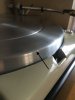
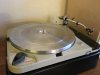
Well hello folks, it's been long time coming, but I have the platters! The metal spinner did a great job. Here is a sneak preview:
IMG_7328.JPG

IMG_7327.JPG

Some work remains to be done: I need to make a jig to locate and drill the three holes around the spindle, so that the original 45rpm adapter and spindle bushing can be used.

The replica is not 100% exact but you would need to have an original one side-by-side to tell the difference. The differences, as far as I can tell, are:

- The material I used is a modern aluminum alloy (6061) and is slightly thicker than the original. This was a deliberate choice as a thicker platter is easier to make flat and should avoid the warping issues plaguing the originals.
- There is no chamfer at the outside edge of the platter. I can put a chamfer there but it would involve some careful work on the lathe. I'm thinking that it's not necessary unless specifically requested. What do you folks think?

I have these available for $325 shipped. Once I drill the center holes, I will consider them finished and will make a new post on this forum with some more photos and some background on how they were made. Some of you have contacted me already to express your interest; if you would like to order one now, PM me, and it will give me some extra motivation to get those center holes drilled and figure out how to ship them. :)
 
Last edited:
Aluminum edges can be a little sharp, especially while spinning.
I think chamfering or rounding the outer edge of the platter might prevent a few fingertip cuts.
Chamfering or rounding both the inner and outer edges of the platter might extend the life of the clutch "pads".

For shipping...maybe a rigid plywood cradle to support and protect the platter and it's edges. Route a circular groove into thick plywood.

Nice work, BTW!
 
Last edited:
Aluminum edges can be a little sharp, especially while spinning.
I think chamfering or rounding the outer edge of the platter might prevent a few fingertip cuts.
Chamfering or rounding both the inner and outer edges of the platter might extend the life of the clutch "pads".

For shipping...maybe a rigid plywood cradle to support and protect the platter and it's edges. Route a circular groove into thick plywood.

Nice work, BTW!
Clutch pads are a consideration. If this was sharp enough to cut through the pads, it would probably be sharp enough to make some marks in the actual clutch
 
Aluminum edges can be a little sharp, especially while spinning.
I think chamfering or rounding the outer edge of the platter might prevent a few fingertip cuts.
Chamfering or rounding both the inner and outer edges of the platter might extend the life of the clutch "pads".

For shipping...maybe a rigid plywood cradle to support and protect the platter and it's edges. Route a circular groove into thick plywood.

Nice work, BTW!

To be clear, the edges have all been finished and are not sharp at all. I've tested them on my machine and it works well with the clutch pads. I am talking about the edge where the horizontal meets the vertical. The original part has a cosmetic chamfer there, while mine currently have a fillet there. I can optionally cut a chamfer to better replicate the original.

IMG_7329.JPG
 
To be clear, the edges have all been finished and are not sharp at all. I've tested them on my machine and it works well with the clutch pads. I am talking about the edge where the horizontal meets the vertical. The original part has a cosmetic chamfer there, while mine currently have a fillet there. I can optionally cut a chamfer to better replicate the original.

View attachment 1137308
Ah...I didn't realize which edge you were considering.
It would be nice to replicate the original but if it's only cosmetic it's unnecessary to function.
 
I wouldn't worry about chamfers. The main thing would be is it flat? Does it spin with no wobbles? Is the center hole perfectly centered? Thats what people would be looking for.
 
Update: still working on it! We're having to experiment with a different thickness stock to maintain flatness during the operation. Lord knows that's the raison d'etre of a replica platter! I also like the thicker material to reduce ringing effects. The fabricator gave me a new handmade wok the last time I was over there, so that's been nice too.
is your machinist having flatness issues after turning the material? what type of aluminum plate are you starting with? cast tool plate or rolled?

cast tool plate is ideal, as there is very little stress in the material. with rolled plate, the rolling process is preloading the material with stresses... the rolled plate may appear "flat" initially while brand new, but removing any material can cause that pre-loaded stress to normalize, which can then lead to warping. cast tool plate will be more expensive, but will yield more accurate and predictable results.
 
Back
Top Bottom