


tmsears
Active Member
Hello all,
I am in the middle of restoring a Technics SL-1300 Mk2 I recently acquired and I am at the part where I am about to order new electrolytics from Mouser.
The first thing I can across is a capacitor in the AC section, before the transformer. The service manual calls for a polyester cap, 0.047uf @ 125v, which is c601 in the service manual that I got off vinyl engine. My unit doesn't have a c601, it has a c701 instead, and it is an axial .022uf @ 450v electrolytic. I looked to see what the difference is and from what I can tell, my unit is a multi voltage model, and the manual is for the US only version.
My question is, what kind of characteristics should I look for in that particular cap, based on where it is in the scheme of things.
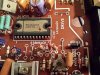
My second question is that, is that I have some electrolytic caps that are of the Tantalum variety: three in the drive section and two in the control section. The ones in the drive section are tied directly into the ic101 chip, which looks like it's made of unobtainium.
I remember something about Tantalum caps being like little bombs ready to go off but that is from the cobwebs of my mind. Is there a modern poly cap I can replace them with it do I leave well enough alone. It may be only certain Tantalum caps that are known to go bad? The internet is unclear.
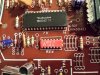
My third and final question is that on the back of the bord there seems to be some of that lovely Sony type bond glue that is known to turn conductive, slathered on some of the solder joints that connect r314, in the pitch section. I think it is a resistor pack? I have no idea why Technics would have put glue there but it looks like it was done in purpose. Does anyone know if there is a reason for the glue, and should it be okay to remove? Note: this unit has never been opened by anyone until now. The self destructive cable ties were all there, no tooling marks of any kind. In fact, I pulled the thrust plate for the platter bearing and there is no discernable wear at all... I don't think this until was used much by the original owner. Currently everything is working fine but these caps are now about 40 years old and I want to get it sorted now so I don't have to mess with it later (hopefully).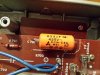

I am in the middle of restoring a Technics SL-1300 Mk2 I recently acquired and I am at the part where I am about to order new electrolytics from Mouser.
The first thing I can across is a capacitor in the AC section, before the transformer. The service manual calls for a polyester cap, 0.047uf @ 125v, which is c601 in the service manual that I got off vinyl engine. My unit doesn't have a c601, it has a c701 instead, and it is an axial .022uf @ 450v electrolytic. I looked to see what the difference is and from what I can tell, my unit is a multi voltage model, and the manual is for the US only version.
My question is, what kind of characteristics should I look for in that particular cap, based on where it is in the scheme of things.
My second question is that, is that I have some electrolytic caps that are of the Tantalum variety: three in the drive section and two in the control section. The ones in the drive section are tied directly into the ic101 chip, which looks like it's made of unobtainium.
I remember something about Tantalum caps being like little bombs ready to go off but that is from the cobwebs of my mind. Is there a modern poly cap I can replace them with it do I leave well enough alone. It may be only certain Tantalum caps that are known to go bad? The internet is unclear.
My third and final question is that on the back of the bord there seems to be some of that lovely Sony type bond glue that is known to turn conductive, slathered on some of the solder joints that connect r314, in the pitch section. I think it is a resistor pack? I have no idea why Technics would have put glue there but it looks like it was done in purpose. Does anyone know if there is a reason for the glue, and should it be okay to remove? Note: this unit has never been opened by anyone until now. The self destructive cable ties were all there, no tooling marks of any kind. In fact, I pulled the thrust plate for the platter bearing and there is no discernable wear at all... I don't think this until was used much by the original owner. Currently everything is working fine but these caps are now about 40 years old and I want to get it sorted now so I don't have to mess with it later (hopefully).

