
• The move to the new server is done. There are some software and database maintenance updates in process. This has us passing the hat around to help out. We appreciate any donations. Seriously, even a dollar helps. The payment page may be found here - https://www.audiokarma.org/support.html

Technics SU-8080 blowing fuses instantly.

Aberhammer

New Member
After losing sound in one channel due to a bad power transistor on the main amp board, I replaced the set, because I figured why not. The set being 2SA913s and 2SC1913s replaced with MJE15030G and MJE15031 respectively. I read elsewhere on the board that this would be fine. The big filter caps seem fine, as do all the diodes on the power supply circuit.

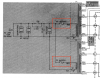
Now, when I turn the amp on, F1 and F2 are blown instantly. I've included a partial snapshot of where they live in the circuit. There's not a whole lot going on that side of the transformers. I'd appreciate any insight as to what the cause could be.... and don't say faulty owner. I know this already.

Thanks for reading.
 

Attachments

  • su8080-01.png
    su8080-01.png
    413.6 KB · Views: 39
Register to hide this ad
Those are the mains fuses, you have a short and most likely it's from the section you just did the work on. Is there supposed to be a clear plastic piece behind the transistors to keep the collector from grounding that you may have forgot to replace? I've done that before so that's the first place I would look. If that's not it, I would take a multi-meter and follow the schematic around those transistors to make sure nothing is grounded that shouldn't be.
 
I would take the new outputs and check them, they may well have blown again when the fuses blew. You will need to check all transistors resistors etc downstream as well. don't power up until you are sure there are no faults or shorts or it could get expensive. Of course a variac or dim bulb tester would help to reduce damage on power up.
Hope this helps.
 
Use a Dim Bulb Tester to avoid blowing fuses on startup.

I highly recommend the DBT over a Variac since the DBT offers instantaneous automatic current limiting, as well as the visual indication that something is wrong. Whereas if you're watching the ammeter on a Variac, by the time you realize that something is amiss, it's quite likely too late, and you've just popped another fuse (if you're lucky) or toasted more components (Murphy's Law, a $5 transistor will burn out in order to save a 10 cent fuse).
 
If you have pics of the original transistors and their pinouts, check the orientation on the circuit board. Its very possible to have installed the transistors backwards, or the wrong transistors in the wrong positions, it happens to everyone.

Also, if you have only replaced transistors because one went bad, well, the one that went bad may not have been the only component which failed, which means you need to check the resistors, capacitors, and diodes around that area or beyond.
 
10cent fuse? lol.... but dbt on this unit will work. Since op has to pull the output transistors to check and if okay hold them out. might pull the drivers, too but if a short with the dbt. most likely those are bad, too. Taking the drivers out will give you an indication, too but you may want to compare those specs to your new (if good) replacement transistor's. pnp or npn placement on the board or heatsink.

These units do sound pretty nice. Good advise to check values of caps and resistors. Orig. post not a good sign regardless.
 
I do agree that the drivers are highly suspect as well, and check the emitter resistors too to see if they've opened.

When replacing drivers, I don't automatically trust that the new device will match the legs of the old device. I use my little Peak transistor checker to identify with certainty which legs are which. I have seen supposedly identical substitutes that were not the same as the original...and the Peak confirms npn or pnp.
 
Thanks for all the responses. I guess a dim-bulb tester is the next step. I doubled checked the pinouts of the new transistors and they do match the originals. My soldering in the area was very clean and I checked all the immediate surrounding components. Interesting that someone else encountered a similar thing on this board, but it looks like the cause was never determined.

Seems like my language mislead a few people. I called the transistors I replaced 'power transistors' as opposed to 'pre-driver transistors' as they've been called elsewhere. My bad, I think. I haven't touched the big TO-3 transistors on the heatsinks although I do have replacements kicking around.

I'll check back as soon as I get my DBT sorted out.
 
the cheap ebay transistor checker's are a very good idea. pin out can vary with same part number....and remember, never buy transistors or capacitors from ebay.
 
I would check those TO-3 transistors for shorts at the very least, preferably pull them and test them all properly. Also drivers and pre drivers... The Dim bulb tester will not completely protect the amp on switch on, each time you try it you risk more and more damage. You need to Eliminate the cause of the short before powering up again.
Hope this helps.
 
I highly recommend the DBT over a Variac since the DBT offers instantaneous automatic current limiting, as well as the visual indication that something is wrong. Whereas if you're watching the ammeter on a Variac, by the time you realize that something is amiss, it's quite likely too late, and you've just popped another fuse (if you're lucky) or toasted more components.
I spent more than a decade in the audio service business and found that a variac with low-range ammeter and range switch (or bypass switch) is the ideal setup. You learn to advance the variac slowly after fuse replacement, and that ammeter behavior gives diagnostic information. Fast-rising line current usually means shorted rectifiers, for instance. A slower ramp-up is more characteristic of power amplifier failure. If it's the usual amp failure, you can set the variac to a low voltage and safely find hot emitter resistors with your fingers, so there's no doubt about the trouble site. I never wasted any fuses after learning these things. Well, except for a few times when I blew the fuses protecting my bench speakers during over-enthusiastic listening tests.
 
Back
Top Bottom