• The move to the new server is done. There are some software and database maintenance updates in process. This has us passing the hat around to help out. We appreciate any donations. Seriously, even a dollar helps. The payment page may be found here - https://www.audiokarma.org/support.html

Tesla NC 430, or How I live now. MK2

Bogdan AH

New Member
(Something didn't came out right after past's WE maintenance of the forums, as my previous thread on my Tesla simply disappeared, along with other posts on the other thread on the TEAC TN550 ... This WE I tried to post some more and for some reason it didn't work. I made a copy, so here it comes, but all that was before... I don't have it... How does those things work here ?)

Two things that I feel is worth mentioning about the NC 430 : the arm lift is really really slow (about 10 - 11 seconds between lever action and the moment the needle touches the record) and the geometry of the tonearm looks like is not accurate at all. I first noticed that when I replaced the original cartridge with the AT95E, a couple of months ago. Today, as I changed to the AT440ML it came back in my present :

This is the AT440ML in the process of alignment (and a view of the non standard mounting, that we called at that time - 1980s - bayonet mount ) :
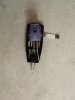
IMG_20180818 AT-440ML.jpg

And on the protractor, first on the outer point ;
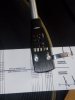
IMG_20180818 AT-440ML EXT.jpg

then on the inner point :
IMG_20180818 AT-440ML INT.jpg

Now I remember that with my IKEDA 407 (a 12" inch mounted on a outer stand to the table) I also had a hard time to find it's position and then to align the cartridge.


I know the theory but not that much practice and for sure nobody taught me how to do it, unless I count all the folks that put information on the net that I read over the years. So I guess that the way I did is right, but if any of you have something to say that might make me learn something new, I'm open to it.

It feels like "oh, it's strange that someone might put on the market a turntable with that kind of error in conception..., or is it me ?" Or maybe the protractor is not adapted to this arm geometry ?

Any opinion ?
 
Register to hide this ad
And another thing. I checked the speed. Printed a strobe pattern and used my phone with a strobe application. I can't be sure about the accuracy of this method, but it came that the speed is around 33,4 - 33,5 rpm. This is with the original belt that stayed tensed on the sub-platter for almost 30 years... I also built another belt that I will put in place soon to see... I'll come back with some feed back.
 
First of all forget the linear protractor. The only worse thing than this protractor is the 1 point protractor (if you dare call that a protractor).

Use Conrad Hoffmans arc protractor:

http://conradhoffman.com/chsw.htm

You need to find out the specs for your tonearm (effective length). Then use the program to print the protractor. If that is a short tonearm the best way would be to use Stevenson protractor. If its a longer tonearm, around 9 inch or so, you can use Lofgren A or B.

If you cant find the effective length measure the distance from the bearings to the cartridge tip (needle). This will give you the effective length. I usually then detract 1 or 0,5mm just to have some room for rotating the cartridge. To get the right effective length printed you will need to change the pivot to spindle value until you get as close as possible to your effective length.

Then print the protractor and to properly align it, you will need a piece of dental floss (or something similar). Fix the platter so it does not move and tape the dental floss from the center of the spindle to the center of the tonearm bearings. Then make sure that the line of the paper is directly under the dental floss string.

I usually put the protractor on a test lp, just so that the surface is nice and even.

And then you can start aligning the cartridge. Always align the cantilever, never the body, since most of the time the cantilever is slightly misaligned, due to factory setup.

Regarding the tonearm lift. If it takes 10 sec, the lube has probably hardened (if it uses the damped mechanism). You should disassemble the mechanism, clean the old lube and then put some new silicon oil (cst is tonearm specific, there is trial and error involved). Usually 300,000 cst is the starting point, but you can try with a lower value. It should take the tonearm about 3-4 sec to drop.
 
Last edited:
"Use Conrad Hoffmans arc protractor:

http://conradhoffman.com/chsw.htm"

You certainly got my attention with all this, Solist. I don't have actually easy access to a printer so I have to see were and when I can print that protractor. I noticed that at 100% the pdf file generated by the program is not exactly at scale on my laptop screen already, so it seem it requires attention during the printing job, and probably several printings...

But, man, aligning the cantilever, not the cartridge body... wow... Sure it makes sense, but it seems like a stretch to me. I'll think about how I can do this. For sure also, for ex, the cantilever of the AT440ML is not perfectly align with the body... I noticed... And for the Sumiko BPS... it seems like it is, but also difficult to be sure, due to the way it's built.

On the other hand, thinking a while I realize that I don't see yet why you are so reluctant towards the two-points protractor. With the Ikeda and the SME tonearms I also had this two-point type delivered. At the end, it seems to me that what is required is to find those two points where the cartridge (ok... the cantilever then) is tangent to the circle on which it stands... to minimize a tracking error that can not be eliminated... And within the range of adjustments of the cartridge on a tonearm that is fixed and not mobile... there's not to many "two points" like that that can be found... And I guess that this is whatever protractor used... Am I missing something ?

"Regarding the tonearm lift. If it takes 10 sec, the lube has probably hardened (if it uses the damped mechanism). You should disassemble the mechanism, clean the old lube and then put some new silicon oil (cstis tonearm specific, there is trial and error involved). Usually 300,000 cst is the starting point, but you can try with a lower value. It should take the tonearm about 3-4 sec to drop."
Yeah, I know I have to dive into doing this once. At the first view it's not obvious how the lift device can be disassembled... So I have to gather my courage to start... Thanks for the tips. I wouldn't knew about the 300 cst...

By the way, Solist, did you tried to say that the tonearm on the NC 430 might be OK geometry wise, but the way I checked the cartridge alignment is rather faulty ? Because if is this, I'll definitely find access to a printer even if I have to rob a bank !!! Weight well your reply, it's some responsibility !!! :D

This is a picture I took at the end of the alignment I did, just to see how it looks on the if I wish to put the headshel parallel to the protractor's lines :
IMG_20180818 HS AS IT SHOULD BE.jpg
Nothing is impossible, but I find it very difficult to put the needle of a cartridge on the perpendicular line... ;-)
 
You can still go to a print thing (forgot whats the name in English) and then measure it and see where you at. Dont check fit to paper when you convert it to a PDF. Mine were spot on the first time so..

It is really the same thing, you just gotta have good light when you do this. It is really easy to align the cantilever since you have a center line to which you align it. And from my experience the alignment makes or brakes the sound. It took me the first time half a day to properly align the cartridge, the next time it took about half an hour. And it needs to be spot on, same with azimuth. SRA doesnt need to be spot on since it will vary from record to record. For those I used pieces of electrical tape to angle the cartridge (1 on the back and 2 on the front where the screws are).

Regarding my itch towards linear protractors. The market is oriented towards the majority of the customers. Basically everything is plug and play nowadays. And the linear is easier to use than the arc protractor so I think this is the reason everyone uses it.

You can try and compare the results to the arc protractor. Then you can see how much off you really are. The way the cartridge is rotated makes me think that the protractor you used is not compatible with the tonearm geometry in the first place. And you can also choose different alignments with the custom one which is a nice thing.

Also forgot to mention. When using the program use the DIN option.
 
Last edited:
The needle needs to sit dead on the + mark and the cantilever must be aligned with the line that goes from the center of the + mark.
 
Or this angle is not good.

10s4yhg.jpg

I doubt this is the case, but is a possibility. He uses an ortofon protractor which is probably the reason the offset angle is so different.
 
Then throw it away. Obviously it does not fit.

Yep, that might be a solution, but I'll keep it. By the way, I 'tested' my Ortofon protactor on a Rega P3 (2016) and I it fitted, that says me that the geometry of the arm of the NC 430 is not good. But as I know how I can fit a cell on it... I still can use-it.
 
You can still go to a print thing (forgot whats the name in English) and then measure it and see where you at. Dont check fit to paper when you convert it to a PDF. Mine were spot on the first time so..

It is really the same thing, you just gotta have good light when you do this. It is really easy to align the cantilever since you have a center line to which you align it. And from my experience the alignment makes or brakes the sound. It took me the first time half a day to properly align the cartridge, the next time it took about half an hour. And it needs to be spot on, same with azimuth. SRA doesnt need to be spot on since it will vary from record to record. For those I used pieces of electrical tape to angle the cartridge (1 on the back and 2 on the front where the screws are).

Regarding my itch towards linear protractors. The market is oriented towards the majority of the customers. Basically everything is plug and play nowadays. And the linear is easier to use than the arc protractor so I think this is the reason everyone uses it.

You can try and compare the results to the arc protractor. Then you can see how much off you really are. The way the cartridge is rotated makes me think that the protractor you used is not compatible with the tonearm geometry in the first place. And you can also choose different alignments with the custom one which is a nice thing.

Also forgot to mention. When using the program use the DIN option.

Ok, thanks. I put my quest on stand by for a while, but now it becomes actual again. So I'll use your advices.
 
First of all forget the linear protractor. The only worse thing than this protractor is the 1 point protractor (if you dare call that a protractor).

Use Conrad Hoffmans arc protractor:

http://conradhoffman.com/chsw.htm

You need to find out the specs for your tonearm (effective length). Then use the program to print the protractor. If that is a short tonearm the best way would be to use Stevenson protractor. If its a longer tonearm, around 9 inch or so, you can use Lofgren A or B.

If you cant find the effective length measure the distance from the bearings to the cartridge tip (needle). This will give you the effective length. I usually then detract 1 or 0,5mm just to have some room for rotating the cartridge. To get the right effective length printed you will need to change the pivot to spindle value until you get as close as possible to your effective length.

Then print the protractor and to properly align it, you will need a piece of dental floss (or something similar). Fix the platter so it does not move and tape the dental floss from the center of the spindle to the center of the tonearm bearings. Then make sure that the line of the paper is directly under the dental floss string.

I usually put the protractor on a test lp, just so that the surface is nice and even.

And then you can start aligning the cartridge. Always align the cantilever, never the body, since most of the time the cantilever is slightly misaligned, due to factory setup.

Regarding the tonearm lift. If it takes 10 sec, the lube has probably hardened (if it uses the damped mechanism). You should disassemble the mechanism, clean the old lube and then put some new silicon oil (cst is tonearm specific, there is trial and error involved). Usually 300,000 cst is the starting point, but you can try with a lower value. It should take the tonearm about 3-4 sec to drop.

I use this protractor - shouldn't you just know your pivot to spindle distance and input that?
 
Sometimes its hard to measure the STP especially if the bearings are not visible. Either way it will work.
 
By the way, I 'tested' my Ortofon protactor on a Rega P3 (2016) and I it fitted, that says me that the geometry of the arm of the NC 430 is not good.

Not true. You cannot use a protractor on a different tonearm and then state that another tonearm geometry is not good. It's not how this works.
 
Not true. You cannot use a protractor on a different tonearm and then state that another tonearm geometry is not good. It's not how this works.

Aha ! OK, so this is why that program : to match every arm with it's two own 'nul points'... I'll keep you informed as soon as I'm gonna to use it. Thanks.
 
So, my measurements of the arm of the NC 430 gives :
Pivot to spindle : 201mm (+- 0,5 mm)
Effective arm length : 218 (+- 1,5 mm I guess - this is more trickier to measure)
 
Begin with a headshell with very long screw slots will make alignments that are physical difficult/impossible very much easier. :rolleyes:
 
The angle of your cartridge to the headshell is typical of tables designed to use Stevenson, or near Stevenson, when trying for a Baerwald alignment. Also typical of that situation is that the cartridge will be way forward in the slots, and sometimes the slots aren't long enough. Does your turntable/arm have a stylus-to headshell collar specification (typically 49-52 mm)? If so, it may be better to just use that, with the cartridge square in the headshell (or the cantilever parallel, if it isn't totally straight) than to try for other alignments. Stevenson isn't a bad way to go - it optimizes for best tracking of the inner grooves - the grooves where the information is the most cramped.
 
Last edited:
The 201mm SPT will give you 216.895mm effective length. Stevenson is mostly used for shorter tonearms since Lof A & B, require longer effective length. Nothing wrong using Stevenson as sqlsavior pointed out.

If you will have problems getting up to the required effective length, just use a shorter SPT value (-0.5mm, and then try that and so on)
 

Attachments

It's true I also thought about modifying the length of the mounting holes of the headshell. I didn't translate it into practice yet : as I only have one of those non SME mounting headshell, and as there's a risk of ****ing it up if I don't do it right... I'm hesitating for the moment......

Yes, the calculator of the protractor gives me the same numbers. I'll keep you informed.
 
It's true I also thought about modifying the length of the mounting holes of the headshell. I didn't translate it into practice yet : as I only have one of those non SME mounting headshell, and as there's a risk of ****ing it up if I don't do it right... I'm hesitating for the moment......

Dont do it, if you bend the headshell is game over. And you will really not hear any difference even if you make it 0.5cm larger.

Best to keep it as it is and enjoy it. Modifying a headshell without having a spare one is beyond stupid.
 
Back
Top Bottom