
malden
Lunatic Member
said AIThe 1970s are widely considered the “Golden Age” of high fidelity, due to a unique combination of technological, economic, cultural, and industrial factors..............


said AIThe 1970s are widely considered the “Golden Age” of high fidelity, due to a unique combination of technological, economic, cultural, and industrial factors..............


I do think that there was something special about music made in the 60s and 70s, and though I really try to keep my mind open to what's new (I love a lot of music though the 90s actually), I think that we're unfortunately in an era where at least the pop culture side of it, isn't offering as much memorable music as in decades past. I do think that this has everything to do with the way that music is distributed and promoted and far less to do with people somehow being less creative these days. I totally agree with you that this nostalgia trip for 50 y/o music is annoying, but I credit that to the fact that music that was already overplayed back then, continues to be popular. I love so much music from that era, but it isn't the "classic rock" disco, yacht rock, or other stereotypical stuff that I enjoy, but things more off the beaten path. I notice that younger folks who work in the neighborhood coffee shop, who seem to be very hip to all kinds of music, have discovered lots of the 50 year old music that I like, not because it's popular, then or now, but because they've surely listened to lots of music and this kind of stuff just speaks to them.I never got to experience the 1970s. I barely got to experience the 80s. But growing up as a kid in the 1990s and early 2000s was a great time to be into audio. Gear from the 1970s was still new enough that it usually still worked without having to be repaired first. It was usually also cheap, because it was "old" but not yet old enough to be vintage/retro. In most cases you were still buying stuff from the original owner who was cleaning out their garage or whatever, and stuff wasn't yet being hoovered up by scalpers/flippers/hoarders. For a while there, it was a great low-cost way to get into the hobby.
But I honestly don't understand the awkward cultural obsession with music from the late 60s through early 80s. Now, I fully understand that for those who grew-up with that music, it will always have a special place in their hearts. I wouldn't expect anything less, as I feel the same way about much of the music that I grew up with. But it's just weird now being constantly surrounded by 50 year old music. Back in the 1990s and 2000s it's not like there was music from the 40s and 50s everywhere, but somehow now ~50 year old music has become the new norm for "oldies". You'll be watching a Hockey game, they put on Queen, "We Are the Champions", and then you realize that not only were all the players on the ice born long after the song was made, but at this point all of the coaches were too... and I can't help but ask, "Why are we still listening to these songs"? Why are they still making new movies with music from the 1970s in the soundtrack? Will we still be stuck listening to 70s music 10, 20, 30 years from now?


It's an interesting topic.I never got to experience the 1970s. I barely got to experience the 80s. But growing up as a kid in the 1990s and early 2000s was a great time to be into audio. Gear from the 1970s was still new enough that it usually still worked without having to be repaired first. It was usually also cheap, because it was "old" but not yet old enough to be vintage/retro. In most cases you were still buying stuff from the original owner who was cleaning out their garage or whatever, and stuff wasn't yet being hoovered up by scalpers/flippers/hoarders. For a while there, it was a great low-cost way to get into the hobby.
But I honestly don't understand the awkward cultural obsession with music from the late 60s through early 80s. Now, I fully understand that for those who grew-up with that music, it will always have a special place in their hearts. I wouldn't expect anything less, as I feel the same way about much of the music that I grew up with. But it's just weird now being constantly surrounded by 50 year old music. Back in the 1990s and 2000s it's not like there was music from the 40s and 50s everywhere, but somehow now ~50 year old music has become the new norm for "oldies". You'll be watching a Hockey game, they put on Queen, "We Are the Champions", and then you realize that not only were all the players on the ice born long after the song was made, but at this point all of the coaches were too... and I can't help but ask, "Why are we still listening to these songs"? Why are they still making new movies with music from the 1970s in the soundtrack? Will we still be stuck listening to 70s music 10, 20, 30 years from now?

The music from those years really reflected the western model, super dominant, expanding, and totally on top compared to the rest. But nowadays, that model has been scaled back a lot, maybe even in decline, with the cultural center of gravity shifting more toward the East.I never got to experience the 1970s. I barely got to experience the 80s. But growing up as a kid in the 1990s and early 2000s was a great time to be into audio. Gear from the 1970s was still new enough that it usually still worked without having to be repaired first. It was usually also cheap, because it was "old" but not yet old enough to be vintage/retro. In most cases you were still buying stuff from the original owner who was cleaning out their garage or whatever, and stuff wasn't yet being hoovered up by scalpers/flippers/hoarders. For a while there, it was a great low-cost way to get into the hobby.
But I honestly don't understand the awkward cultural obsession with music from the late 60s through early 80s. Now, I fully understand that for those who grew-up with that music, it will always have a special place in their hearts. I wouldn't expect anything less, as I feel the same way about much of the music that I grew up with. But it's just weird now being constantly surrounded by 50 year old music. Back in the 1990s and 2000s it's not like there was music from the 40s and 50s everywhere, but somehow now ~50 year old music has become the new norm for "oldies". You'll be watching a Hockey game, they put on Queen, "We Are the Champions", and then you realize that not only were all the players on the ice born long after the song was made, but at this point all of the coaches were too... and I can't help but ask, "Why are we still listening to these songs"? Why are they still making new movies with music from the 1970s in the soundtrack? Will we still be stuck listening to 70s music 10, 20, 30 years from now?

And they held up very well ! And are some are being enjoyed by a new generation !Having started my hi-fi hobby in the mid to late 1980s, I think we are in the beginning stages of a golden hi-fi era right now. The push for this is the development of so many high value products that have entered the arena within the past 2-3 years. In my years, I have never seen this happen in the way it is today. Very, very good quality hi-fi components can be had these days for a small fraction of the prices in the past. I don't think there has ever been a point in my lifetime where such high quality hi-fi components have been as affordable as they are today.
IMO, where the 1970s shined regarding music was with musical creativity. The song writing skills and musical talent of such a large number musicians may never be repeated again. So many bands wrote and performed their own material. Also, music production made a big advancement in the 1970s. I still marvel at the quality of so many albums that were produced in the 1970s.
Short of writing a book-length reply, the easiest way to explain it is that a lot of work got done between 1967 and 1979.But I honestly don't understand the awkward cultural obsession with music from the late 60s through early 80s

But I honestly don't understand the awkward cultural obsession with music from the late 60s through early 80s. Now, I fully understand that for those who grew-up with that music, it will always have a special place in their hearts. I wouldn't expect anything less, as I feel the same way about much of the music that I grew up with. But it's just weird now being constantly surrounded by 50 year old music. Back in the 1990s and 2000s it's not like there was music from the 40s and 50s everywhere, but somehow now ~50 year old music has become the new norm for "oldies". You'll be watching a Hockey game, they put on Queen, "We Are the Champions", and then you realize that not only were all the players on the ice born long after the song was made, but at this point all of the coaches were too... and I can't help but ask, "Why are we still listening to these songs"? Why are they still making new movies with music from the 1970s in the soundtrack? Will we still be stuck listening to 70s music 10, 20, 30 years from now?


The 1970s are widely considered the “Golden Age” of high fidelity, due to a unique combination of technological, economic, cultural, and industrial factors.
During that decade, a rare balance was achieved between build quality, technological innovation, and affordability, transforming the way people listened to music.
Transistors and solid-state circuits offering lower heat output, improved reliability, and reduced costs, together with advancements in analog design, brought to the market a range of outstanding devices for high-quality music reproduction.
Devices from that era featured exceptional build quality, with thick brushed aluminum chassis, perfectly machined knobs, real wood case panels, and often oversized components so much so that many of these units still function flawlessly today.
The design was also magnificent, with all controls clearly labeled and logically placed, complemented by analog needle meters.
Hi-fi systems became not only audio equipment but also pieces of furniture, yet audio quality and usability always remained the top priorities.
All this came at an affordable cost, especially thanks to excellent Japanese products manufactured on a large scale.
Music itself was also changing: rock, progressive rock, jazz fusion, singer-songwriters, soul, and funk became central to a cultural revolution.
During these years, owning a hi-fi system was both a status symbol and a cult object.
The 1970s represented an unparalleled balance between mature analog technology, artisanal-level production quality at scale and affordable prices, and a culture of conscious listening.
It was a period when the home music listening experience reached a depth, emotion, and engagement level that many audiophiles still strive to recreate today.
I love the ’70s!


"Chicago 98, 99, and 100."I couldn't tell you what the name of their past several albums are.


Some of us do as it’s so bad, it’s good — unintentionally hilarious, like an aural Plan 9 From Outer Space.As someone already said, a lot of great music was produced in that span of time. It is not just that we grew up listening to it. A lot of crap was also produced then. We do not listen to that!
There are so many wonderful songs from their double album debut. I can't think of another band that released two records for their debut. I am sure there were more but they probably didn't have as many great songs that are still heavily listened to today. One of my favorite songs on CTA is Poem 58. Terry Kath was incredible in this one, and many others. He played lead guitar and sung lead vocals.From CTA.
Beginnings.
"Chicago Transit Authority." MFSL 2-128. Victor (Japan) 1/2-speed pressing MFSL re-master. 1984.
Run-out: MFSL-2-128-1-A11 JH/2 H1111 ※

The funny thing for me is there are a lot of 70s songs that I did not like at the time they were released. However, over time I did come to like a lot of them. I think this is due to me growing up through the my teenage years in the 70s and as I matured I came to appreciate these songs more and more. There were A LOT of good 70s songs that were done by one, or two, hit wonders.As someone already said, a lot of great music was produced in that span of time. It is not just that we grew up listening to it. A lot of crap was also produced then. We do not listen to that!

I think a lot of it has to do with the fact it is well recorded, video and audio and very accessible. I'd like to see and hear a well recorded show of Artie Shaw or Glenn Miller using today's technology to capture it. I do believe the recording technology has a lot to do with it, capturing the impact, nuance and power of it.It's an interesting topic.
I was watching a documentary the other day about the 'Live Aid' concerts in 1985, it being forty years since that event.
1985 was the mid-point between now, and the end of the Second World War.
As a sixteen year old in 1985, WW2 seemed like ancient history to me and the popular music of that era archaic - although not necessarily bad or not enjoyable. Nevertheless, it was not common to hear it played on radio or TV and no-one my age was 'into' it.
But we now have the same time gap from those 1985 concerts featuring Queen, Clapton, Collins, McCartney, Status Quo, Ultravox, Elvis Costello, Billy Ocean, Black Sabbath - all music which is still common currency on radio, TV, films. And people who were not even born in 1985 are listening to it.
I'm not really sure why that is, but it's fascinating.
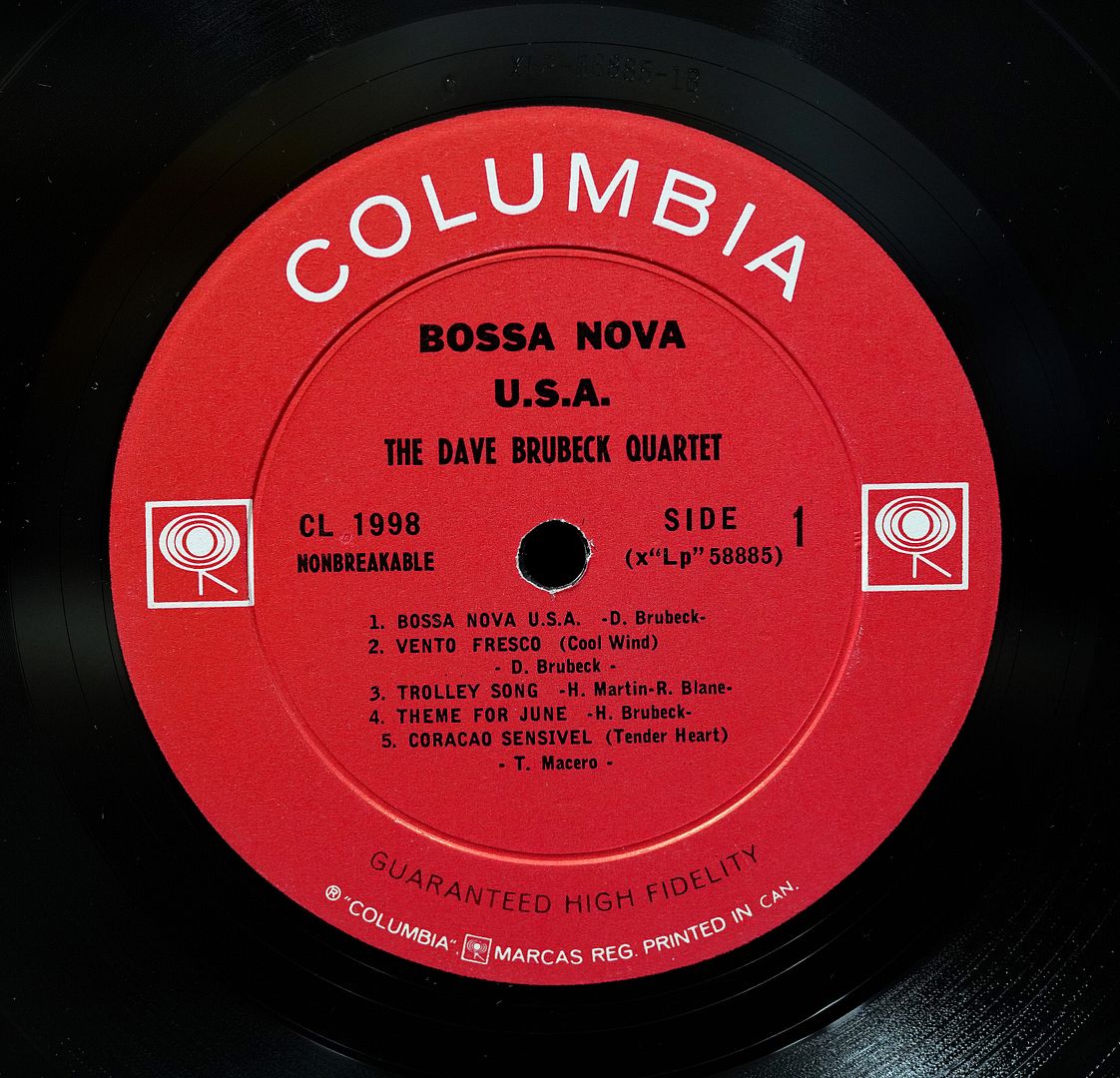
I love watching those 2-Eye labels spin around.I'm a 60's/70's kid, but I have to think the era during the pinnacle of vacuum tubes and labels like Columbia were peak sound. Playing these recordings with modern gear is something to behold.
https://www.rollingstone.com/music/...30th-street-studio-aretha-frankin-1960-78377/
https://tonybennett.com/photo-detail.php?id=30


I can remember getting blasted with Free Form Guitar to wake me up once or twice. At least I think I remember.There are so many wonderful songs from their double album debut. I can't think of another band that released two records for their debut. I am sure there were more but they probably didn't have as many great songs that are still heavily listened to today. One of my favorite songs on CTA is Poem 58. Terry Kath was incredible in this one, and many others. He played lead guitar and sung lead vocals.


