• The move to the new server is done. There are some software and database maintenance updates in process. This has us passing the hat around to help out. We appreciate any donations. Seriously, even a dollar helps. The payment page may be found here - https://www.audiokarma.org/support.html

The greatest amps circa 1977-80?

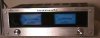
One Marantz amp I didn't see listed was the Marantz model 140 power amp. Sometimes called a baby Marantz. Rated at 75wpc. I had two, but still have one. Once restored, both put out just over 95wpc. They are modular, so all you need is a screw driver and unsolder two wires and everything comes apart. A compete wiring harness coming off the power transformer that plugs into everything. They are a nice neautral sounding amp.
0140.jpg
 

Attachments

  • 140_sup_i.jpg
    140_sup_i.jpg
    61.1 KB · Views: 36
Hate it when you know its out there and just can't find it, there was a magazine review of
perhaps 6 or 7 power amps judging overall best SQ 1977,78,79 North American published.

Ring any bells?
 
I'd put my MC2125s up against an awful lot of other amps from this era. They sound great and just keep on ticking, very versatile units with exceptional build quality. I've owned a lot of amps over the years, but these were my keepers. :thumbsup:

Enjoy the music!
 
lightning will go where it wants regardless of what you do.[/QUOTE]
can agree, had it hit my parents house, killing a pioneer sx 3900, and were sure it hit the fireplace, and get this, even put a gas pilot light out in a hot water heater, blew a tv, and the ethernet on a pc, not the pc, fused the sil;inoid in an ac unit, unfortunatly the 3900 didnt survive
 
One Marantz amp I didn't see listed was the Marantz model 140 power amp. Sometimes called a baby Marantz. Rated at 75wpc. I had two, but still have one. Once restored, both put out just over 95wpc. They are modular, so all you need is a screw driver and unsolder two wires and everything comes apart. A compete wiring harness coming off the power transformer that plugs into everything. They are a nice neautral sounding amp.
View attachment 2106226

One thing to be aware of- IIRC, the 140 was the Marantz amp I had, from which I learned- the hard way- the problem with high-capacitance speaker wiring.

I had mine hooked up with a set of Kimber Kable speaker wires- and it just sounded STRANGLED. No dynamics, very rough and edgy sounding. I thought I had blown it up, in fact!

I then thought to remove the Kimber Kable- and put in a set of old Audioquest F14 (flat wire) cables. And the sound was BACK. The 140 sounded completely normal again.

I suspect that there is something in there, that makes it marginally stable- and the speaker wire was enough to send it into oscillation. Fortunately, it wasn't bad enough to blow up...

Regards,
Gordon.
 
Wrong !!
It`s more like what you don`t do to protect, or how you do it !

I had one client out in rural West Georgia, where I had to design a complete "dissipation/draining ring" for their entire house, to protect against lightning. In essence- the same ground scheme that would be used for a multi-story hi-rise building.

We literally buried a closed, un-broken loop of 4/0-gauge (four ought gauge- about 1/2" in diameter) bare copper wire, completely around the entire house, with a branch that went over to their backup generator (about 50 feet from the house). Periodically, we put lightning rod wires (also 4/0-gauge) up into the trees, all around the house, to "sap off" lightning, so that it wouldn't hit the house directly. The whole house was bonded to the copper ring, as was the generator and its conduit wiring, and the cable TV entrance wire as well.

This was AFTER full-house surge protection had been installed, on the AC power, cable TV cables, and telephone wiring- but, it was only after adding the buried grounding ring, that we finally got things under control. It was literally many thousands of dollars of materials and contractor labor (and I think the contractors thought I was half-crazy for insisting on everything that I specified), and several months of work to install...

They went from frying a major electronic component (home theater receiver, TV, cable box, etc) every two months or so- to only having having two significant failures in the last five years (which may or may not been equipment just wearing out?).

Regards,
Gordon.
 
Last edited:
One thing to be aware of- IIRC, the 140 was the Marantz amp I had, from which I learned- the hard way- the problem with high-capacitance speaker wiring.

I had mine hooked up with a set of Kimber Kable speaker wires- and it just sounded STRANGLED. No dynamics, very rough and edgy sounding. I thought I had blown it up, in fact!

I then thought to remove the Kimber Kable- and put in a set of old Audioquest F14 (flat wire) cables. And the sound was BACK. The 140 sounded completely normal again.

I suspect that there is something in there, that makes it marginally stable- and the speaker wire was enough to send it into oscillation. Fortunately, it wasn't bad enough to blow up...

Regards,
Gordon.
I restored two of them. One I kept, the other my son has been using pretty much daily for over three years now. I do know on each amp board is a flat gray film cap that Marantz used in various equipment that didn't stand the test of time.
They make that amp and one preamp I know of sound very dull and lifeless. Many in the Marantz crowd replace them. Also one original electrolytic cap on each board can cause problems. The only thing that came close to what you describe for me or my son, was he had run some very long speaker wires from his living room out to the patio in his back yard. That didn't make the amp very happy at all. It was the same thing you described. I told him not to run the wires that long. That amp uses push on pin connectors to connect wiring to the amp boards also. The pins have to be cleaned and new connectors on the wires as they build up corrosion over time. I do really like the modular design though. Just a few screws and everything unplugs from the wiring harness on the transformer. The factory trim pots Marantz used then for bias and DC offset tend to be unstable also. Even when adjusted you can watch your meter move up and down, never staying put for long. I just replaced them when I saw them in other integrated amps and power amps. I still use mine connected to a model 1060 integrated amp used as a preamp.
They carbon up really bad and cleaning doesn't help much. I've only used 14g speaker wire though.
 
I had one client out in rural West Georgia, where I had to design a complete "dissipation/draining ring" for their entire house, to protect against lightning. In essence- the same ground scheme that would be used for a multi-story hi-rise building.

We literally buried a closed, un-broken loop of 4/0-gauge (four ought gauge- about 1/2" in diameter) bare copper wire, completely around the entire house, with a branch that went over to their backup generator (about 50 feet from the house). Periodically, we put lightning rod wires (also 4/0-gauge) up into the trees, all around the house, to "sap off" lightning, so that it wouldn't hit the house directly. The whole house was bonded to the copper ring, as was the generator and its conduit wiring, and the cable TV entrance wire as well.

This was AFTER full-house surge protection had been installed, on the AC power, cable TV cables, and telephone wiring- but, it was only after adding the buried grounding ring, that we finally got things under control. It was literally many thousands of dollars of materials and contractor labor (and I think the contractors thought I was half-crazy for insisting on everything that I specified), and several months of work to install...

They went from frying a major electronic component (home theater receiver, TV, cable box, etc) every two months or so- to only having having two significant failures in the last five years (which may or may not been equipment just wearing out?).

Regards,
Gordon.
Very good, Sir !! Excellent structure surge/spike ground field (earthing) engineering implementation, Gordon W, based on from my direct first hand experience here in the upper portion of my state`s (FL.) well known "Lightning Alley", since living here starting in 1989.

I did the same here, but with lesser gauge wire diameter (8 ga. surrounding my house tied to 8 ft. copper clad ground rods (over 20 total earthing rods), being my average soil soaked water table is usually 3 ft. or less below ground level (~10ft. above sea level)..

With 2 (one at each end of my house`s width 50ft telescoping poles for VHF/UHF antenna use, bonded to the ground rod at their base and to the bonding of the 8 ga. house perimeter tied in back to the house`s electrical grounding electrode for preemptive lightning attraction.

And every attic run circuit whether signal or power has at least 2 grounded protectors (one at the send and one at the end point (whole house genset too).
Meter based, & load center surge/spike protectors for initial up stream power line grid energy redirect..

When done right and complete, one can greatly minimize or even stop destructive energy surges/spikes damage to household electrical/electronic equipment.
My investment in time and money for surge/spike protection for me has proved very worthwhile over the many decades of exposure to hundred`s of very nearby ~directly on top of me present violent thunderstorms.
 
I’m surprised that I’ve only seen Threshold mentioned once. My Threshold 400a has to be amongst the best that era had to offer. I’m not sure when my Denon POA 2400 was first produced but it is also a great amp.
 
Yamaha B-1 and B-2. VFET are truly different sounding that other solid state. Sony TA-5650 and TA-8650 are also VFET. As for the rest, the McIntosh 2300 was produced in that era and should be very high up the list. Same goes for Sansui BA-5000. Rotel RB-5000 was another super sized amp from that era but is rarer and suffers from being not well known.
 
Back
Top Bottom