Hollow_Man
New Member
Hello everyone.
I definitely have a problem with this amplifier, when I bought it it was very neglected, it was reassembled with parts from other appliances, it had 4 diodes tied together as a power supply, etc. So I started to repair and replace everything (or almost everything) that was not done properly, coming to work very well, its sound was quite good and without distortion, I used it regularly until it started having problems, the first what happened was that, when pressing the Main button, the left channel sounded with a strong hum, at the same time the pair of TO-3 transistors and the 0.47 Ω cement resistors heated up, It took me a long time to realize that a TO-18 transistor had a broken leg and that was what was causing the problem. Unfortunately, during the review process with the multimeter, a 100 Ω resistor on the right channel turned red hot, annihilating the pair of power amplification transistors and caused the current problem.
I replaced the TO-3 even amps, the 100 Ω resistor was replaced, I checked the soldering of all the resistors including the 0.47 Ω cement rectangular resistors, but the problem was already present.
As soon as I turn on the amp:
-the transistors of power amplifier overheat including the radiator.
-White rectangular 0.47 Ω resistors get hot too
-the pair transistors of the driver with heat sink the same
-a little sound like a fly coming out of the amplifier without speakers
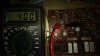
-the 60v with which the driver worked was reduced to 54v
-a zone of the driver with several resistances reduced its ohms.
All this on the right channel because the left channel works fine (although it sounds very bad)
What I have done so far is:
-i removed the resistors with reduced Ohm (all work fine when they are not in the circuit)
-I removed the thermistor (I replaced it with the one in the left channel and the problem persists)
-I removed a variable resistor (without that resistor the values of the resistors returned to normal but fell when I put the replacement)
-I checked the transistors (no problem, all ok)
-I checked the electrolytic capacitors (they work)
-I disconnected the driver from the power supply (the values return to 60v)
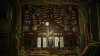
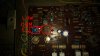
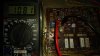
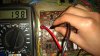
Right now I can't think of what else to do, a little help would be useful, I upload the images of the manual and some photos of the amplifier. Thanks
I definitely have a problem with this amplifier, when I bought it it was very neglected, it was reassembled with parts from other appliances, it had 4 diodes tied together as a power supply, etc. So I started to repair and replace everything (or almost everything) that was not done properly, coming to work very well, its sound was quite good and without distortion, I used it regularly until it started having problems, the first what happened was that, when pressing the Main button, the left channel sounded with a strong hum, at the same time the pair of TO-3 transistors and the 0.47 Ω cement resistors heated up, It took me a long time to realize that a TO-18 transistor had a broken leg and that was what was causing the problem. Unfortunately, during the review process with the multimeter, a 100 Ω resistor on the right channel turned red hot, annihilating the pair of power amplification transistors and caused the current problem.
I replaced the TO-3 even amps, the 100 Ω resistor was replaced, I checked the soldering of all the resistors including the 0.47 Ω cement rectangular resistors, but the problem was already present.
As soon as I turn on the amp:
-the transistors of power amplifier overheat including the radiator.
-White rectangular 0.47 Ω resistors get hot too
-the pair transistors of the driver with heat sink the same
-a little sound like a fly coming out of the amplifier without speakers
-the 60v with which the driver worked was reduced to 54v
-a zone of the driver with several resistances reduced its ohms.
All this on the right channel because the left channel works fine (although it sounds very bad)
What I have done so far is:
-i removed the resistors with reduced Ohm (all work fine when they are not in the circuit)
-I removed the thermistor (I replaced it with the one in the left channel and the problem persists)
-I removed a variable resistor (without that resistor the values of the resistors returned to normal but fell when I put the replacement)
-I checked the transistors (no problem, all ok)
-I checked the electrolytic capacitors (they work)
-I disconnected the driver from the power supply (the values return to 60v)
Right now I can't think of what else to do, a little help would be useful, I upload the images of the manual and some photos of the amplifier. Thanks
Attachments
-
 IMG_20220922_170409321.jpg89.5 KB · Views: 18
 -
 IMG_20220922_170415276-2.jpg75.9 KB · Views: 13
 -
 IMG_20220922_170623835.jpg76.6 KB · Views: 14
 -
 IMG_20220922_170644299.jpg82.1 KB · Views: 14
 -
 IMG_20220922_190756404.jpg90.4 KB · Views: 14
 -
 IMG_20220922_190806428.jpg100.4 KB · Views: 16
 -
 Plano.jpg149 KB · Views: 17