StirFriedFrp
Member
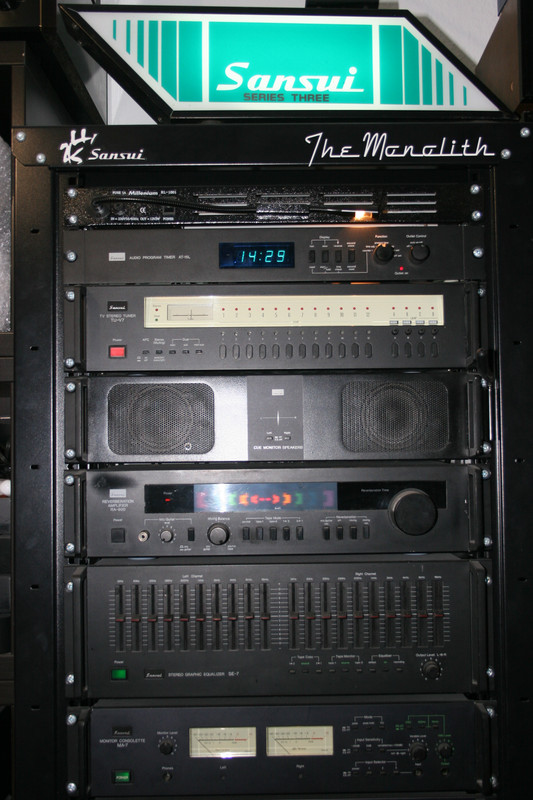
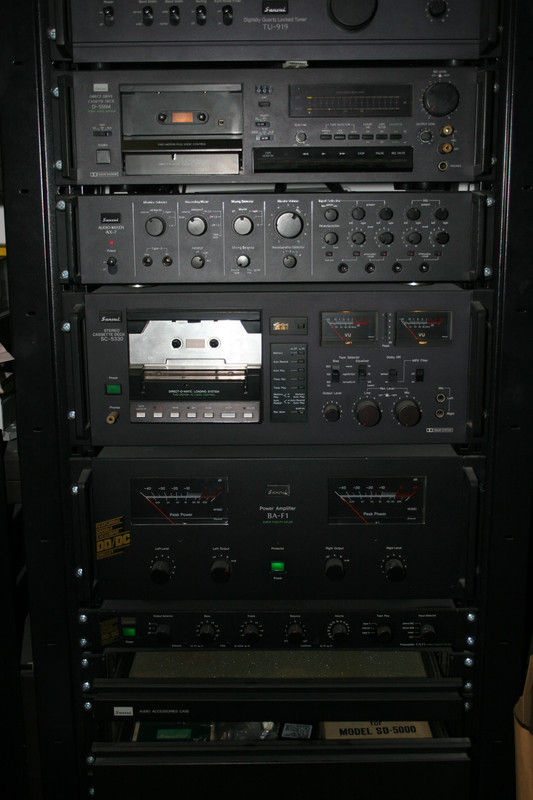
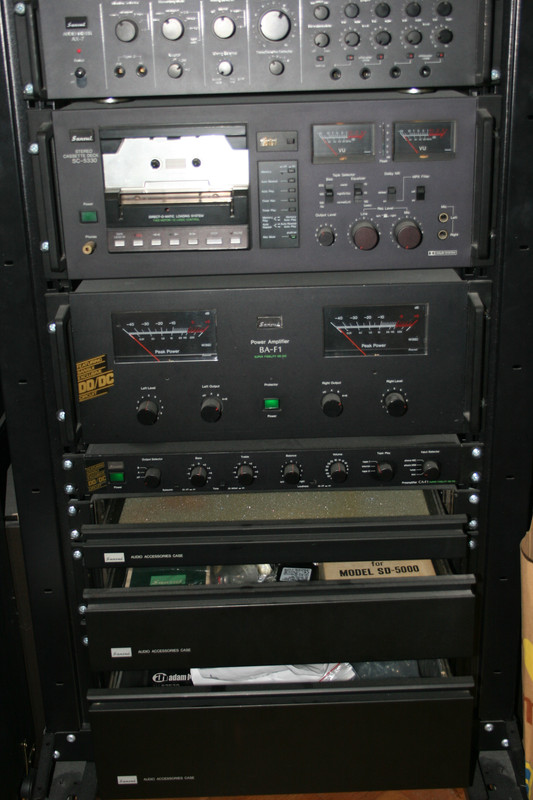
A bit of background: I started collecting the black sansui gear with rack handles since about 5 years. I find them very appealing, especially if they are racked "nicely". So in those period I bought about 30 pieces, and sold about 10. So I now have about 20 pieces. It is the Sansui rack handles that make the pieces "nicely rackable". These rack handles come in about 10 different sizes. More details about the exact sizes can be found in this post from 2010, and this post from 2015. Most of my Sansui gear is in my office. NB: the following image does not show the ultimate Sansui rack handle setup 

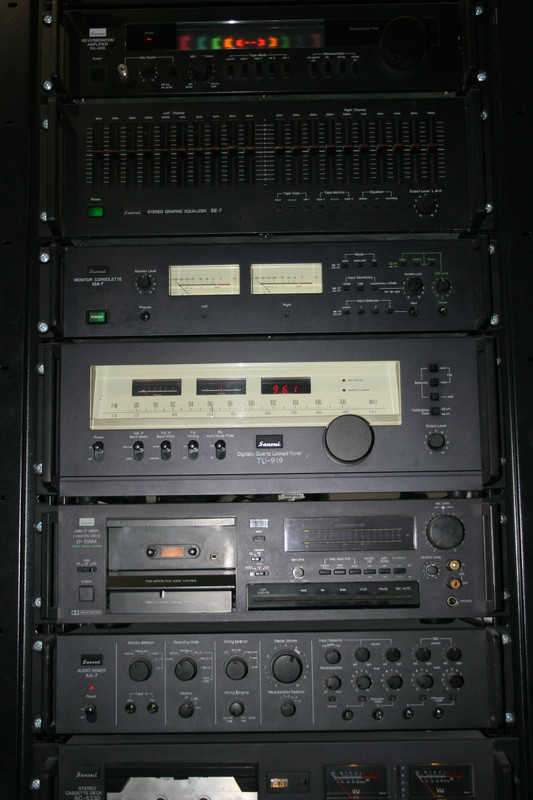
The problem with these rack handles is that they do not comply with the vertical spacing standards of 19" racks. So, if you screw these items in a modern standard 19" rack, you often need extra space between the units because the holes don’t align nicely. It looks sloppy then. This topic about an AU-317 explains it well, with images. I find it rather incomprehensible why Sansui didn’t simply add or remove a few mm, so that this problem would not have existed. After all the 19" rack standard was already well established in the 70s. In the image above, in the right rack, the SE-7 equalizer and the two Sansui audio accessories cases are not screwed in because the holes don't align.
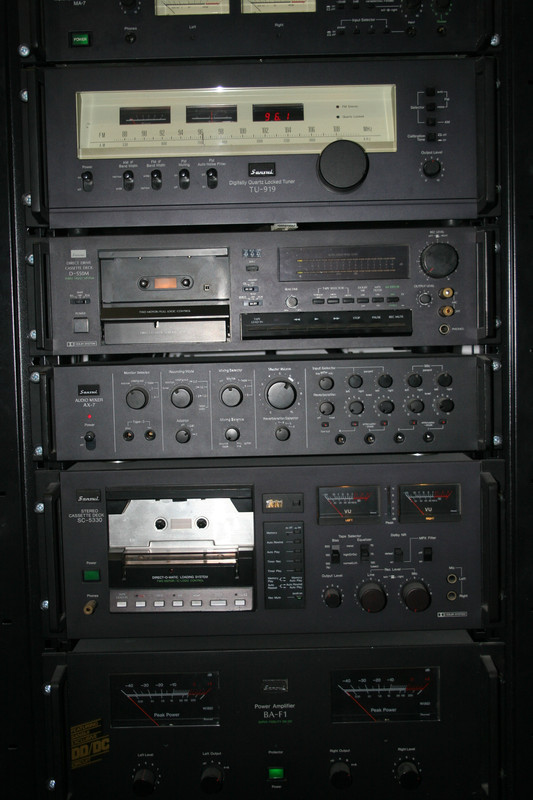
The original solution to this problem was to have "sliding channels", with washers instead of fixed holes. This allows placing the items at every desired vertical position. The Sansui proprietary racks from that era (GX-5, GX-100, etc) were made like this. This is a fine solution, but not for me because I don’t like the brown color. There are also modern alternatives, at least in Europe. Thomann sells the "Thon Studio Rack Strip Sets", which are nothing more than the sliding channels. I have used this rack strip set to build my Thomann rack (in the image above, the left rack). But WAF is also low for such a large rack in the living room.
My personal challenge then became to find the ideal Sansui rack handle setup. It should be elegant, low-profile, and visually appealing. Long story short: the best results are with the following combination:
 . You can hardly see that they are attached to each other. But the screws do give them stability so that nothing moves.

The findings along the way I gladly share. I can imagine others might be willing to do the same.

The problem with these rack handles is that they do not comply with the vertical spacing standards of 19" racks. So, if you screw these items in a modern standard 19" rack, you often need extra space between the units because the holes don’t align nicely. It looks sloppy then. This topic about an AU-317 explains it well, with images. I find it rather incomprehensible why Sansui didn’t simply add or remove a few mm, so that this problem would not have existed. After all the 19" rack standard was already well established in the 70s. In the image above, in the right rack, the SE-7 equalizer and the two Sansui audio accessories cases are not screwed in because the holes don't align.
The original solution to this problem was to have "sliding channels", with washers instead of fixed holes. This allows placing the items at every desired vertical position. The Sansui proprietary racks from that era (GX-5, GX-100, etc) were made like this. This is a fine solution, but not for me because I don’t like the brown color. There are also modern alternatives, at least in Europe. Thomann sells the "Thon Studio Rack Strip Sets", which are nothing more than the sliding channels. I have used this rack strip set to build my Thomann rack (in the image above, the left rack). But WAF is also low for such a large rack in the living room.
My personal challenge then became to find the ideal Sansui rack handle setup. It should be elegant, low-profile, and visually appealing. Long story short: the best results are with the following combination:
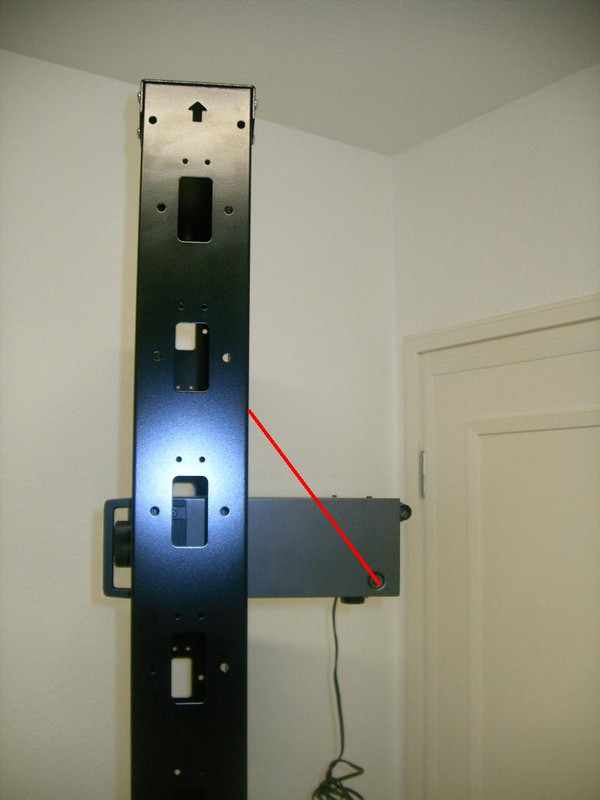
- Penn Elcom 7 HU rack strip with square holes
- Sansui items with specific rack handles sizes
- Three items with 11,0 cm rack handles (in my case AU-317, MA-7, and cue monitor speakers)
- Two items with the 16,8 cm rack handles (in my case AU-919, and TU-719).
. You can hardly see that they are attached to each other. But the screws do give them stability so that nothing moves.The findings along the way I gladly share. I can imagine others might be willing to do the same.
- The metal rack handles and plastic rack handles do not have exactly the same shape. For some reason the plastic rack handles do not fit perfectly to the rack strip, whereas the metal ones do.
- The original feet for the AU-919 and TU-719 perfectly align with the vertical holes in the rack strip. No need to replace the feet.
- The original feet of the AU-317, MA-7, and cue monitor speakers do NOT align with the vertical holes. So I replaced the feet with wood slices, 8 mm high. In this way everything is aligned perfectly again.
- For the AU-317, MA-7, and cue monitor the Penn Elcom 7 HU rack strip was 1 centimeter too high, so I cut it off. For the AU-919 and TU-719 this was not the case.
- Many tuners, amplifiers and other items have the right size for this setup. However the only cassette decks that fit are SC-2110 and SC-3110. For the SE-7 equalizer there is no suitable alternative. Too bad!
- Available on Ebay are 3d printed copies of rack handles. I bought one set but they are extremely light. I think its use is primarily esthetic.
- And yes I like blue lights