I'm thinking about buying a Phase linear 400 series 1 Amp. I have Warfedale E90s I want to hook it up to. From what I understand the amp has great sound and alot of power, but there's some mods out there for reliability and better sound quality. I was wondering what you guys Do? I read online the amp sounds great with bypass caps added on each filter, then some how they separate the grounds for each channel, and I've heard people double the filter caps. Also there's a protection circuit you can build. I've come across all of these being discussed but no schematics or anything like that. Is this all necessary and how much of a difference in sound do all these mods make?


You are using an out of date browser. It may not display this or other websites correctly.
You should upgrade or use an alternative browser.
You should upgrade or use an alternative browser.
Thinking of Buying a Phase Linear 400
- Thread starter Ap1985
- Start date
Register to hide this ad

PL stuff definitely generates opinions, and mods range from basic PM stuff with a speaker protect circuit through completely gutting the stock amplifier and replacing the circuit board and all of the output transistors to end up with something called a White Oak Phase Linear (WOPL).
Speaker protect circuit
White Oak Audio
and I'll link you over here where the Phase Linear experts tend to dwell. They can give you a whole lot more specific details on all of this
personal opinion, bare minimum type stuff, do the speaker protect relay, replace the main filter caps, and go through the circuit board to replace the electrolytic caps and any off-value resistors. These tend to have a lot of carbon composition resistors that drift pretty badly. Set the bias and all that to spec and make sure its behaving itself. At that point it should work about as well as it did when new, and if something gets unhappy it won't smoke your speakers.
Speaker protect circuit
White Oak Audio
Explore White Oak Audio
Home Page and main White Oak Audio Design introduction page.
www.whiteoakaudio.com
and I'll link you over here where the Phase Linear experts tend to dwell. They can give you a whole lot more specific details on all of this
Phoenix Audio Community Forums
Welcome to Phoenix Audio Community Forums, a friendly place to talk about all things audio!
forums.phxaudiotape.com
personal opinion, bare minimum type stuff, do the speaker protect relay, replace the main filter caps, and go through the circuit board to replace the electrolytic caps and any off-value resistors. These tend to have a lot of carbon composition resistors that drift pretty badly. Set the bias and all that to spec and make sure its behaving itself. At that point it should work about as well as it did when new, and if something gets unhappy it won't smoke your speakers.
Phase Linear PL-400 Series One Bridge Rectfier Question
Hello, I am in the very early stages of my journey to resto-mod one of two PL-400 Phase Linear amplifiers that I own. I am going to do everything. FULL WOPL. White Oak Phase Linear in Full Comp Mode. Backplane boards. Control Board. Light board. Capacitor Kit (ADDED: I went with a different...
www.audiokarma.org
I've built two WOPL400s A series one (above) and a series two with the LED meters. I built mine using only a dim-bulb tester, pair of multimeters, basic soldering equipment, and a ton a patience. The wiring is the tricky part. You really have to make sure you wire everything up correctly and triple check everything.
But once you are done, you'll have one of the finest power amps ever designed by man.
Last edited:

Why not buy a modern amp that doesn't have to be completely rebuilt into something else to fix all the design flaws that it came with... there are literally hundreds of better choices than the old Bob Carver maldesigned Flame Linears...I'm thinking about buying a Phase linear 400 series 1 Amp. I have Warfedale E90s I want to hook it up to. From what I understand the amp has great sound and alot of power, but there's some mods out there for reliability and better sound quality. I was wondering what you guys Do? I read online the amp sounds great with bypass caps added on each filter, then some how they separate the grounds for each channel, and I've heard people double the filter caps. Also there's a protection circuit you can build. I've come across all of these being discussed but no schematics or anything like that. Is this all necessary and how much of a difference in sound do all these mods make?
Last edited:

Lavane
Lunatic Member
^this^ By the time you buy the 400, either buy all the parts you need to make it a stable amp, or have someone else do it for you, you could have bought a nice modern amp. Marantz makes nice amps, Technics, Yamaha, etc. plus many other brands like Vincent.Why not buy a modern amp that doesn't have to be completely rebuilt into something else to fix all the design flaws that it came with...
Yamaha and Crown make some nice power amps. They're Pro Audio, but many use them for home use. Plus they're probably cheaper than buying a Phase Linear and restoring it. You can do some research on what model lines are more popular for home use.
I had a Phase Linear 200 series 2 that flamed out and took my speakers with it. It was just playing at a low level when it blew. That soured me on Carver designed equipment. There was absolutely zero protection inside that amp.


Have a listen to a wopl and then make the decision.I prefer the sound of old gear, every time I listen to newer stuff it just doesn't sound the way I'd like it to.
Lavane
Lunatic Member
I opened up a newer Marantz 2 channel amp to have a peek at how it was built.
It was all descret parts except for the op amps. It wasn't full of machine placed and soldered SMD bits like some are made now. The only parts that had a few SMD parts was a very small board at the back that connected to some remote control port. The rest looked pretty much like something you would find in the 70's. There are still companies that build this way.
Rogue makes some nice SS and tube gear. They're a great company with good support. If you e-mail them, they right back to you pretty quick to answered your questions too. I see when they upgrade a model they offer upgrades to your earlier version too. Not many if any other companies do this anymore.
It was all descret parts except for the op amps. It wasn't full of machine placed and soldered SMD bits like some are made now. The only parts that had a few SMD parts was a very small board at the back that connected to some remote control port. The rest looked pretty much like something you would find in the 70's. There are still companies that build this way.
Rogue makes some nice SS and tube gear. They're a great company with good support. If you e-mail them, they right back to you pretty quick to answered your questions too. I see when they upgrade a model they offer upgrades to your earlier version too. Not many if any other companies do this anymore.
By the time you buy the 400, either buy all the parts you need to make it a stable amp, or have someone else do it for you,
this is quite frankly most of why my Pro 700 is still a Pro 700 rather than a WOPL 700. Mine is still in perfect original working condition, sporting all of it's original output transistors and no signs of repair work on the board before I replaced the handful of old caps on it. Its also not in wonderful cosmetic shape so I could spend a lot of money to make a working amplifier that I don't use better, and it would still be ugly.
If the plan was to White Oak one right out of the gate I don't think I'd pay a premium for a working unit. I'd be after the nicest cosmetic condition one I could find and consider it a plus if it didn't work and could be purchased at a discount.

IDK. I had two PL 400 II amps. Bought them new in 1979. They were recommended and less expensive than McIntosh or Crown. Used them for about six years professionally in a mobile equipment rack, traveling from gig to gig. I installed fans behind them. True workhorses. Never had any problems. Drove them sometimes to 10% clipping.
I had never heard of the term “Flame Linear” (funny, unless it’s you who gets burned!), thankfully, until, 30 years later, when I read it here on AK. The PLs moved on long ago. Have no idea even if they were good amps or how they’d compare to current offerings.
I can’t remember being aware of any differences in SQ between the PLs and my Marantz (76 WPC integrated amp, also bought new in 1979), which I used on one pair of the same two sets of speakers (Bose 901 IVs) at home. (The PLs got much louder, of course, and produced prodigious amounts more bass.)
Obviously, YMM—and Can—V.
I had never heard of the term “Flame Linear” (funny, unless it’s you who gets burned!), thankfully, until, 30 years later, when I read it here on AK. The PLs moved on long ago. Have no idea even if they were good amps or how they’d compare to current offerings.
I can’t remember being aware of any differences in SQ between the PLs and my Marantz (76 WPC integrated amp, also bought new in 1979), which I used on one pair of the same two sets of speakers (Bose 901 IVs) at home. (The PLs got much louder, of course, and produced prodigious amounts more bass.)
Obviously, YMM—and Can—V.
Last edited:
I sort of wonder how many people that have had a blown TF up Phase Linear were running Series 1 vs Series 2 amps. The driver boards on the Series 2 are completely different, and in some cases they used different/better output transistors that weren't as fragile.
I did manage to nuke a set of woofers with mine, but it was my own stupid fault and the amp survived the episode with no issues.
I did manage to nuke a set of woofers with mine, but it was my own stupid fault and the amp survived the episode with no issues.
Flame Linear...If you're thinking an old PL400 will be "plug & play" you will likely end up disappointed. More like "plug & pray" it doesn't smoke itself, your speakers or potentially your home.

In my world it only applied to the first Series. Never saw a second out in the wild. And the story was it came from running at 4 ohms or lower. We used them daily at 8ohms with not a problem unitil Leo swapped the mid and sub and one of them did release the magic smoke. No flames sadly.I sort of wonder how many people that have had a blown TF up Phase Linear were running Series 1 vs Series 2 amps. The driver boards on the Series 2 are completely different, and in some cases they used different/better output transistors that weren't as fragile.
I did manage to nuke a set of woofers with mine, but it was my own stupid fault and the amp survived the episode with no issues.
The Pheonix guys did a nice write up for the 400 on a race condition that can leed to a latch up, main rails clamps to speaker line, thats about 75Vdc which would smoke most speakers. They also came up with a solution, back to back diodes (2) across C6, I'm sure they would be happy to provide further details if required.
As per gadget73, mandatory speaker protection (Watts Abundant), increase size of main filters, maybe general recap. Maybe part WO(driver board?) or full WO if budget allows...
As per gadget73, mandatory speaker protection (Watts Abundant), increase size of main filters, maybe general recap. Maybe part WO(driver board?) or full WO if budget allows...

I have a few personal PL units in need of updating and I also will follow basically what @gadget73 detailed. All my units still work, but not perfectly.
I'll install speaker protection, new filter caps, new E-caps, replace CC resistors and anything else that seems appropriate while I'm in there. LOL< all the easy stuff. I've been meaning to do this for a few years now, so check be with me in another 2 years

I'll install speaker protection, new filter caps, new E-caps, replace CC resistors and anything else that seems appropriate while I'm in there. LOL< all the easy stuff. I've been meaning to do this for a few years now, so check be with me in another 2 years

Yep! My Marantz 7025...I could not be any happier than I am with it. Handsome on the outside and as you have said, very well built.I opened up a newer Marantz 2 channel amp to have a peek at how it was built.
It was all descret parts except for the op amps. It wasn't full of machine placed and soldered SMD bits like some are made now. The only parts that had a few SMD parts was a very small board at the back that connected to some remote control port. The rest looked pretty much like something you would find in the 70's. There are still companies that build this way.
Rogue makes some nice SS and tube gear. They're a great company with good support. If you e-mail them, they right back to you pretty quick to answered your questions too. I see when they upgrade a model they offer upgrades to your earlier version too. Not many if any other companies do this anymore.
I got mine on sale last year but now they go for around $1000. I have a couple of older amps that I like just fine, but the Marantz is just absolutely transparent. No coloration of the music, just reproduces the source material......exactly what a SS am should be and do.
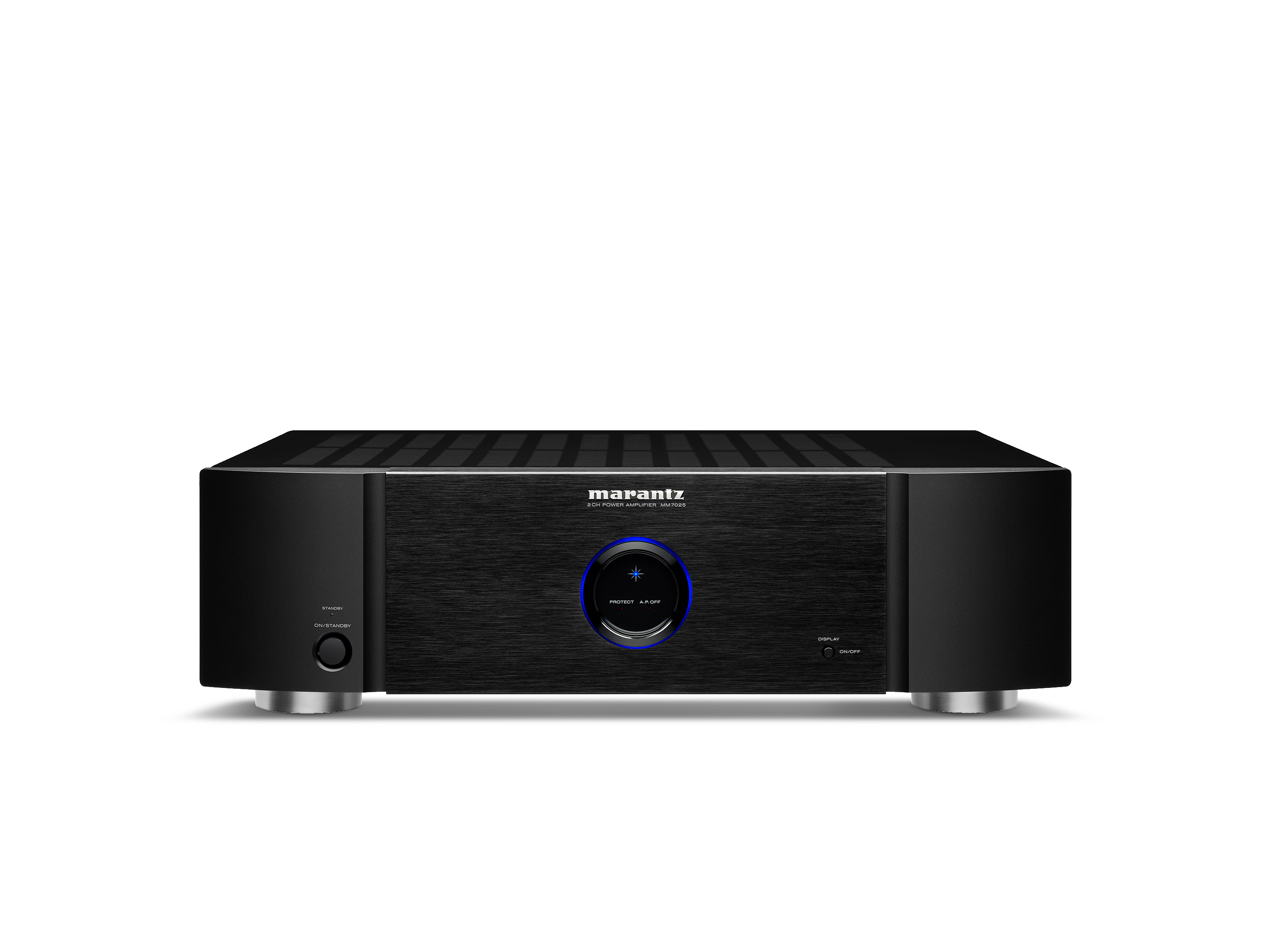
MM7025 - 2 Channel Power Amplifer with 140W | Marantz - US
2 Channel Power Amplifer with 140W
 www.marantz.com
If somebody finds a nice vintage amp in nice condition, what the heck, give it a shot. But buying a vintage amp that has to be extensively rebuilt? Not on your life.