• The move to the new server is done. There are some software and database maintenance updates in process. This has us passing the hat around to help out. We appreciate any donations. Seriously, even a dollar helps. The payment page may be found here - https://www.audiokarma.org/support.html

Tips to de-solder a/d/s/ board? Having trouble removing components.

Johnny_Law

o.O
Subscriber
Ok so I have been doing a lot of soldering but am still pretty new to it. I've recapped a couple receivers, many speakers, etc., but the solder always seems to melt and come off easily. Not the case here. I'm hoping you don't mind helping an amateur overcome this soldering obstacle ...

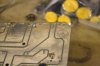
I am trying to re-cap my a/d/s/ M9/90s but having a heck of a time removing components from the circuit board. The factory solder just won't come off, or at least it puts up a heck of a fight. I've never seen this kind of a circuit board before. I am using a Hakko at 850 degrees. I have tried laying down additional flux core to get the factory solder off, and it doesn't really work. I am using both a little solder sucker and flux wire.

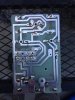
The problem lead:

lyfTtJT - Imgur.jpg

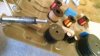
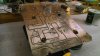
Here's my setup, and an example of one that did manage to come off after a long enough struggle that I didn't touch it for a week afterwards:
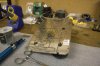
cxv4enC - Imgur.jpg

pTnotRj - Imgur.jpg


Thanks in advance for any advice ...
 
Last edited:
Register to hide this ad
Sometimes you got to "prime the pump" so to speak to get the solder flowing. Clean and tin your iron properly, dip it in paste flux, add a small blob of fresh solder, then touch that to the old solder on the board. Once that starts to flow a bit, add a touch more fresh solder. That should break the crust and allow you to desolder the pad cleanly.

PS ... 850's a bit on the high side. I like to work my station at around 725F ...
 
Very large pours on that board. If you're using the tip that came with that Hakko, it's too small to conduct enough heat.

Don't dip the tip in flux. It will have activated and burned off only serving to contaminate your tip long before you get the iron back to the board.
 
I wish I was slick enough at soldering to offer advice. My ADS boards had smaller contact runs that probably don't synch away as much heat as your broader paths. My iron is not as nice as yours and I'm using the same blue sucker with good results.
Could it be a pointy tip thing? Are you using a chisel tip, as opposed to the pointy ones that come with soldering irons?
In your shoes, I'd chicken out, apply enough heat to pull the wire/lead out, grind and redrill. It would give you the opportunity to custom drill to your components, as opposed to the large "universal" holes drilled in production. Soldering goes much smoother and quicker without an air pocket to fill.

Left - Original ADS board. Right - new board with drilled to component size holes. The photo gives the illusion of orbs with bad contact, but a 3-D view reveals the opposite. What's the opposite of an "orb" ? A circus tent?

IMG_0578.JPG SolderJob.gif
 
Last edited:
Wowsers! Those temps are way higher than what I run! Then again I never use my iron to desolder unless I'm using wick. Even then I only go up to 550 on big ugly joints. I wouldn't call myself a seasoned professional though. For all I know I'm doing it wrong. Mainly I use a 30 watt solder sucking iron. That thing will liquify almost any joint in a few seconds.
Like you'd dirty your ermine covered work bench with such things. Not that you'd have time, what with all the high-falooting listening sessions with the other audio Bildebergers up in Martha's Bohemian Grove this time of year.
 
I second the comment that JP said regarding the tip of your iron. I had the same issues 2 years ago. I simply could not get the solder to melt enough to get things cleaned up. Even melting fresh solder didn't to it, it actually made things worse. In a last ditch effort to get the darned things de-soldered, I changed my tip to something quite large and blunt. I was able to get a larger contact with my iron to the offending piece and it melted immediately. Bam.

Biggles
 
T18-C4 or C5 would do the trick nicely. Also great tips for use with solder wick.
 
Wowsers! Those temps are way higher than what I run! Then again I never use my iron to desolder unless I'm using wick. Even then I only go up to 550 on big ugly joints. I wouldn't call myself a seasoned professional though. For all I know I'm doing it wrong. Mainly I use a 30 watt solder sucking iron. That thing will liquify almost any joint in a few seconds.

I always thought the high temp was a bad idea, but I learned that the trick is to keep the iron on the board for the shortest time possible. The higher heat setting allows you to get a good pool going almost instantaneously - IF you don't have the aforementioned crusting on the old solder, which is common when working on the "classic" equipment. 30+ years of accumulated crud and oxidation can fight you. For normal use, lower heats increase your chances of lifting a trace ... never a good thing.

(Point to point wiring benefits as well, but not a bad idea to use heat sinks for the more sensitive bits.)

Step one ... pre tin and clean. I like Caig tip tinner for that. Just dunk and spin a couple times.

P77641a.jpg

Next step, a dip in the flux ...

media.nl


Next step, tin the tip with fresh solder ... BIG fan of Cardas ... love the stuff!

cardas-quad.jpg


Next step, clean excess with brass ...

s-l225.jpg


Perfect tip, every time.

And as far as fluxing the tip after cleaning it? The flux will only dry if you let it. A fresh coat of solder prevents that, and the flux allows that to spread evenly over the tip. Last step is a quick dip in the brass to get rid of any excess. THEN add a small blob of solder to aid transferring heat to the board if the old solder's fighting you.

To each their own though. Do what works for YOU. I refuse to use any of the new "green" no lead solders ... There's a trick to using that successfully, and can cause real trouble for the casual tinker. Got a couple pounds of Kester 60/40 stashed in the shed next to the maliathon and carbon TET just case the EPA decides to ban it somewhere down the road. ;-}
 
ADDENDUM

Solder removal got a whole lot easier here when I got this ...

2168261.jpg


http://www.jameco.com/z/SA6-R-Electric-Desolder-Pump-UL-Listed_2168261.html

Gun shows 42 watts on the meter here, which is perfect for most any application. Way easier to use than my trusty old Rat Shack bulb type desoldering tool, and gets into much tighter places. Replaceable tips too! More times than not, just set the plunger, drop the tip over a pin or lead, twist it a bit to improve contact, and push the plunger release to suck the connection dry. Having to go twice on a common circuit board connection is rare. And yes, I do the blob on the iron trick for crusty joints to start things going. DO wait a minute between connections to allow the tip heat to recover - we're talking quite a bit more mass here than a solder tip, so it takes longer.

(And yes, you need to clean these tips as well. Same process I documented earlier works slick.)

Oh. Little trick. Common misteak with many desoldering newbs (me included, way back when) is to try and get the connection perfectly clean so the part drops right out. Lots of times, the leads will stick to the sides of the hole no matter what you do. Reapply a standard iron to the lead and nudge it to center it in the hole - it doesn't take much, and if you do it right, it won't rebond, making removal easy.
 
Last edited:
Hi guys. Based on the picture, the large areas of copper pulls the heat from the tip. Using a larger wedge tip applies more heat to the joint which should begin to melt the solder better. One trick I learned was to put the board in a vise holding it vertically. Apply heat to the one side of the board. The part to be removed is pulled from the board as the solder is melted. Also this trick works to remove the solder after the part is removed using the solder sucker on the side opposite from the heat. Only use lead-free solder on stuff that is already made with it. Lead free solder needs a higher temp and different flux to flow. It sucks. 34 yrs electronic tech/ electronics mfr.
 
You guys rock! You were dead on!

I switched to a bigger tip and the solder INSTANTLY melted! The rest was a breeze ...

Ff9xMww.jpg
I hope no soda spilled out of those cans that someone left laying on your crossover.
Make sure to post about your listening impressions of those poly caps. I'm awaiting the arrival of my refurbed drivers to do the final listening tests on pretty much the same mod. I'm real curious to see what the differences are on the 4th order beast of yours.
 
Back
Top Bottom