

You are using an out of date browser. It may not display this or other websites correctly.
You should upgrade or use an alternative browser.
You should upgrade or use an alternative browser.
Today's classical playlist
- Thread starter RichPA
- Start date


TEX-Tech
AKAI Deck Lover
================================================================================

================================================================================
Le Sacre du Printemps (The Rite of Spring)
Igor Fyodorovich Stravinsky (1882–1971)
Michael Tilson Thomas
Boston Symphony Orchestra
Part One: The Adoration of the Earth - Introduction
Auguries of Spring (Dances of the Young Girls)
Mock Abduction
Spring Khorovod (Round Dance)
Games of the Rival Clans
Procession of the Wise Elder
Adoration of the Earth (The Wise Elder)
Dance of the Earth
Part Two: The Sacrifice - Introduction
Mystical Circles of the Young Girls
Glorification of the Chosen One
The Summoning of the Ancients
Ritual of the Ancients
Sacrificial Dance (The Chosen Victim)
Carmina Burana
Cantiones Profanae
Carl Orff (1895-1982)
Eugen Jochum [Dir]
Deutsche Oper / Orchester
Gundula Janowitz [Soprano]
Gerhard Stolze [Tenor]
Dietrich Fischer-Dieskau [Baritone]
Schöneberger Sängerknaben
Hellwig, Gerhard [Dir]
Deutsche Oper / Chor.
Walter Hagen-Groll [Dir]
Fortuna Imperatrix Mundi
"O Fortuna"
"Fortune plango vulnera"
I. Primo vere
"Veris leta facies"
"Omnia Sol temperat"
"Ecce gratum"
Uf dem Anger
"Tanz"
"Floret silva nobilis"
"Chramer, gip die varwe mir"
"Swaz hie gat umbe"
"Chume, chum geselle min"
"Were diu werlt alle min"
II. In Taberna
"Estuans interius"
"Olim lacus colueram"
"Ego sum abbas"
"In taberna quando sumus"
III. Cour d'amours
"Amor volat undique"
"Dies, nox et omnia"
"Stetit puella"
"Circa mea pectora"
"Si puer cum puellula"
"Veni, veni, venias"
"In trutina"
"Tempus est iocundum"
"Dulcissime"
Blanziflor et Helena
Ave formosissima
Fortuna Imperatrix Mundi
"O Fortuna"
Deutsche Grammophon Gesellschaft 413 160-4 [1972]
1 Cassette tape
================================================================================
================================================================================
Le Sacre du Printemps (The Rite of Spring)
Igor Fyodorovich Stravinsky (1882–1971)
Michael Tilson Thomas
Boston Symphony Orchestra
Part One: The Adoration of the Earth - Introduction
Auguries of Spring (Dances of the Young Girls)
Mock Abduction
Spring Khorovod (Round Dance)
Games of the Rival Clans
Procession of the Wise Elder
Adoration of the Earth (The Wise Elder)
Dance of the Earth
Part Two: The Sacrifice - Introduction
Mystical Circles of the Young Girls
Glorification of the Chosen One
The Summoning of the Ancients
Ritual of the Ancients
Sacrificial Dance (The Chosen Victim)
Carmina Burana
Cantiones Profanae
Carl Orff (1895-1982)
Eugen Jochum [Dir]
Deutsche Oper / Orchester
Gundula Janowitz [Soprano]
Gerhard Stolze [Tenor]
Dietrich Fischer-Dieskau [Baritone]
Schöneberger Sängerknaben
Hellwig, Gerhard [Dir]
Deutsche Oper / Chor.
Walter Hagen-Groll [Dir]
Fortuna Imperatrix Mundi
"O Fortuna"
"Fortune plango vulnera"
I. Primo vere
"Veris leta facies"
"Omnia Sol temperat"
"Ecce gratum"
Uf dem Anger
"Tanz"
"Floret silva nobilis"
"Chramer, gip die varwe mir"
"Swaz hie gat umbe"
"Chume, chum geselle min"
"Were diu werlt alle min"
II. In Taberna
"Estuans interius"
"Olim lacus colueram"
"Ego sum abbas"
"In taberna quando sumus"
III. Cour d'amours
"Amor volat undique"
"Dies, nox et omnia"
"Stetit puella"
"Circa mea pectora"
"Si puer cum puellula"
"Veni, veni, venias"
"In trutina"
"Tempus est iocundum"
"Dulcissime"
Blanziflor et Helena
Ave formosissima
Fortuna Imperatrix Mundi
"O Fortuna"
Deutsche Grammophon Gesellschaft 413 160-4 [1972]
1 Cassette tape
================================================================================
djBPS1z,jy4Q~~60_12.GIF)


Mr. Lin
Lunatic Member
What I found is not conclusive with the info you posted...But, it looks pretty good...
BARTÓK
Violin Concerto No. 1, Sz37
Minneapolis Symphony Orchestra
New York, Carnegie Hall
SR-90003
Mercury
2/17/1957
Doráti held the post as principal conductor of the Minneapolis Symphony Orchestra from 1949 to 1960. So, it's definately the right time frame.
SR-90003 is listed as a "Catalog" number, But, I don't know if it is Mercury's or even if it is for an LP. Obviously, if your album has that number on it, it will cinch it.
I think if the album mentions Carnegie Hall, it would put it in the 95% + area
2/17/1957 is the performance date, not the publishing date.
Mike
Thanks Mike. I was surprised at how difficult it is to find concrete information about this particular version of the recording.
...If I'd known then what I know, there are a couple of shelves of records that would never have entered the house, and a shelf or two of other records that would never have escaped my grasp. :sigh:
This is a situation I find myself in as well, it's just a fact of life as our experience with music continues to evolve and grow.
The last 3 books are more harmonically and rhythmically experimental and, in my opinion, more interesting. He didn't stay musically in one place for long, so although it's still recognizable as Gesualdo, by Book 6, his madrigals are stretched way beyond Book 3 and just about everyone else's. It's no coincidence that Book 6 contains his most famous, and by extension, THE most famous madrigals.
Ray
Thanks for that information, it's helpful!
Mercury "Wing" was a budget LP label.The Mercury equivalent to RCA's "Victrola" label perhaps but I do not know if "wing" was solely reserved for classical music or if Mercury used it for popular recording as well. RCA also used Victrola to release some of their previously unreleased stereo recordings from the early age of stereo before the advent of the stereo LP.
This is something I didn't know. Although it's a budget release, the sound and vinyl quality are actually pretty good. It's a good thing because, as you guys know, Bartok's Violin Concerto is pretty quiet throughout.


guiller
Toscaninichus Australis
Vivaldi:
Il cimento dell'Armonia e dell'Invenzione, concertos (12) for solo instruments, strings, and continuo, Op. 8
Maria Teresa Garatti, Felix Ayo
I Musici
Philips/Decca/Universal CD
(part of a great 40 CD bargain box -I paid less than 50 euros for it- entitled "Vivaldi: Les Chefs-d'oeuvres de Vivaldi [The Masterworks of Vivaldi; Masterpieces of Vivaldi]")
IMHO, one the best modern instruments recordings of the Four Seasons (Fall starts today in this part of the wold).

Il cimento dell'Armonia e dell'Invenzione, concertos (12) for solo instruments, strings, and continuo, Op. 8
Maria Teresa Garatti, Felix Ayo
I Musici
Philips/Decca/Universal CD
(part of a great 40 CD bargain box -I paid less than 50 euros for it- entitled "Vivaldi: Les Chefs-d'oeuvres de Vivaldi [The Masterworks of Vivaldi; Masterpieces of Vivaldi]")
IMHO, one the best modern instruments recordings of the Four Seasons (Fall starts today in this part of the wold).
TEX-Tech
AKAI Deck Lover
================================================================================

================================================================================
Tchaikovsky, Peter Ilich (1840-1893)
Herbert von Karajan
Berliner Philharmoniker
Concerto, piano, no. 1, op. 23, B♭ minor
Konzert für Klavier und Orchester, Nr. 1, B-moll, op. 23
Deutsche Grammophon Gesellschaft 923 021 [1976]
1 Cassette tape
================================================================================
================================================================================
Tchaikovsky, Peter Ilich (1840-1893)
Herbert von Karajan
Berliner Philharmoniker
Concerto, piano, no. 1, op. 23, B♭ minor
Konzert für Klavier und Orchester, Nr. 1, B-moll, op. 23
Deutsche Grammophon Gesellschaft 923 021 [1976]
1 Cassette tape
================================================================================

guiller
Toscaninichus Australis
40 CDs for 50 euros? That is a hell of a deal.
It is, but I am not surprised, as I find this type of deals (in classical music) in every one of my visits to Europe!
BTW, that Vivaldi box is superb: it includes the complete Vivaldi Edition that Philips released in the 70's, including Vittorio Negri's recordings of the complete sacred music.
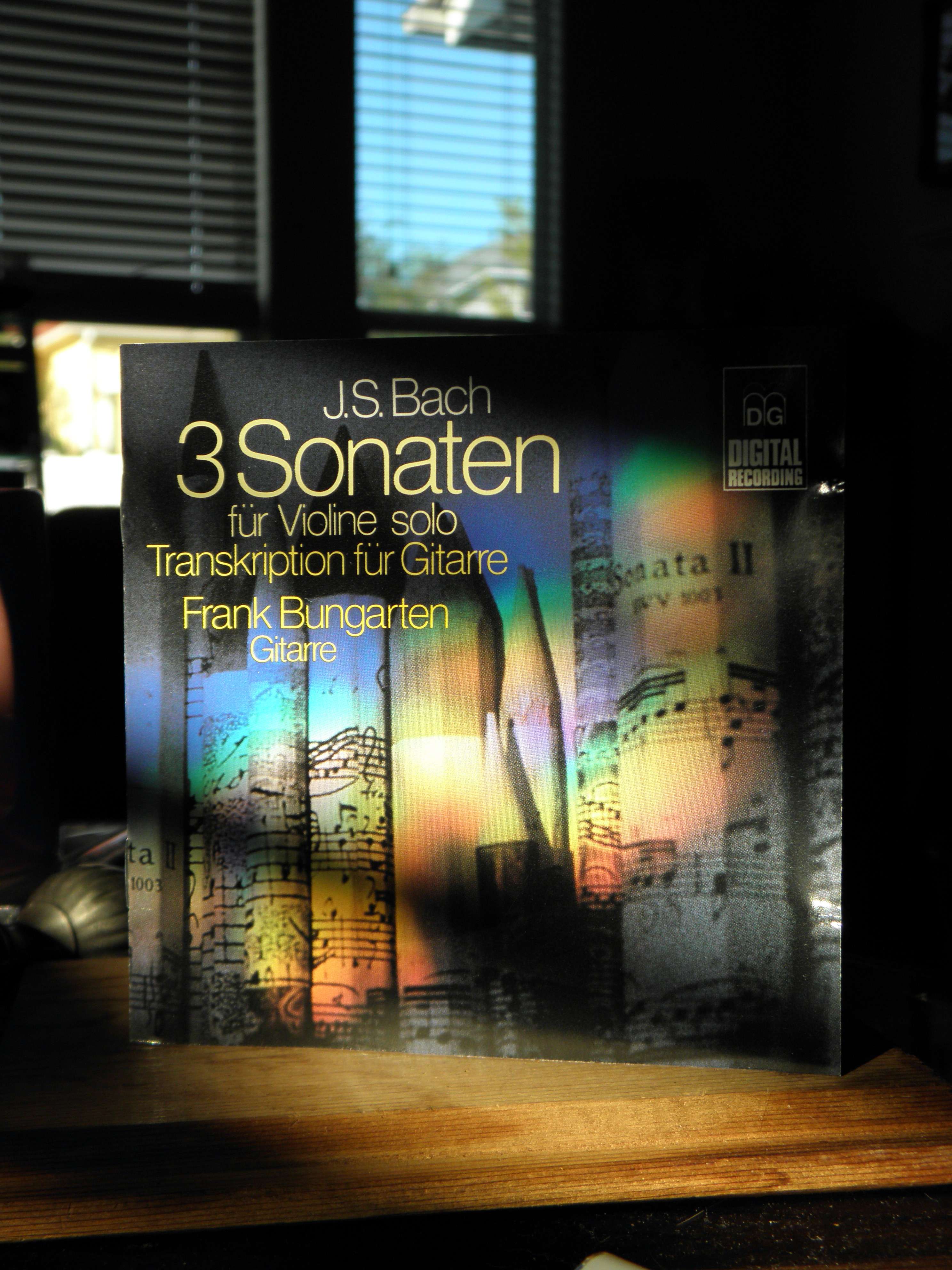
TEX-Tech
AKAI Deck Lover
This is what catologing your music will do for you.
I found that I have these:

Which allows me do something I have been wanting to try for some time.
I will be spending the rest of the morning setting up and attempting to do an unbiased critical comparitive listen to them.
My plan is to cue them all up and switch between them as they play.
I'll let you know...
Mike
I found that I have these:
Which allows me do something I have been wanting to try for some time.
I will be spending the rest of the morning setting up and attempting to do an unbiased critical comparitive listen to them.
My plan is to cue them all up and switch between them as they play.
I'll let you know...
Mike
guiller
Toscaninichus Australis
This is what catologing your music will do for you.
I found that I have these:
Which allows me do something I have been wanting to try for some time.
I will be spending the rest of the morning setting up and attempting to do an unbiased critical comparitive listen to them.
My plan is to cue them all up and switch between them as they play.
I'll let you know...
Mike
Wonderful! I love that performance, but only got the LP, CD and R2R versions of it
 !Please let us know what your results are. I've got my favorite one, but won't let you know now so as to avoid any biasing on your tests.
TEX-Tech
AKAI Deck Lover
Comparative Listen
The results are in!!!
Executive brief, for those who don’t want to read the whole thing;
4. Cassette .. lack of range, tape hiss
3. LP ………..... surface noise, have to turn it over.
2. CD ……....… over bright, no noise
1, R2R ……..... full range, minor tape hiss.
--------------------------------------------------------------------------------------------------------------------------------------
=========================================================================
--------------------------------------------------------------------------------------------------------------------------------------
No big surprises. But, there was a small surprise (CD v LP) which while not totally unexpected, was none the less disappointing (another story),
The LP is an early pressing with the metallic sleeve and was made in Germany and imported to the USA ca, 1971
The Cassette was also manufactured in Germany and imported to the USA ca. 1971 and is FeO2 tape with no Dolby encoding.
The R2R was Manufactured in the USA By Ampex in Elk Grove Village, Illinois, USA ca. 1971 it is apparently iron oxide with no Dolby encoding
The CD is Manufactured and Marketed by Universal Classics Group in New York, NY, USA and has copyright date of 2001 Deutsche Gammophon Gmbh Hamburg
I listened to the Cassette about a week ago and was pleased with it. However, I would readily admit two important points; first; I wasn’t exactly listening with a critical ear and second; I, too, truly enjoy William Steinberg and the Boston SO’s performance of this piece.
Listening today and directly comparing it to the other media, I would readily rate it dead last, it is noticeably lacking range. Tape hiss is quite high. High enough that when I put the headphones on, I could no longer stand to listen to it. Overall; I would grade it acceptable for casual listening/background music.
The surprise came in with the LP. I visually checked the LP and it looked clean; so, I put it on the TT and spun it up. The surface noise was pretty high; so. I decided to clean it. I don’t have an RCM so, I broke out all my cleaning paraphernalia and cleaned it. (I’d be happy to discuss technique, elsewhere if anyone cares) The surface noise was greatly reduced; but, still present. Not truly annoying but still there. (It is possible an RCM could fix this) Overall, I would call the LP superb and suitable for any listening venue. (You do still have to turn the disc over)
The CD seemed a tad bright to me. Artificial is the term that comes to mind. It’s as if some truly talented programmer figured out how to generate the performance in Steinberg’s style. This is not necessarily a bad thing… it’s just a thing. The lack of any detectable noise of any kind, edged out the LP in my mind. I happily trade the brightness for the noise
The R2R was a full range, quiet, rendition. I felt it was just perfect to listen to. When I put the headphones on, I could detect a very minute amount of tape hiss. Without the “cans” I could not hear it. Since all my tape decks “autoreverse” I don’t have to turn the tape over. So, I have the best of all worlds, the only way it could be better is if it had been Dolby encoded. (Tape hiss is an inherent artifact of tape recorders. If you listen very carefully to the LP you can hear it there also.)
I will listen to the R2R for my at home listening and install the CD in the queue in the changer in the car. (Best in both worlds)
The results are in!!!
Executive brief, for those who don’t want to read the whole thing;
4. Cassette .. lack of range, tape hiss
3. LP ………..... surface noise, have to turn it over.
2. CD ……....… over bright, no noise
1, R2R ……..... full range, minor tape hiss.
--------------------------------------------------------------------------------------------------------------------------------------
=========================================================================
--------------------------------------------------------------------------------------------------------------------------------------
No big surprises. But, there was a small surprise (CD v LP) which while not totally unexpected, was none the less disappointing (another story),
The LP is an early pressing with the metallic sleeve and was made in Germany and imported to the USA ca, 1971
The Cassette was also manufactured in Germany and imported to the USA ca. 1971 and is FeO2 tape with no Dolby encoding.
The R2R was Manufactured in the USA By Ampex in Elk Grove Village, Illinois, USA ca. 1971 it is apparently iron oxide with no Dolby encoding
The CD is Manufactured and Marketed by Universal Classics Group in New York, NY, USA and has copyright date of 2001 Deutsche Gammophon Gmbh Hamburg
I listened to the Cassette about a week ago and was pleased with it. However, I would readily admit two important points; first; I wasn’t exactly listening with a critical ear and second; I, too, truly enjoy William Steinberg and the Boston SO’s performance of this piece.
Listening today and directly comparing it to the other media, I would readily rate it dead last, it is noticeably lacking range. Tape hiss is quite high. High enough that when I put the headphones on, I could no longer stand to listen to it. Overall; I would grade it acceptable for casual listening/background music.
The surprise came in with the LP. I visually checked the LP and it looked clean; so, I put it on the TT and spun it up. The surface noise was pretty high; so. I decided to clean it. I don’t have an RCM so, I broke out all my cleaning paraphernalia and cleaned it. (I’d be happy to discuss technique, elsewhere if anyone cares) The surface noise was greatly reduced; but, still present. Not truly annoying but still there. (It is possible an RCM could fix this) Overall, I would call the LP superb and suitable for any listening venue. (You do still have to turn the disc over)
The CD seemed a tad bright to me. Artificial is the term that comes to mind. It’s as if some truly talented programmer figured out how to generate the performance in Steinberg’s style. This is not necessarily a bad thing… it’s just a thing. The lack of any detectable noise of any kind, edged out the LP in my mind. I happily trade the brightness for the noise
The R2R was a full range, quiet, rendition. I felt it was just perfect to listen to. When I put the headphones on, I could detect a very minute amount of tape hiss. Without the “cans” I could not hear it. Since all my tape decks “autoreverse” I don’t have to turn the tape over. So, I have the best of all worlds, the only way it could be better is if it had been Dolby encoded. (Tape hiss is an inherent artifact of tape recorders. If you listen very carefully to the LP you can hear it there also.)
I will listen to the R2R for my at home listening and install the CD in the queue in the changer in the car. (Best in both worlds)

juncers
Reasonably skeptical about everything
The results are in!!!
Executive brief, for those who don’t want to read the whole thing;
4. Cassette .. lack of range, tape hiss
3. LP ………..... surface noise, have to turn it over.
2. CD ……....… over bright, no noise
1, R2R ……..... full range, minor tape hiss.
--------------------------------------------------------------------------------------------------------------------------------------
=========================================================================
--------------------------------------------------------------------------------------------------------------------------------------
No big surprises. But, there was a small surprise (CD v LP) which while not totally unexpected, was none the less disappointing (another story),
The LP is an early pressing with the metallic sleeve and was made in Germany and imported to the USA ca, 1971
The Cassette was also manufactured in Germany and imported to the USA ca. 1971 and is FeO2 tape with no Dolby encoding.
The R2R was Manufactured in the USA By Ampex in Elk Grove Village, Illinois, USA ca. 1971 it is apparently iron oxide with no Dolby encoding
The CD is Manufactured and Marketed by Universal Classics Group in New York, NY, USA and has copyright date of 2001 Deutsche Gammophon Gmbh Hamburg
I listened to the Cassette about a week ago and was pleased with it. However, I would readily admit two important points; first; I wasn’t exactly listening with a critical ear and second; I, too, truly enjoy William Steinberg and the Boston SO’s performance of this piece.
Listening today and directly comparing it to the other media, I would readily rate it dead last, it is noticeably lacking range. Tape hiss is quite high. High enough that when I put the headphones on, I could no longer stand to listen to it. Overall; I would grade it acceptable for casual listening/background music.
The surprise came in with the LP. I visually checked the LP and it looked clean; so, I put it on the TT and spun it up. The surface noise was pretty high; so. I decided to clean it. I don’t have an RCM so, I broke out all my cleaning paraphernalia and cleaned it. (I’d be happy to discuss technique, elsewhere if anyone cares) The surface noise was greatly reduced; but, still present. Not truly annoying but still there. (It is possible an RCM could fix this) Overall, I would call the LP superb and suitable for any listening venue. (You do still have to turn the disc over)
The CD seemed a tad bright to me. Artificial is the term that comes to mind. It’s as if some truly talented programmer figured out how to generate the performance in Steinberg’s style. This is not necessarily a bad thing… it’s just a thing. The lack of any detectable noise of any kind, edged out the LP in my mind. I happily trade the brightness for the noise
The R2R was a full range, quiet, rendition. I felt it was just perfect to listen to. When I put the headphones on, I could detect a very minute amount of tape hiss. Without the “cans” I could not hear it. Since all my tape decks “autoreverse” I don’t have to turn the tape over. So, I have the best of all worlds, the only way it could be better is if it had been Dolby encoded. (Tape hiss is an inherent artifact of tape recorders. If you listen very carefully to the LP you can hear it there also.)
I will listen to the R2R for my at home listening and install the CD in the queue in the changer in the car. (Best in both worlds)
Thanks for that Mike--interesting. I would have thought the cassette would have done better, but .... I guess not.
I think that a properly mastered SACD v R2R would be a real interesting shootout.
Ray
juncers
Reasonably skeptical about everything
Bach JS- Toccata & Fugue in D Minor BWV 565 ;
Chorale Prelude "Ich ruf' zu dir Jesu Christ BWV 639;
Passacaglia & Fugue in C minor BWV 582;
Fantasia & Fugue in G minor BWV 542;
Chorale Prelude "Wachet auf" BWV 645;
Chorale Preludes "Kommst du nun" BWV 650 ; "Vom Himmel hoch" BWV 606;
Prelude & Fugue in E minor BWV 548;
Liszt-- Fantasia on B-A-C-H
Karl Richter at the organ of the Victoria Hall, Geneva
London (Decca) LCK-80067 4 track 7.5 IPS
Lucked into this on EBAY UK.
I'm catching up Mike!!
Ray
Chorale Prelude "Ich ruf' zu dir Jesu Christ BWV 639;
Passacaglia & Fugue in C minor BWV 582;
Fantasia & Fugue in G minor BWV 542;
Chorale Prelude "Wachet auf" BWV 645;
Chorale Preludes "Kommst du nun" BWV 650 ; "Vom Himmel hoch" BWV 606;
Prelude & Fugue in E minor BWV 548;
Liszt-- Fantasia on B-A-C-H
Karl Richter at the organ of the Victoria Hall, Geneva
London (Decca) LCK-80067 4 track 7.5 IPS
Lucked into this on EBAY UK.
I'm catching up Mike!!
Ray
TEX-Tech
AKAI Deck Lover
Thanks for that Mike--interesting. I would have thought the cassette would have done better, but .... I guess not.
I think that a properly mastered SACD v R2R would be a real interesting shootout.
Ray
I think a Dolbyized Cassette or better yet some exotic metal and dolbyized would give a run on the R2R. I know this is true as I have MANY CrO2 tapes with dolby encoding.... excellent range and virtually hiss free.
This is an early technology cassette and as a result has all the attendant problems that were being ironed out just about the time it was made.
From the Dolby labs History web page:
"1970: Advent, Fisher, and Harman Kardon begin offering cassette tape recorders with Dolby B-type noise reduction."
"1971: Dolby and Signetics create a simplified Dolby B-type integrated circuit, widening the range of products in which the technology could be used."
You'll recall the tape was made in 1971 so there wasn't enough market for them to offer it with Dolby.
Ah well, You can;t have it all... I would certainly stick it in the cassette player in my convertable and listen to it going down the road.
Mike

TEX-Tech
AKAI Deck Lover
================================================================================

================================================================================
Bach, Johann Sebastian (1685-1750)
Karl Richter
Munich Bach Orchestra
Brandenburg Concertos; Orchestral Suites 2 & 3
Brandenburg concertos Nr 2, 3 & 5
Deutsche Grammophon Gesellschaft 923 017 [1980]
1 Cassette tape
================================================================================
================================================================================
Bach, Johann Sebastian (1685-1750)
Karl Richter
Munich Bach Orchestra
Brandenburg Concertos; Orchestral Suites 2 & 3
Brandenburg concertos Nr 2, 3 & 5
Deutsche Grammophon Gesellschaft 923 017 [1980]
1 Cassette tape
================================================================================