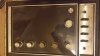
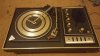
I just received this combination receiver second hand for free. I realize it might not be an audiophile's dream... but from what I can get out of it the sound is great for my purposes. It is an Electrophonic (Zenith???) stereo music center combination turntable, 8 track, and fm stereo. The left channel seems to work great, but the right channel is very quiet and distorted with crackling. This is true with FM radio or my phone connected through the guitar mic input.. The previous owner had pigtailed all of the speakers to be wired only into the left channel, which is less than ideal. And I would like to get it working properly again.
I have plugged working speakers into the left channel, sounds great...same speaker in the right channel with the volume cranked all the way up it is quiet and very distorted with crackling. This is true no matter which speakers I try. The balance, bass, treble, volume, seem to have no effect in improving the faulty right channel. Just based on reading and research I have come across suggestions such as blown fuses, dirty potentiometers, blown/old capacitors, etc..
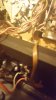
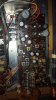
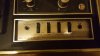
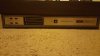
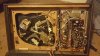
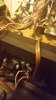
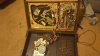
My first step was going to be clean the pots with contact cleaner.. Though the inside of the receiver is extremely clean. I also figured I would look for blown fuses. However... I can't seem to find any fuses?!?! I know they must be there, but what I expected to find (a few fuses staring me in the face), I did not. Where are the fuses in this receiver? Can anyone tell based on my images? The close up image is of the backside of the inputs for the right channel. Seems to me these would be the first solder points to check, but I don't really know how to identify a cracked solder, and have very little experience soldering. Any help would be greatly appreciated!! I would like to keep this from going into the landfill, or paying 100$ to get professionally repaired. What are my options?
I have plugged working speakers into the left channel, sounds great...same speaker in the right channel with the volume cranked all the way up it is quiet and very distorted with crackling. This is true no matter which speakers I try. The balance, bass, treble, volume, seem to have no effect in improving the faulty right channel. Just based on reading and research I have come across suggestions such as blown fuses, dirty potentiometers, blown/old capacitors, etc..
My first step was going to be clean the pots with contact cleaner.. Though the inside of the receiver is extremely clean. I also figured I would look for blown fuses. However... I can't seem to find any fuses?!?! I know they must be there, but what I expected to find (a few fuses staring me in the face), I did not. Where are the fuses in this receiver? Can anyone tell based on my images? The close up image is of the backside of the inputs for the right channel. Seems to me these would be the first solder points to check, but I don't really know how to identify a cracked solder, and have very little experience soldering. Any help would be greatly appreciated!! I would like to keep this from going into the landfill, or paying 100$ to get professionally repaired. What are my options?