• The move to the new server is done. There are some software and database maintenance updates in process. This has us passing the hat around to help out. We appreciate any donations. Seriously, even a dollar helps. The payment page may be found here - https://www.audiokarma.org/support.html

TPA325x amps: the next step in Class D?

Gnesen

Super Member
Instead of cluttering up Poultrygeist's excellent TPA3116/8 thread, I figured there is a need for a new thread dedicated to TPA325x-based amps. As you may know, there are a lot of cheap ones now available from Yuan-Jing and other vendors on Amazon and eBay, both as completed units and as boards requiring some DIY. Please share your experiences with TPA3251/3/5 amps here, with the rationale being that early adopters are really beta testers who often get mixed results from new products. Of course, I realize there are other 'new' chipsets that deserve respect and attention too.

I'll go first: I now have two amps based on the TPA3255, one being the bare amp directly from Texas Instruments (TPA3255EVM) and the other being a cheap generic from eBay. While I haven't tried all the different TPA311x amps available on the market (including Allo's), my experience is that the TPA3255s just flatly sound better -- more power, less noise, and a nice even response from bottom to top.

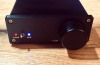
A few quick details on the cheap one I got from eBay (mine cost quite bit less than currently listed):
  • It doesn't come with a power supply or any documentation. There isn't even a model number listed anywhere on the unit, save for a simple sticker on the side.
  • TPA3255 chips are supposed be able to handle 48V, as indicated in the listing, but I found that this unit gets quite hot at 48V even when not playing any music. After switching to a 36V 4A power supply, I don't feel any heat coming from the case at all. I strongly suggest using something lower than 48V if you get this amp.
  • The Bluetooth works well, but the amp sounds better via the line-in (nothing surprising here).
  • The amp is dead quiet. I don't hear any hiss or other noise at all coming from the speakers at any volume setting (with no input, of course). Nice!
  • While there isn't an indication of the builder, I suspect the unit comes from Yuan-Jing, as when connecting to Bluetooth it identifies as "YJHiFi".
In summary, I really like the amp, but suggest either waiting for better builds from more reputable builders/vendors or getting the TI TPA3255EVM (if you don't mind a little DIY). In case you're curious why I got the cheap one in the first place, I had a credit from eBay burning a hole in my digital pocket and had one too many drinks one evening. Still, I don't really regret buying it at all. Hopefully the build quality is good on the inside -- I haven't opened it up yet.

s-l1600.jpg


upload_2020-1-6_22-13-19.png

upload_2020-1-6_22-13-41.png

upload_2020-1-6_22-14-10.png

upload_2020-1-6_22-14-48.png

index.php
 

Attachments

  • upload_2020-1-6_22-8-36.png
    upload_2020-1-6_22-8-36.png
    129 KB · Views: 1,425
Last edited:
Register to hide this ad
EVM board w/Meanwell supply is a good way to go. I still need to case mine up for a finished unit.
 
I have the 3eaudio version wired up to a meanwell 48v power supply fed by a kenwood basic c2 pre and nikko gamma I tunner and also chromecast audio with mission 700 bookshelf speakers and a PE 10" sub - sounds clean with zero color.
 
While I haven't tried all the different TPA311x amps available on the market (including Allo's), my experience is that the TPA3255s just flatly sound better -- more power, less noise, and a nice even response from bottom to top.

Ditto.

I've yet to see a recent Chinese TPA 3255 build which can handle 48V input...despite what some sellers say.
Basically they're all meant to be run at 36VDC.
You're lucky you didn't fry your unit at 48V.....and undoubtedly would've if you'd continued.

Most obvious clue is the voltage rating of the caps on the board.
Keep in mind that the TI boards all have caps rated well in excess of max input voltage.
50-63V on lower voltage [36V] models [TPA 3250 and TPA 3251].
As I recall, 80-100V on the TPA 3255EVM.

Imo, the only serious choices atm are the TI EVM and the 3eaudio boards.
 
Last edited:
...sounds clean with zero color.

This is a perfect way to describe my experience with the 3255 amps. Clean with zero color. Yet plenty powerful and musical, meaning not dull and lifeless.

Ditto.

I've yet to see a recent Chinese TPA 3255 build which can handle 48V input...despite what some sellers say.
Basically they're all meant to be run at 36VDC.
You're lucky you didn't fry your unit at 48V.....and undoubtedly would've if you'd continued.

Most obvious clue is the voltage rating of the caps on the board.
Keep in mind that the TI boards all have caps rated well in excess of max input voltage.
50-63V on lower voltage [36V] models [TPA 3250 and TPA 3251].
As I recall, 80-100V on the TPA 3255EVM.

Imo, the only serious choices atm are the TI EVM and the 3eaudio boards.

Good to know. I've been tempted to take apart the cheap one I have to look at the cap values. I am lucky that it didn't fry at 48V. The vendors really should fix their listings to reflect this, but then I suppose they can't make their claims on the power output.

I briefly checked out the 3eaudio board (online) -- it's interesting that there's 12V coming out of the board to power something else. I could see that coming in handy.
 
Last edited:
The vendors really should fix their listings to reflect this, but then I suppose they can't make their claims on the power output.

That has to be the reason.
Big difference between hyping "300W x 2" as opposed to the actual output of 75W x 2 into 8ohms when run at 36V.

Stupid though, as you get the same power out of the slightly cheaper TPA 3251, which sounds just as nice.
And since that chip is meant for 36V operation, any attempts to run it over-voltage would likely trip the built-in chip protection.
Restart is simply a matter of doing a reset....at least on the EVM.

plenty powerful and musical, meaning not dull and lifeless.

I would add "very dynamic" as well.

Prior to switching to Class D, I was running a rebuilt, ultra low-distortion, dual mono SS Class A/B amp.
I was shocked at how much I preferred the TPA 325x EVMs.
Much better low end response. Much more musical sounding.

A big step-up from the TPA 3116/8 amps I'd heard as well.
That includes the Allo Volt+.
 
Last edited:
I heard a well executed engineer built 3251 with a 36 volt, 10 amp linear power supply, putting out out 150 watts per channel, which I could say I didn't have a single issue with,
BUT what's coming are amps based on the irs2092 chip, which does not provide power by itself, it requires MOSFETS, it had -+ 52v dc on dual rails, putting out
200 watts per channel with a linear power supply, I could not tell the difference with the same amp and a switcher power supply, but I did prefer the dual rail
irs2092 based amp, but the necessary MOSFETS take you to a different price point.
In all cases we used pre, pre phono stages with a single 12AU7 and classic well dialed in Marantz & Kenwood preamps. The labor he put into dialing in the classic preamps would have come to nearly a couple of thousand dollars.
I only listen to CD's so I substituted the FX Audio 01J with a pair of 6AK5's in the tape monitor loop.
It takes far longer to get the classic preamps right than it does to build the digital amps.
One thing that he insisted on was that these be referred to as digital amps, calling them Class D might get you thrown out of his house!
 
That has to be the reason.
Big difference between hyping "300W x 2" as opposed to the actual output of 75W x 2 into 8ohms when run at 36V.

I have not looked at the actual chip data sheets for these, but I have found the amplifier sales info is generally correct. The issue is understanding the context of the rating.

Yes, it is technically a 300W x 2 amp, but....

Often it's at 4 ohms, maybe 2, and 10% distortion (and max voltage). Big numbers there but that is not the rating method people are generally familiar with or presume.
 
Last edited:
I have not looked at the actual chip data sheets for these, but I have found the amplifier sales info is generally correct. The issue is understanding the context of the rating.

Yes, it is technically a 300W x 2 amp, but....

Often it's at 4 ohms, maybe 2, and 10% distortion (and max voltage). Big numbers there but that is not the rating method people are generally familiar with or presume.

All good points. It can be difficult to find the exact specs in TI's literature. However, this video says it's 315 wpc at 10% THD into 4 ohms or 150 wpc at 0.9% THD into 8 ohms. Not sure if that's across the frequency spectrum or just at 1 kHz.

upload_2020-1-30_13-47-25.png
 
I have not looked at the actual chip data sheets for these, but I have found the amplifier sales info is generally correct. The issue is understanding the context of the rating.

Yes, it is technically a 300W x 2 amp, but....

Often it's at 4 ohms, maybe 2, and 10% distortion (and max voltage). Big numbers there but that is not the rating method people are generally familiar with or presume.

Then you're more trusting than I, because I do look at the datasheets.
The only way you can get 300 watts x2 out of TPA 3255 is by operating it on 48V. That's into 4 ohms with 10%THD.
Run one at 36V, the best you'll get is about 160 watts x2 into 4 ohms with 10% THD.
TPA 3255 is not rated for 2 ohm operation in stereo mode.
 
The only way you can get 300 watts x2 out of TPA 3255 is by operating it on 48V. That's into 4 ohms with 10%THD.
Run one at 36V, the best you'll get is about 160 watts x2 into 4 ohms with 10% THD.
TPA 3255 is not rated for 2 ohm operation in stereo mode.

Yeah, that's what I said.

300x2 is an accurate rating, but under specific conditions.
 
Yeah, that's what I said.

300x2 is an accurate rating, but under specific conditions.

Right.
Sorry, I misread your post.
The "but" in this case being that the amp isn't built well enough to handle 48V operation.
In fact, that amp may use a board, which when sold on it's own, is said to only handle 32V.
I'd have to check to be sure.

Actually, the fact that the recommended voltage in the ad for this amp is 30V, makes me think I'm right.
 
Last edited:
I understand. Paralleling of the outputs give the higher output at lower impedance.

I've used my Crown Microtech 1200s that way on occasion - parallel mono. Can operate into 1 ohm that way, at 1300W each.
 
I heard a well executed engineer built 3251 with a 36 volt, 10 amp linear power supply, putting out out 150 watts per channel, which I could say I didn't have a single issue with,
BUT what's coming are amps based on the irs2092 chip, which does not provide power by itself, it requires MOSFETS, it had -+ 52v dc on dual rails, putting out
200 watts per channel with a linear power supply, I could not tell the difference with the same amp and a switcher power supply, but I did prefer the dual rail
irs2092 based amp, but the necessary MOSFETS take you to a different price point.
In all cases we used pre, pre phono stages with a single 12AU7 and classic well dialed in Marantz & Kenwood preamps. The labor he put into dialing in the classic preamps would have come to nearly a couple of thousand dollars.
I only listen to CD's so I substituted the FX Audio 01J with a pair of 6AK5's in the tape monitor loop.
It takes far longer to get the classic preamps right than it does to build the digital amps.
One thing that he insisted on was that these be referred to as digital amps, calling them Class D might get you thrown out of his house!

irs2092 has been around awhile, Class D audio uses it in their amps (supposedly pretty good). I built a irs2092 amp with LJM boards and linear supply from an old B&K amp, +/- 53 volt rails. It certainly is a powerful amp. I like the irs2092 sound too, will be A/B'ing against my 3255 EVM again once I have it fully cased up..
 
Back
Top Bottom