• The move to the new server is done. There are some software and database maintenance updates in process. This has us passing the hat around to help out. We appreciate any donations. Seriously, even a dollar helps. The payment page may be found here - https://www.audiokarma.org/support.html

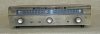
Trio AF-270 AM/FM Tuner

smallradios

New Member
Hope I've got this right. Not only first thread on Audiokarma, first thread ever.
I am chasing a circuit diagram for this tuner. I've done the basics and it works, just. I don't have adequate knowledge to take it too much further without the circuit. All information gratefully received
 
Register to hide this ad
Welcome.. Going to very difficult to trace down a scat, rare and Japanese.
 
Even though you do not or might not find a schematic, it is still possible to figure a few things out. A detailed pic showing the circuit board(s) is helpful. identifying what parts are used, like what does it use for a detector, HA1137(quad), ratio etc.Then refer to those devices datasheets, this will allow you to get a better idea.

You never did say the condition of your tuner and why you need a schematic.
 
These were likely also sold (in the US, at least) in "OEM" versions under other names (e.g., "Lafayette") -- maybe (???) one might find a schematic for one of those?
Did you check the usual documentation sites (e.g., www.hifiengine.com)?
A photo would be helpful; someone here might be able to 'cross-reference' another tuner brand and (who knows?!) might even have a schematic for it.
 
Trio morphed into Lafayette and Kenwood. We have a Kenwood - Trio subforum so someone there may be able to help.
 
Trio was the name used by Kenwood in much of the world (for a long time). Lafayette Radio Electronics (a Long Island based catalog store chain) sold some OEM Trio/Kenwood hardware -- there was no morphing involved.
 
Trio was the name used by Kenwood in much of the world (for a long time). Lafayette Radio Electronics (a Long Island based catalog store chain) sold some OEM Trio/Kenwood hardware -- there was no morphing involved.

Some Trio equipment was branded Lafayette and had no other identification. I have a Trio KW-55 receiver that was identified on the front panel as Trio but the KW in the part number stood for Kenwood. I also have an old Lafayette KT-500 tuner from 1958 where the KT stands for Kenwood Trio (or maybe Kenwood Tuner). This was badge engineering but there may have been Lafayette-only products. At any rate, the Trio name does not appear to be in use anymore so in that sense you might say Trio morphed into Kenwood.
 
Thanks for the feedback and suggestions. Have attached a few pictures (I hope). I was aware of the Kenwood connection but haven’t seen any markings on this unit to suggest that this is anything other than Trio. Lafayette is a new lead. Transformer primary & switching suggest that this was constructed for the U.S. market (BTW I’m from North Coast NSW, Australia) and the primary connections have been modified by a previous owner for 240v. Why do I need a schematic? My technical background is as a self taught collector and restorer of valve broadcast radios, all of which are A.M.. I need the guidance of a circuit, particularly with this amount of switching, to make sense of it and to be certain I have the right voltages in the right places. The set does work, albeit output is very low and ‘sibilant’
 

Attachments

  • Trio AF-270 Front.JPG
    Trio AF-270 Front.JPG
    51 KB · Views: 55
  • Trio AF-270 Back.JPG
    Trio AF-270 Back.JPG
    46.2 KB · Views: 45
  • Trio AF-270 Topside.JPG
    Trio AF-270 Topside.JPG
    100.9 KB · Views: 45
The separate tuning for AM and FM marks that as one of the sets from the late 1950's into early 1961 where some broadcasters used their FM and AM stations as left and right channels respectively for stereo. From the interior view, this looks like a good set.
 
The dual AM tuners would make this an Australian model. US used AM/FM simulcast stereo, Japan used FM/FM, and Australia used AM/AM. Multiplex came along shortly after...
 
Back
Top Bottom