


EmoCowMoo
New Member
I have been trying to restore a Pioneer H-R99 8-track deck. Before and after replacing all the electrolytic capacitors, the motor seemed to be moving in a wavy or "wowowow" fashion. Adjusting the pots (VR1 & VR2) on the motor control board would adjust the waviness, but I could not eliminate it completely.
I then replaced the 3 transistors on the motor control board (Q1, Q2, & Q3) and there was no change in the waviness problem. I then replaced the 2 transistors (Q3 & Q4) and the thyristor (SR1) on the power supply board and no change in the waviness. I adjusted the motor control board pots and got it almost cleared, but I could still hear the waviness.
I then fast forwarded a tape (to get to a song I wanted to listen to and adjust to). While fast forwarding, smoke started coming up from the power supply board. The R15 resistor was burned completely up and the R13 resistor was darkened from cooking. I replaced both of them. Normal playback still included the waviness, but then FF again, smoke was coming up again. This time the R13 was the only one visually affected.
#1: What could be causing the resistors to burn up only when I fast forward the motor?
#2: What might be the underlying cause of not being able to adjust out the waviness while in normal playback?
Could these issues be related? I'm no expert when it comes to troubleshooting electronics.
Also, hooking the oscilloscope to the incoming power to the motor control board and also output to the motor would yield sinusoidal waves each time I would test them after adjustments. Am I supposed to see an oscillating wave at motor control board incoming power? I would assume I'm not supposed to see that going to the motor. Or maybe I am, i have no clue. I don't have a good unit to test against so I have no idea...
Also I have replaced the capstan, belt, motor, and motor pulley with the same results.
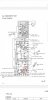
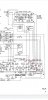
Any ideas would be greatly appreciated! I attached two screenshots of the schematics and board layout relating to the motor control circuit.
I then replaced the 3 transistors on the motor control board (Q1, Q2, & Q3) and there was no change in the waviness problem. I then replaced the 2 transistors (Q3 & Q4) and the thyristor (SR1) on the power supply board and no change in the waviness. I adjusted the motor control board pots and got it almost cleared, but I could still hear the waviness.
I then fast forwarded a tape (to get to a song I wanted to listen to and adjust to). While fast forwarding, smoke started coming up from the power supply board. The R15 resistor was burned completely up and the R13 resistor was darkened from cooking. I replaced both of them. Normal playback still included the waviness, but then FF again, smoke was coming up again. This time the R13 was the only one visually affected.
#1: What could be causing the resistors to burn up only when I fast forward the motor?
#2: What might be the underlying cause of not being able to adjust out the waviness while in normal playback?
Could these issues be related? I'm no expert when it comes to troubleshooting electronics.
Also, hooking the oscilloscope to the incoming power to the motor control board and also output to the motor would yield sinusoidal waves each time I would test them after adjustments. Am I supposed to see an oscillating wave at motor control board incoming power? I would assume I'm not supposed to see that going to the motor. Or maybe I am, i have no clue. I don't have a good unit to test against so I have no idea...
Also I have replaced the capstan, belt, motor, and motor pulley with the same results.
Any ideas would be greatly appreciated! I attached two screenshots of the schematics and board layout relating to the motor control circuit.
Last edited:

