• The move to the new server is done. There are some software and database maintenance updates in process. This has us passing the hat around to help out. We appreciate any donations. Seriously, even a dollar helps. The payment page may be found here - https://www.audiokarma.org/support.html

Trying to get my HPM tweeters to work Pioneer HPM-700 Ribbon Tweeters

allanmatters

Active Member
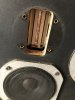
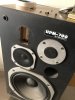
Once again I am back with fiddling with my Pioneer HPM ribbon tweeters. I bought these speaker in 2014, of course the tweeters were not working back then ( I know this cause I disconnected all the other speakers in the box and listened for the 16kHz frequency, but they never produced the magic sound I wanted.

So I took them apart and tried tightening the terminals at the end and reassembled it back . No luck.

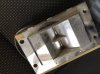
Then i tried something different. I took some speaker wires (thin ones small gauge) and I connected it inside the thin film of the ribbon tweeter film ( I put the wires on the sides inside on the front of the film where the original terminals run through in parallel. Reassembled it and voila ! She played finally. But it did not stay for long. It keeps going and coming ( like its telling me the connection needs to be as accurate as possible).

I was a fool to think that soldering the wires to the thin film would work but that just burn / eats up the film.(its in good shape though. 1% damage only done by the soldering trial and error process)
But its still works sometimes ,comes and goes. So I did not connect it back to the speaker box.
The other tweeter was more tough to fix. It never really fired up at all when i tried the same trick.

My ribbon tweeter wires which comes from the crossover, works (both of them work) I checked it by swapping the ribbon tweeters when i managed to almost fix one.

I ended up putting another ribbon tweeter which I took out from a Pioneer cs-c11. It had the transformer attached to it already so i took a direct connection from the speaker terminals behind the speaker box (not from the crossover board) and hooked them up (these ribbon tweeters also have their own independent magnet, a big one too). They seem louder than the original ones which came with the speakers. I have heard that the ribbon tweeters on the Pioneer hpm-700's can give up to or more than 16kHz frequency.
However i find that less since the tweeter can dominate it in terms of loudness.

So i installed some ribbon tweeters I found from a Pioneer cs-c11 . Its installed from inside the HPM box, not from outside like the originals were ( doesn't look very pretty but it does the job ( clear sound and freq from these ribbon tweeter as a replacement)

My questions are -

Does any one know any other way I can get my HPM ribbon tweeters to work. Is it worth the shot? I mean I like my speakers to look and have all its original parts ( in this case I am happy but the substitute part ( ribbon tweeter) does not really match in terms of fitting. More importantly how can I get them to work ? the best way to get contact with the + and - inside the thin film so it can work

Are the HPM-700 ribbon tweeters good at 16kHz ? I can hear it since I am still young and my ears are good. But it lacks loudness from a distance. I mean can we really hear it from a distance when all other speakers are working ?

Will attaching a magnet behind the original HPM-700 ribbon tweeters increase the frequency ?
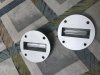
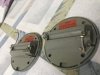
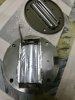
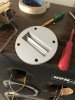
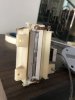
IMG_9178.jpg IMG_9177.jpg IMG_9179.jpg IMG_9137.jpg IMG_9138.jpg IMG_9139.jpg IMG_9141.jpg IMG_9144.jpg
I have attached some images on my work just for your reference
 
Last edited:
Register to hide this ad
From other discussions on AK regarding HPM speakers, the HPM (super)tweeters don't actually produce much sound, so yours may actually be working as designed.
 
Your approach is similar to what I did to re-establish contacts on the HPM-200 tweeter module.
I used a single strand of wire from 12 gauge speaker wire.
You should clean the film edges where contacts are made as there may be a tiny bit of corrosion.
I'd try fine sanding the strands of wire to expose the copper better.
Check the connections at the transformer etc.
Finally, 16k hz is a unicorn frequency for many.
 
Super tweeters don't do much and you certainly should not be able to pick them out from across the room. They add a little sparkle up high which should be noticeable when disconnected but you shouldn't be able to "pick them out" listening. Its very subtle and should be.
 
Appreciate every ones insights on this

Thanks for the advice @NH-MAN . I thought as much this would be the way it is originally . I plan on getting it fixed though to complete my set up . Still doing a lot of testing with the substitutes installed

@tubed I actually used multiple strands of wire from a hometheatre speaker wire( don’t know if that is a problem ) only so that when reassembling the two plastics together, it would get more tight ( I am not really using the original terminals as they have broken. I am rather using independent strands of wires running in side the thin film on each terminal side). It runs through just about Less than quarter of the entire length l.
Sanding the strands of the wires is a good tip
I am guessing it’s a little hard to get these tweeters to connect efficiently
 
Last edited:
+1 tho the opinion of the others. Having sold lots of HPM speakers I know the super tweeters only add a bit of sparkle onto the sound.

By the way: These are not ribbon tweeters (as in the S series). They work following the piezoelectric principle, they so to say "breathe" the signal. They don´t vibrate in the normal sense, they are clamped on two sides to form a semicircle cylinder wall and they expand and retract in the tact of the music.
 
Thanks for the information every body. I like the fact that the substitutes I installed (pioneer cs-c11 super tweeters) add more sparkle than the HPM-700 ones .

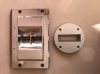
But I need to figure out a way to attach that “cone” type of thing in the front now, as you can see in the pictures the substitute super tweeters are installed from inside the speaker box . The original fittings of the pioneer cs-c11 super tweeters had a cone shaped sort of thing attached to the tweeter film so that it sort of expands the sound (much like a cone )

I’ve attached a pic below for your understanding . If I could find a way to install that big silver cone type of thing I would heart content on the over design of the speakers . Of course I’d have for cut it and make it fit 9EB8BC83-D298-439E-A5F2-CC432D3FB562.jpeg
It’s pretty audible from a distance . Will attaching it’s cone (what you see in the image here above) expand the sound a little more ?
 
Don't remember the crossover stats at the moment, but when it comes to HPM super-tweeters (and NOT the "regular" tweeter if the 700 is a four way), get your hearing checked before attempting to determine if they are working or not by listening. Crossover is quite high, and many people don't hear much, if anything, above 12kHz. The super-tweeter may appear completely non-functional to you, but run a 22kHz signal on it at high volume and every dog in the neighborhood will howl. You can also blow it out running it at low frequencies I think.

I love HPMs, but at least back in the day I had very good high frequency hearing, up to 22kHz, just like my Dad. I still hear all sorts of things other people don't. However, if you don't hear high frequencies well, HPMs may indeed sound strange to you due to being "out of balance". Never could stand Marantz amps -- I later learned they often produce first order clipping distortion, and with good speakers I find that experience quite painful since the first order harmonics are quite audible for me. Adds a whole new dimension to "screaming guitars" -- flat drove me out of the room with my ears covered. No one else noticed anything, they thought I was nuts.
 
I had the HPM-900 for several years (sold my Braun L-710-1 for them - now that was a mistake!). I remember I could nearly not hear the HPM super tweeters - and I was around 40 years younger then. When I upgraded to the S-1010 I was astonished how strong the ribbons were.
 
My ears are fine thankfully . At 31 I am still able to hear the high frequencies of the hpm 700’s ribbon tweeters ( the stock ones ) . The only problem was getting them to run without cutting off / lose contacts . I am not sure if they will blow out of you connect a normal speaker out from the amplifier directly to the tweeters. I did this by the way . ( only for the testing stages) that’s when I made them work with the help of feeding a naked wire strand on the insides of the film on each side.
Later I connected it to the crossover and it was audible. I am sure you guys are all correct and the tweeter does work on the desired frequency it’s supposed to . But I am not able to get it to run . It keeps cutting out ( mostly a loose connection in the area where I placed the strands of wire.

The wires coming from my crossover boards are intact . The substitute super tweets run well with no problem what so ever.


Thorsten R, I heard the HPM-900’s are more forward sounding speakers than the 700’s. Over all
 
Last edited:
My ears are fine thankfully . At 31 I am still able to hear the high frequencies of the hpm 700’s ribbon tweeters ( the stock ones ) . The only problem was getting them to run without cutting off / lose contacts . I am not sure if they will blow out of you connect a normal speaker out from the amplifier directly to the tweeters. I did this by the way . ( only for the testing stages) that’s when I made them work with the help of feeding a naked wire strand on the insides of the film on each side.
Later I connected it to the crossover and it was audible. I am sure you guys are all correct and the tweeter does work on the desired frequency it’s supposed to . But I am not able to get it to run . It keeps cutting out ( mostly a loose connection in the area where I placed the strands of wire.
The wires coming from my crossover boards are intact . The substitute super tweets run well with no problem what so ever.

Thorsten R, I heard the HPM-900’s are more forward sounding speakers than the 700’s. Over all
Try a strip of aluminum foil, more contact area.
Of course you know the tweeters won't produce sound unless wired to the transformer.
 
I also did a small test. I just used my iPhone speaker for the test . I played some music and put the speaker behind the more bigger cone of the tweeter as you can see in the picture. And there was a substantial increase in wideness. I did the same on the HPM 700 tweeter cones and there was barely any difference. I think the cone (or expander) of the the Tweeter matters ? The depth of the cone looks like an important factor to the contribution of wider spread of frequencies.
Check out the pics of the cone below.
 

Attachments

  • 55DC6E55-DC5C-4695-A43C-0FF8B2FD50D4.jpeg
    55DC6E55-DC5C-4695-A43C-0FF8B2FD50D4.jpeg
    59.1 KB · Views: 11
Have you cleaned the L-pads? Open connection over the variable resistor will result in flaky or non-working tweeters. And as noted, you must have the transformer. No sound without it, I believe they require high voltage to operate (or extra low? one or the other).

If you think they are bad get replacements -- and remember, they don't produce very much sound in the "normal" human hearing range. Those speaker have flat frequency response to well above 40kHz, and are only 3dB down or so at 50kHz. Even I don't pretend to hear that. Especially not now. Much of that range is produced by the super-tweeter and can only be measured with a sound pressure meter, not by your ears.

Unless you have had your ears tested by a good audiologist, you should not assume you can hear above 16kHz, and if you are fond of heavy metal and loud rock, you probably can't now even if you did earlier, the high frequencies go first. Only a few percent of people can hear higher than 16kHz. I can (or could) hear some bat calls and ultrasonic alarm systems, first order clipping in amplifiers (Marantz are VERY bad about that) and I don't "notice" the super-tweeters. No reason to assume mine don't work, the speakers sound the same to me for all the 38 years I've owned them.
 
Last edited:
To answer your question at first, no I did not clean the L-pads. I shall try that

I understand what you are trying to communicate to me in terms of “the human ear” and in my case too ( when it comes to hearing ultrasonic noise/ above 16kHz / very high frequency, only my dog can hear ) from the super tweets.

I don’t listen to heavy metal . These speakers deserve far better genre of music and they are given that.

When I do my testing for the super tweets I make sure the entire room is free from every other present noise both outside and within. All other speakers are disconnected in the speaker box and only the super tweets are allowed to play . All this testing is done with the original transformer complimenting it.
My ears can even pick up the frequency without the transformer connected ( yes it’s going to be much less as there is no transformer and the tweet needs the transformer)

Again all on a moderate volume and even lower I can hear these frequencies.
So based on that I think the Audiologist will definitely give me an A+ on my hearing.

It’s great your speakers sound the same to you even after 38 years
 
The High PolyMer supertweeters need a high voltage due to the piezoelectric principle. This works through voltage and not current. Presumably the material is polyvinylidene fluoride ( https://en.wikipedia.org/wiki/Polyvinylidene_fluoride ) and this is an isolator. So this is a step-up transformer. Quite the opposite to the ribbon supertweeters of the S - (and other Pioneer speaker) series. Here you need high current and an according step-down transformer.
 
Hearing range is genetic, only way to know if you hear high range is to have your ears blind tested. If you think your pair of super-tweeters has failed, they aren't scarce, buy a replacement pair. They were used is a number of Pioneer speakers from '78 to '84 or so. I'm not sure they can be repaired at home.
 
Back
Top Bottom