

You are using an out of date browser. It may not display this or other websites correctly.
You should upgrade or use an alternative browser.
You should upgrade or use an alternative browser.
Tune your system the way live pro sound people do for cheap
- Thread starter barredowl
- Start date

voltcontrol
Fizheuer Zieheuer

1scienceguy
AK Member and E-waver #88
I feel the need to defend the home RTA and flat response.
Kevzep has several things in his favor that allows him to tune (in the end) by ear. First, a lot of very expensive equipment, second, he does this all the time (where most of us set and forget), third, he has formal training and experience, and forth, he is working a 50k seating venue and mine seats 3.
For me, getting a flat response is the starting point for tweaking a system. After doing this many times I can honestly say that all my screwing around with eq knobs and levers has left me wanting the flat curve to start with. Let me say that again, I need a starting point otherwise it gets frustrating. Once the flat response is set, my ears/brain says, "That sounds good." Then I tweak for my liking.
It's like setting the treble, mid, and bass knobs at 12 o'clock and then making the adjustments. There is just something nice about a starting point. I just do not have the time, training, or talent that Kevzep has to tune exclusively by ear.
Kevzep has several things in his favor that allows him to tune (in the end) by ear. First, a lot of very expensive equipment, second, he does this all the time (where most of us set and forget), third, he has formal training and experience, and forth, he is working a 50k seating venue and mine seats 3.
For me, getting a flat response is the starting point for tweaking a system. After doing this many times I can honestly say that all my screwing around with eq knobs and levers has left me wanting the flat curve to start with. Let me say that again, I need a starting point otherwise it gets frustrating. Once the flat response is set, my ears/brain says, "That sounds good." Then I tweak for my liking.
It's like setting the treble, mid, and bass knobs at 12 o'clock and then making the adjustments. There is just something nice about a starting point. I just do not have the time, training, or talent that Kevzep has to tune exclusively by ear.

barredowl
Before and after Science
kevzep reread what I said which is tune to an equal response curve which is exactly taking Fletcher Munson into account and compensating for the peak in hearing at 3.15k. I even attached the equal response curve which is an inverse Fletcher Munson curve and shows you graphically which frequencies to cut when reading an RTA.
And yes I am sure there are more sophisticated setups for large venues with speaker arrays that are time coherent with delays, yada, yada, yada. Point is for a home audio forum like AK is that we can tune our systems reasonably well and certainly noticeably better than untuned for the price of yet another amp when many of us already have amps that aren't hooked up collecting dust (guilty ) Another thing to think about is a 31 band pro EQ which you can get for 129.00
http://www.amazon.com/Behringer-FBQ3102-31-Band-Graphic-Equalizer/dp/B0002E50XG
Anyway that's my story and I'm sticking to it, all I am suggesting is people experiment with it, and you might be happy with the results, shrug. If you aren't happy it's not a huge investment Audacity and RTA light are free and even the paid version of RTA is only 14.95 and offers a zoomable scale for fine tuning, and a graphic EQ is cheap and can be CLed if you don't like it.
How do you like your setup with and with the RTA tuning onepixel?
And yes I am sure there are more sophisticated setups for large venues with speaker arrays that are time coherent with delays, yada, yada, yada. Point is for a home audio forum like AK is that we can tune our systems reasonably well and certainly noticeably better than untuned for the price of yet another amp when many of us already have amps that aren't hooked up collecting dust (guilty
) Another thing to think about is a 31 band pro EQ which you can get for 129.00http://www.amazon.com/Behringer-FBQ3102-31-Band-Graphic-Equalizer/dp/B0002E50XG
Anyway that's my story and I'm sticking to it, all I am suggesting is people experiment with it, and you might be happy with the results, shrug. If you aren't happy it's not a huge investment Audacity and RTA light are free and even the paid version of RTA is only 14.95 and offers a zoomable scale for fine tuning, and a graphic EQ is cheap and can be CLed if you don't like it.
How do you like your setup with and with the RTA tuning onepixel?

kevzep
Its all about the Music
I feel the need to defend the home RTA and flat response.
Kevzep has several things in his favor that allows him to tune (in the end) by ear. First, a lot of very expensive equipment, second, he does this all the time (where most of us set and forget), third, he has formal training and experience, and forth, he is working a 50k seating venue and mine seats 3.
For me, getting a flat response is the starting point for tweaking a system. After doing this many times I can honestly say that all my screwing around with eq knobs and levers has left me wanting the flat curve to start with. Let me say that again, I need a starting point otherwise it gets frustrating. Once the flat response is set, my ears/brain says, "That sounds good." Then I tweak for my liking.
It's like setting the treble, mid, and bass knobs at 12 o'clock and then making the adjustments. There is just something nice about a starting point. I just do not have the time, training, or talent that Kevzep has to tune exclusively by ear.
Thanks for the compliments, well you are right, I do it all the time, so Im fairly "dialed in", and yes I am working with the best equipment money can buy.........
It is interesting which is why I shared, but at the same time its my job, which at times is like any other job...........
Smaart Live isnt really something for using using at home, Ive never actually considered using it at home, my listening spaces are no where near as challenging as an arena with all its acoustic deficiencies............
My systems sound more than adequate without introducing more phase shift and distortion into the mix with domestic graphics and the likes............
Ive got fairly dead rooms and good speakers good amps, its totally enough......
You really need training to use Smaart properly, the program itself is not cheap, but now Ive noticed there are a few crack versions around which is dissapointing, because now many many people are going around with it and not really understanding how to use it..............
I come across that sometimes, when Ive done my job with the PA and then a guy comes in who is the "valet" to the bands engineer with his spectrafoo, or smaart live, and has had no formal training, only to systematically undo all the good work I have done.....That can be disappointing, and annoying because they can seriously compromise the systems performance....
Smaart live can be a very powerful tool, but if you dont fully understand what your doing it can be a bit like the sorcerers apprentice syndrome..........
You also need an extremely good soundcard and analyzer mic.
I suppose if you were just using it at home that wouldnt be so critical, its all relative, my PA system speaker cabinets are nearly $25,000US per box, if you catch my meaning................
kevzep
Its all about the Music
kevzep reread what I said which is tune to an equal response curve which is exactly taking Fletcher Munson into account and compensating for the peak in hearing at 3.15k. I even attached the equal response curve which is an inverse Fletcher Munson curve and shows you graphically which frequencies to cut when reading an RTA.
And yes I am sure there are more sophisticated setups for large venues with speaker arrays that are time coherent with delays, yada, yada, yada. Point is for a home audio forum like AK is that we can tune our systems reasonably well and certainly noticeably better than untuned for the price of yet another amp when many of us already have amps that aren't hooked up collecting dust (guilty
http://www.amazon.com/Behringer-FBQ3102-31-Band-Graphic-Equalizer/dp/B0002E50XG
Anyway that's my story and I'm sticking to it, all I am suggesting is people experiment with it, and you might be happy with the results, shrug. If you aren't happy it's not a huge investment Audacity and RTA light are free and even the paid version of RTA is only 14.95 and offers a zoomable scale for fine tuning, and a graphic EQ is cheap and can be CLed if you don't like it.
How do you like your setup with and with the RTA tuning onepixel?
Oh yes absolutely, I thought members might be interested in the other extreme of the scale...........absolutely experiment away.........
25 years ago I was playing around with anything I could get my hands on at home...........thats what got me started.........
I thought I would share a days work (or part thereof) relative to the topic, I wasnt trying to be a snob................
barredowl
Before and after Science
P.S. kevzep I don't doubt as an experienced sound tech that you hear well enough in bands to equal or outperform a cheap RTA, question is are most other AKers in a position that they can tell there a resonance boosting the presence at exactly 800 hz? Sorry but I doubt it, keep practicing and refining your craft and more power to you, while also realizing people are at different places on the learning curve and an RTA can be helpful for those people. And dialing down the attitude a tad might help too as this is this all audio, no attitude form.
Thanks!
Thanks!
Last edited:
kevzep
Its all about the Music
Posted before I read your second response thanks for the explanation, I now retract the attitude comment.
All good, I like sharing knowledge, its how we all learn, when I started there was no internet let alone forums where people could share their knowledge and experiences........
Information was so much more difficult to come by and not that long ago, especially for your thread topic.....

tensleep
Addicted Member
So let's say I have the EQ, which I do, and a laptop, but no Iphone and don't plan on getting one. Is there a free "app" that I can download, along with the pink noise generator, that will run on Windows XP? Can it be tuned to accept any microphone? How critical is the sound card in a laptop for this tuning?
I wish I could afford the schooling and the high end gear - that has always been my dream. Alas, I remain an industrial electrician with an audio hobby, but I want to play, too.
I wish I could afford the schooling and the high end gear - that has always been my dream. Alas, I remain an industrial electrician with an audio hobby, but I want to play, too.
barredowl
Before and after Science
Good question ten sleep my proff said he didn't know any apps for computers that are cheap like the RTA phone app. Nice thing about the RTA phone/ ipod touch app is it's precalibrated to the iphones mic where as download software would likely need to be calibrated to whatever mic you have. Can you borrow an iphone from someone for an afternoon?
BTW you can use the free "Audacity" sound editor to generate the pink noise measuring your system response is the rub.
BTW you can use the free "Audacity" sound editor to generate the pink noise measuring your system response is the rub.
1scienceguy
AK Member and E-waver #88
kevzep reread what I said which is tune to an equal response curve which is exactly taking Fletcher Munson into account and compensating for the peak in hearing at 3.15k. I even attached the equal response curve which is an inverse Fletcher Munson curve and shows you graphically which frequencies to cut when reading an RTA.
And yes I am sure there are more sophisticated setups for large venues with speaker arrays that are time coherent with delays, yada, yada, yada. Point is for a home audio forum like AK is that we can tune our systems reasonably well and certainly noticeably better than untuned for the price of yet another amp when many of us already have amps that aren't hooked up collecting dust (guilty
http://www.amazon.com/Behringer-FBQ3102-31-Band-Graphic-Equalizer/dp/B0002E50XG
Anyway that's my story and I'm sticking to it, all I am suggesting is people experiment with it, and you might be happy with the results, shrug. If you aren't happy it's not a huge investment Audacity and RTA light are free and even the paid version of RTA is only 14.95 and offers a zoomable scale for fine tuning, and a graphic EQ is cheap and can be CLed if you don't like it.
How do you like your setup with and with the RTA tuning onepixel?
I have the digital version and a Behringer mic. This unit does the auto set-up and multiple curves as well.
http://www.parts-express.com/pe/showdetl.cfm?Partnumber=248-661
1scienceguy
AK Member and E-waver #88
So let's say I have the EQ, which I do, and a laptop, but no Iphone and don't plan on getting one. Is there a free "app" that I can download, along with the pink noise generator, that will run on Windows XP? Can it be tuned to accept any microphone? How critical is the sound card in a laptop for this tuning?
I wish I could afford the schooling and the high end gear - that has always been my dream. Alas, I remain an industrial electrician with an audio hobby, but I want to play, too.
I cannot remember the source but I did find a down loadable pink noise signal that could be burned to a CD. Search Google.
Last edited:

KrisM
Lunatic Member
"I come across that sometimes, when Ive done my job with the PA and then a guy comes in who is the "valet" to the bands engineer with his spectrafoo, or smaart live, and has had no formal training, only to systematically undo all the good work I have done.....That can be disappointing, and annoying because they can seriously compromise the systems performance...."
This happened at a Los Lobos show I was at a few years ago. This was a blues festival that that I'd been going to for 10 years. Always great sound around the whole venue. The local sound crew does a great job, but the Lobos crew spent a bunch of time "fixing" the sound system. They ended up sounding like a bunch of 16 year olds who just got their first Marshall and full volume was the only way to play. There was one "main" guy who was acting like the biggest a-hole ever as well. Kicking stuff around and berating the on-stage helpers. Probably the most disappointing show I've ever been at.
And the sad part is CBC recorded it, and has aired portions of the show on CBC Radio and it was a great show. They knew what they were doing. Too bad I couldn't have heard it live.
This happened at a Los Lobos show I was at a few years ago. This was a blues festival that that I'd been going to for 10 years. Always great sound around the whole venue. The local sound crew does a great job, but the Lobos crew spent a bunch of time "fixing" the sound system. They ended up sounding like a bunch of 16 year olds who just got their first Marshall and full volume was the only way to play. There was one "main" guy who was acting like the biggest a-hole ever as well. Kicking stuff around and berating the on-stage helpers. Probably the most disappointing show I've ever been at.
And the sad part is CBC recorded it, and has aired portions of the show on CBC Radio and it was a great show. They knew what they were doing. Too bad I couldn't have heard it live.

whoaru99
Epic Member
So let's say I have the EQ, which I do, and a laptop, but no Iphone and don't plan on getting one. Is there a free "app" that I can download, along with the pink noise generator, that will run on Windows XP? Can it be tuned to accept any microphone? How critical is the sound card in a laptop for this tuning?
I wish I could afford the schooling and the high end gear - that has always been my dream. Alas, I remain an industrial electrician with an audio hobby, but I want to play, too.
Take a look at True RTA and Room EQ Wizard. Two different things but either may help you along in your quest.
Dunno about True RTA, but REQW has a routine built in that allows you to measure your sound card and make a correction file to level out the response. Also, you can load in mic cal files for common stuff like the Behringer ECM8000. Without laboratory grade gear and calibrations you're not going to get laboratory grade results, but you will be far ahead regardless of that. Might be some other stuff out there too, I recall hearing about a Holm Acoustics (HolmImpulse) or something like that but I've not checked into it.
barredowl
Before and after Science
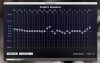
It doesn't even *have* to be pink noise I put in some Steeley Dan (don't like the music but well recorded grumble) and played with the 31 band EQ in Audio Hijack Pro on a Mac and wound up with these EQ settings to get the itouch RTA app to be pretty close to the Equal Loudness curve in my crappy basement listening space. In my subjective opinion it sounds better, clearer vocals more clear cymbals, slightly more "weight." This is just an example of Eqing with RTA each room is unique so see what results you get, and above all have fun.
Attachments
whoaru99
Epic Member
To my point earlier...if you adjust your system to what the "analyzer" says is correct, and you don't like the sound, will you leave it as adjusted, or re-tune it by ear? If the latter then, again, why bother with it in the first place...at least on a personal level anyway?
I understand that in a professional application it may be required by riders and just flat out good business practices.
I understand that in a professional application it may be required by riders and just flat out good business practices.
barredowl
Before and after Science
Well lets say hypothetically you do the RTA and notice that your room has a huge suckout at 500 hz like my basement seems to that you can correct exactly that frequency an inexperienced person might not even know exits (I didn't) then from there you can say this doesn't have enough bass at 50 for the kick drum punch or too much or whatever. Point is even from a subjectivist standpoint you are ahead of the game compensating for room anomalies IMO. Now a truly experienced pro like kevzep may be able to do that by ear but I doubt many of us are in that place, shrug.
I suggest looking at the EQ settings I posted to see how screwed up an average room can be. From there tune to taste of course, but you might be surprised how much better a just plain dialed in room setting sounds. Or not, if you don't like it don't use it, shrug.
I suggest looking at the EQ settings I posted to see how screwed up an average room can be. From there tune to taste of course, but you might be surprised how much better a just plain dialed in room setting sounds. Or not, if you don't like it don't use it, shrug.