

You are using an out of date browser. It may not display this or other websites correctly.
You should upgrade or use an alternative browser.
You should upgrade or use an alternative browser.
Tutorial: "Deep Cleaning" An Amplifier
- Thread starter Machineghost
- Start date

Goldie99
Super Member
Got any pictures?
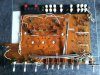
Not sure this it's what you meant, but this the main board in an early NAD 3020 - it's also working perfectly, and has been since it was refurb'ed about 2 - 3 years ago. Normally I'd have taken the old caps etc. off first, but it was so filthy I decided washing first was preferable....
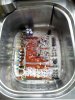
Edited (20.7.18): to add a couple of 'Before' / 'After' photos:

Last edited:

Grady Shades
New Member
I did not take any pictures just in case it was a complete failure I didn’t need that picture taunting me lol.I was thinking before and after.


cpt_paranoia
Addicted Member
For our PCB room, we have an ultrasound cleaner and use a solution of Safewash 2000:
https://www.electrolube.com/products/cleaning/swa/safewash_range_-_aqueous_cleaning/
Following this wash, we rinse with filtered, softened tapwater, and a final distilled water rinse.
Then we use a compressor airline gun and blow water out of all traps, such as under components.
Then we dry the board with a hot air blower.
For small reworks, we use the appropriate grade of Flux-off, either rosin or non-rosin, to clean off liquid flux residues, and then air blow and dry.
https://www.chemtronics.com/flux-removers
At home, I remove dust and fluff with a small, stuff brush (such as a toothbrush), and then use a mild detergent solution, followed by rinse, blow and dry heat. This also works well for restoring rubber pad remote controls that get contaminated by accumulated body oils.
As others have mentioned, NEVER use benzene in a home environment. I would urge care with acetone, as it will damage many plastics. Isopropyl alcohol or even vodka are useful. Don't use rubbing alcohol, as it often contains castor oil.
https://en.m.wikipedia.org/wiki/Rubbing_alcohol
I would also advise caution on cleaning pots with aqueous solutions, at least, unsealed pots commonly found in audio equipment. Whilst modern electronics production does indeed use water & detergent for production cleaning (if not using a no-clean process), it requires all components to be sealed against water ingress. Unsealed pots with passivated steel backshells would have been fitted by hand after the wave or reflow soldering process and subsequent cleaning; that's why their solder joints often have rosin flux residue when the rest of the board is clean. The pressed steel cases may have exposed steel at their cut outlines, which would be prone to rust if not dried quickly after washing.
https://www.electrolube.com/products/cleaning/swa/safewash_range_-_aqueous_cleaning/
Following this wash, we rinse with filtered, softened tapwater, and a final distilled water rinse.
Then we use a compressor airline gun and blow water out of all traps, such as under components.
Then we dry the board with a hot air blower.
For small reworks, we use the appropriate grade of Flux-off, either rosin or non-rosin, to clean off liquid flux residues, and then air blow and dry.
https://www.chemtronics.com/flux-removers
At home, I remove dust and fluff with a small, stuff brush (such as a toothbrush), and then use a mild detergent solution, followed by rinse, blow and dry heat. This also works well for restoring rubber pad remote controls that get contaminated by accumulated body oils.
As others have mentioned, NEVER use benzene in a home environment. I would urge care with acetone, as it will damage many plastics. Isopropyl alcohol or even vodka are useful. Don't use rubbing alcohol, as it often contains castor oil.
https://en.m.wikipedia.org/wiki/Rubbing_alcohol
I would also advise caution on cleaning pots with aqueous solutions, at least, unsealed pots commonly found in audio equipment. Whilst modern electronics production does indeed use water & detergent for production cleaning (if not using a no-clean process), it requires all components to be sealed against water ingress. Unsealed pots with passivated steel backshells would have been fitted by hand after the wave or reflow soldering process and subsequent cleaning; that's why their solder joints often have rosin flux residue when the rest of the board is clean. The pressed steel cases may have exposed steel at their cut outlines, which would be prone to rust if not dried quickly after washing.
Last edited:
Goldie99
Super Member
I was thinking before and after.
I added a couple of photo's above - before / after - cleaning was (1) vacuum / blow out, (2) strip far enough to get main board (and PS board) conveniently into sink, (3) wash both boards with warm water / washing-up liquid and a soft paintbrush, (4) rinse with clean water, then distilled water, (5) dry (shake & drip dry, blow out with a small air gun), (6) continue work.... all pots were deoxit cleaned afterwards, excess flux / residual dirt was removed using Acetone & IPA with Q-tips / pipe cleaners (& good ventilation), further parts removed / tested / replaced etc. (more than necessary - I was using it to learn / practice at the time) - the final photo is after cleaning, when it was ready to be built up again.
Last edited:

JDSmith
New Member
Very informative thread, thank you!
One question: How do you set up boards for drying in the oven at low temp?
I can imagine putting a pan roasting rack with its rails perpendicular to the oven rack, to
allow the board to stand up and have minimal contact with the heated metal of the oven
rack and the roasting rack. How have other folks done this?
One question: How do you set up boards for drying in the oven at low temp?
I can imagine putting a pan roasting rack with its rails perpendicular to the oven rack, to
allow the board to stand up and have minimal contact with the heated metal of the oven
rack and the roasting rack. How have other folks done this?
