• The move to the new server is done. There are some software and database maintenance updates in process. This has us passing the hat around to help out. We appreciate any donations. Seriously, even a dollar helps. The payment page may be found here - https://www.audiokarma.org/support.html

TV Antenna for FM

braxus

FeCr Type III
I couple years ago I bought a circular roof style tv antenna. It picks up VHF (not sure about UHF or not) and has a FM trap in it. Is it possible to remove the FM trap so I can strictly use the antenna to pick up FM stations? If so how does one remove the FM trap if its inside the unit? What exactly does the trap look like?
 
Register to hide this ad
Why bother? I have my tuner hooked up to a rooftop TV antenna and it works great without any such modifications.
 
I couple years ago I bought a circular roof style tv antenna. It picks up VHF (not sure about UHF or not) and has a FM trap in it. Is it possible to remove the FM trap so I can strictly use the antenna to pick up FM stations? If so how does one remove the FM trap if its inside the unit? What exactly does the trap look like?

Brand and model number might help us help you.

In general it is not overly difficult to bypass an FM trap. It is had to tell what your FM trap would look like without knowing the brand and model of antenna. So times they are made out of discreet parts (capacitors and inductors) and sometimes these elements will be made into a printed circuit board.

Is this a passive or active antenna?


Why bother? I have my tuner hooked up to a rooftop TV antenna and it works great without any such modifications.

Why bother....???

Some TV antennae do not have FM traps...And some do and the ones that do may have a very affective FM trap.

Your TV antenna may not even have an FM trap.

Just because a specific TV antenna works OK for FM reception, because it does not have an FM trap, does not mean that another brand or model will not contain an FM trap.
 
I went to go look at the antenna to see what exactly I had. Now its gone missing somewhere in the crawl space. I'll have to see if I can find it.
 
As long as you're up there, put in a new one. Just lay it in the rafters. Then you won't have to worry about traps or bad elements. Depending on how far you want to reach out, good FM antennas can be had for about $40.00. You can add an inline amp later if need be. I assume the cable is already there.
 
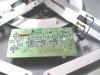
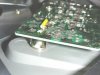
There is no antenna up currently. Anyway I found the antenna down in the crawl space. Got it out. Its a Nexxtech 21" Omni directional -Part No.: 741235119975 . I openned it up and found the circuit board attached to everything. See pics. So basically if I were to completely remove the whole circuit board and directly attach the wires to the output jack, this would work? I do have a soldering iron, so it would be easy enough to remove the board. I could also put in a little heavier wire to attach it all. Also it doesn't say it, but would this antenna work with HDTV Hi Def signals? It comes with an amplifier, but I don't know if it works with FM as well. If not I have an older Radio Shack amplifier I could use I know that does. Also with FM and HD signals, would it work to have this antenna sideways instead of horizontal? I know its meant for horizontal, but I don't know with FM if it matters or not.
 

Attachments

  • 2.JPG
    2.JPG
    49.1 KB · Views: 14
  • 3.JPG
    3.JPG
    44.6 KB · Views: 15
  • 4.JPG
    4.JPG
    51.7 KB · Views: 17
  • 5.JPG
    5.JPG
    28.9 KB · Views: 18
  • 1.JPG
    1.JPG
    50.9 KB · Views: 31
Last edited:
That is an amplified antenna. The circuit board in the antenna is actually the amplifier and the part that you are calling the amplifier is actually the device that sends the operating voltage up the the antenna and separates the operating voltage from the signal. So if you connect that device and expect it to amplify the signal, it will not.

IIRC it does cover both the VHF and UHF television bands, so it would work for any over the air television reception.

It is omni-directional if used in the horizontal plane. If you use it in the vertical plane it will directional broadside to the antenna in a figure 8 pattern.

The FM trap is built into the circuit board in the antenna. You can tell that it is an amplifier by the four transistors located on the circuit board. The little things labeled Q1 though Q3 are the transistors.

You can certainly try it without the circuit board. It is however a balanced antenna (when not used with the internal amplifier) and would need a balun to keep noise that might be picked up by the shield of the feed line from being coupled to the antenna. The noise would then make its way to your tuner.

That is not to say that it will not work with your coax connected directly to the antenna elements. Sometimes poorly designed antennae will work well enough in a given application.
 
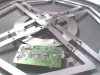
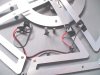
Oops. I already removed the circuit board. As you said I probably wouldn't have received FM if I didn't remove it anyway. I do have some pics of the work I did. The 3rd pic is the amp the antenna came with and the 4th pic is the old Radio Shack unit I have that I could use to boost the signal. I suspect this will work- no? Do you think I can receive HD signals with this antenna and would the Radio Shack amp boost those signals? What can I do to the cabling to help cut down on the noise you say I'll get?
 

Attachments

  • 6.JPG
    6.JPG
    54.9 KB · Views: 11
  • 7.JPG
    7.JPG
    40.1 KB · Views: 12
  • 8.JPG
    8.JPG
    26.8 KB · Views: 9
  • 9.JPG
    9.JPG
    28.1 KB · Views: 11
Well for fun I plugged in the Radio Shack amp to the antenna and plugged the output of that into my HDTV. Set the tv to antenna and programmed the channel selection. I picked up only 1 station in digital and it was in the US. It was KVOS Bellingham which is 46 miles away from us. Signal kept breaking up at times, so its probably a bit too far away. But when the signal was ok- the picture was pretty good and clean. Im surprised I got no Canadian stations in digital since we are switching over to shut off the analog signals soon and I know a couple stations already broadcasting in digital.
 
Oops. I already removed the circuit board. As you said I probably wouldn't have received FM if I didn't remove it anyway. I do have some pics of the work I did. The 3rd pic is the amp the antenna came with and the 4th pic is the old Radio Shack unit I have that I could use to boost the signal. I suspect this will work- no? Do you think I can receive HD signals with this antenna and would the Radio Shack amp boost those signals? What can I do to the cabling to help cut down on the noise you say I'll get?


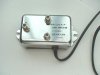
Just to be clear the part that came with your antenna is a power inserter...It sent power up the coax to the antenna, It will not provide any amplification...It is not an amplifier.

There is no difference in antennae for the old over the air analog broadcasts or the new digital over the air broadcasts. Regardless of of what you hear or read...there is no such thing as a "Digital Antenna" for over the air broadcasts.

Most digital over the air broadcasts are in the same UHF band that the old analog over the air television used. However there are some over the air digital broadcasts that are in the old over the air VHF band.

Here is a link that may help you...


http://www.tvfool.com/ds

I would use singe wires (not the zip wire that you used) to connect the antenna elements to your connector, especially if some of your stations are in the UHF band. And I would not use the ferrite form that you have the wires running through.

As far as any noise pickup by the coax...You may not have a problem. The best thing to use is a balun transformer. IIRC this antenna is a 300 Ohm antenna so a standard balun transformer should work. Although you may not need it. A lot of people feed a balanced antenna with an unbalance feed line and get away with it.

A lot will depend on the environment were the coax is run and the amount of RFI.

The radio shack amplifier is made to take a clean strong signal and make it bigger to overcome feed line and splitter loses. It is not made to help "pull in" very weak signals, all though some use them for this purpose.

I was away from my computer and I see that you have already tried your antenna. Those antennae are general broadband omnidirectional antennae and do not have any gain or directivity like a Yagi antenna. That is why it had an internal RF preamplifier, to make up for the short comings of the antenna itself.
 
Oops. I already removed the circuit board. As you said I probably wouldn't have received FM if I didn't remove it anyway. I do have some pics of the work I did. The 3rd pic is the amp the antenna came with and the 4th pic is the old Radio Shack unit I have that I could use to boost the signal. I suspect this will work- no? Do you think I can receive HD signals with this antenna and would the Radio Shack amp boost those signals? What can I do to the cabling to help cut down on the noise you say I'll get?

Well for fun I plugged in the Radio Shack amp to the antenna and plugged the output of that into my HDTV. Set the tv to antenna and programmed the channel selection. I picked up only 1 station in digital and it was in the US. It was KVOS Bellingham which is 46 miles away from us. Signal kept breaking up at times, so its probably a bit too far away. But when the signal was ok- the picture was pretty good and clean. Im surprised I got no Canadian stations in digital since we are switching over to shut off the analog signals soon and I know a couple stations already broadcasting in digital.

I have that exact antenna on my balcony. It is an OEM product distributed under several names. For me it perfectly picks up all local Toronto and Hamilton ATSC stations as well as Buffalo and Erie Pennysylvania (100 miles away.) It is a very well-designed "Active antenna" meaning the circuitry on the board and the antenna elements are all one, a very efficient tuned pickup. The antenna elements essentially see infinite impedance, meaning even tiny signals are passed to the preamp without loss. Also the electronics act to change the virtual size of the elements for correct loading of the incoming wavelength. Without that board those crossed pieces of aluminum are just untuned pieces of metal, not an antenna. It is extremely unwise of you to disassemble that and lose all the advantages of such a clever design. If you want FM, buy a cheap single dipole FM antenna. And don't destroy such a good antenna.

As for FM. Each band requires its own tuning circuit to create the correct virtual size of the elements; one for channels 2-6, one for 7 -13, and two for UHF. Fm would require another whole circuit to make it a virtual FM antenna. That would add complexity and cost to a system not being bought for that purpose. Nothing even exists in that assembly to be able to receive FM in the first place.
 
Last edited:
Well I could always put it all back in if I decided to do so. I still have all the parts. If I was really concerned- I could just buy a second antenna for HD signals. I did forget about the impedance thing. I'll fix that. Also what is a "singe wire"? DO you mean "single"?
 
Well I could always put it all back in if I decided to do so. I still have all the parts. If I was really concerned- I could just buy a second antenna for HD signals. I did forget about the impedance thing. I'll fix that. Also what is a "singe wire"? DO you mean "single"?

This antenna is the best thing I've found for HD TV, and I've tried Winegard yagis and flat plate pickups. You'd be buying another of the same thing.

it doesn't matter if you "match the impedance," without the electronics those pieces of metal aren't an antenna anyway, they are not PHYSICALLY tuned to the correct wavelength to pick up anything. The active inductive circuits on the board act to change the size of the elements as seen by the incoming signal. The same principle is used in high end shortwave radios, a 4-foot whip looks like a 45-foot tuned antenna to incoming signals, thus improving pickup efficiency. Note that the antenna does indeed have a preamp, but the important principle is to "tune" the elements so they resonate properly with the desired incoming signal.

That board also controls rotation of the direction of pickup by the way by changing the phase relationship betwen the metal strips. There is nothing whatsoever to be gained by trying this without the electronics. Put it back together and REALLY see what the TV pickup is like.
 
This antenna is the best thing I've found for HD TV, and I've tried Winegard yagis and flat plate pickups. You'd be buying another of the same thing.

it doesn't matter if you "match the impedance," without the electronics those pieces of metal aren't an antenna anyway, they are not PHYSICALLY tuned to the correct wavelength to pick up anything. The active inductive circuits on the board act to change the size of the elements as seen by the incoming signal. The same principle is used in high end shortwave radios, a 4-foot whip looks like a 45-foot tuned antenna to incoming signals, thus improving pickup efficiency. Note that the antenna does indeed have a preamp, but the important principle is to "tune" the elements so they resonate properly with the desired incoming signal.

That board also controls rotation of the direction of pickup by the way by changing the phase relationship betwen the metal strips.
There is nothing whatsoever to be gained by trying this without the electronics. Put it back together and REALLY see what the TV pickup is like.

IIRC that antenna is an omnidirectional antenna. In order for it to be electronically rotatable, it would need more than one set of wires going to the elements. While you "could" change the phase relationship between the two sets of elements that would not result in full 360 steering of the antenna.

And inductive loading is very frequency selective and would have to change each time you changed channels in order to to try to resonate the elements ( A frequency change range of 50mHz up to the UHF frequencies). It would need a control box to send a signal to the antenna each time the channel was changed and to change the direction of the antenna.

As far as inductively loading(tuning) a shortwave antenna, yes it can be done, but is not as affective as a full size antenna and the frequency bandwidth is narrow. I use inductive loading to make my mobile high frequency ham radio antennae work. But the loading must be changed each time I change my operating frequency. The same thing would have to happen with this antenna each time the receiving channel was changed.

To the OP, doe this antenna have a separate control box? Not talking about the power inserter, but a separate box with controls on it.

If it does I will stand corrected. But looking at the circuit I do not see anything that would "steer" the antenna electrically.

What was to be gained:

The original question was how to use this antenna to receive FM. It has a fixed FM trap in the internal preamp, so removing it (the preamp) was a way to allow it to function for FM reception.

And as far as Yagis go...I installed over the air TV antennae in deep fringe locations and there is no substitute for a large Yagi will full size elements, regardless of the electronics at the antenna. Besides resonance it is a question of capture area.

To the OP...With out a doubt the antenna will work much better with the preamp installed. As I previously mentioned, the preamp makes up for the limitations of this antenna.

You will need to use the power inserter along with its power supply if you want to use the antenna with the preamp installed and of course the FM trap will be active.
 
Last edited:
Would it matter if I put the antenna preamp box downstream of the connection? Meaning connect the antenna as it is now (with coax out) to the Radio Shack splitter amp. Then one signal to the tuner, and the second feeding into the original antenna preamp box with circuit board attached. That setup would give me both options for tuning and still use the antenna preamp. Or does that have to be direct to the antenna leads?
 
IIRC that antenna is an omnidirectional antenna. In order for it to be electronically rotatable, it would need more than one set of wires going to the elements. While you "could" change the phase relationship between the two sets of elements that would not result in full 360 steering of the antenna.

And inductive loading is very frequency selective and would have to change each time you changed channels in order to to try to resonate the elements ( A frequency change range of 50mHz up to the UHF frequencies). It would need a control box to send a signal to the antenna each time the channel was changed and to change the direction of the antenna.

As far as inductively loading(tuning) a shortwave antenna, yes it can be done, but is not as affective as a full size antenna and the frequency bandwidth is narrow. I use inductive loading to make my mobile high frequency ham radio antennae work. But the loading must be changed each time I change my operating frequency. The same thing would have to happen with this antenna each time the receiving channel was changed.

To the OP, doe this antenna have a separate control box? Not talking about the power inserter, but a separate box with controls on it.

If it does I will stand corrected. But looking at the circuit I do not see anything that would "steer" the antenna electrically.

What was to be gained:

The original question was how to use this antenna to receive FM. It has a fixed FM trap in the internal preamp, so removing it (the preamp) was a way to allow it to function for FM reception.

And as far as Yagis go...I installed over the air TV antennae in deep fringe locations and there is no substitute for a large Yagi will full size elements, regardless of the electronics at the antenna. Besides resonance it is a question of capture area.

To the OP...With out a doubt the antenna will work much better with the preamp installed. As I previously mentioned, the preamp makes up for the limitations of this antenna.

You will need to use the power inserter along with its power supply if you want to use the antenna with the preamp installed and of course the FM trap will be active.

The electronics "tunes" the antenna in four bands, not as efficient as 10 meg passbands but it works. I find the performance of this antenna to be very good and it was equal to a double stacked bowtie with a preamp. - Which then required a mechanical rotor.

Yes it has a separate control box. The box sends power for the electronics down the coax, and there is also a three wire cable for directional control. The control can aim the antenna in any of 16 directions. If it is NOT an OEM version of the antenna in this link I stand corrected. http://mini-state.com/ But I have opened my Mini-state and the internals are identical to the OP's. The antenna already HAS a preamp which allows the signal to be split three ways before the set's SNR overcomes the antenna's.

(Edit) Ok this is not directionally controlled and is omnidirectional, sorry. But it is still an active antenna and the internal electronics provides its best performance. The Mini-state is still my recommendation for an HD antenna unless one has lots of room for a yagi or stacked bowtie.
 
Last edited:
The electronics "tunes" the antenna in four bands, not as efficient as 10 meg passbands but it works. I find the performance of this antenna to be very good and it was equal to a double stacked bowtie with a preamp. - Which then required a mechanical rotor.

Yes it has a separate control box. The box sends power for the electronics down the coax, and there is also a three wire cable for directional control. The control can aim the antenna in any of 16 directions. If it is NOT an OEM version of the antenna in this link I stand corrected. http://mini-state.com/ But I have opened my Mini-state and the internals are identical to the OP's. The antenna already HAS a preamp which allows the signal to be split three ways before the set's SNR overcomes the antenna's.

(Edit) Ok this is not directionally controlled and is omnidirectional, sorry. But it is still an active antenna and the internal electronics provides its best performance. The Mini-state is still my recommendation for an HD antenna unless one has lots of room for a yagi or stacked bowtie.

Yes, this is what I have said all along in all of my posts.

The reason for the experiment is the inclusion of an FM trap in the internal preamplifier.

braxus Would it matter if I put the antenna preamp box downstream of the connection? Meaning connect the antenna as it is now (with coax out) to the Radio Shack splitter amp. Then one signal to the tuner, and the second feeding into the original antenna preamp box with circuit board attached. That setup would give me both options for tuning and still use the antenna preamp. Or does that have to be direct to the antenna leads?

Not a good way to go. The input of the original internal preamp for your antenna will be looking for a much smaller signal. Your method could lead to the antenna preamplifier from your antenna being overloaded. The RS amplifier will add an appreciable amount of noise to the signal, that will then be amplified by the antenna preamp located downstream.

Again the Radio Shack amplifier is designed to take an all ready clean and strong signal and boost it enough to overcome down stream feed line and splitter lose.

All of this being said. The first thing you need to know is if this antenna, in it's original configuration (and in it's final location) will be up to the task of over the air television reception. In what directions are your TV signals? Do you need an omnidirectional or steerable antenna because you have signals coming from different directions? How strong are your television and FM signals?

It would also be good to know if all of your signals are in the UHF band or if some of them are in the VHF band. That will be of a help of you decide to replace your current antenna.

Remember that anything that you try will result in a decrease in performance. So if your current antenna does not work well in its original configuration, it will not work well in any alternative configuration.

If it works well in it's original configuration, then you could experiment with different configurations.

All of this being said, go ahead and experiment. You might get lucky and come up with a configuration that works, even though, on paper, it looks like it should not work.

I have cobbled together various things that had no right to work and they ended up working well enough for my application.

And to the OP. Just to be clear as you are experimenting. The circuit board is the preamp. The thing that you call the preamp box is merely a circuit that sends operating power to the circuit board. I mention this because holding the circuit board in your hand or having it on any type of RF conductive surface may affect it's operation.

And remember, any small form factor antenna is going to be a compromise in performance.

Even the antenna that Melody Master referenced is considerably less sensitive than a simple half wave dipole in the VHF television bands and only shows a small amount of gain in the UHF television band and that may be offset somewhat by the noise factor (the amount of noise the electronics in the antenna add to the already weak signal) of around 3dB in the UHF television band.

Edit...From the specs for the antenna that Melody Master referenced it is not clear if the antenna performance includes the affects of the amplifier or the gain of the amplifier need to be added to the antenna specifications. If so that would make it a some what better on the VHF bands and considerably better on the UHF bands.

Melody Master does your antenna pass FM signals? IF so it might be of interest to the OP.

 
Last edited:
Back
Top Bottom